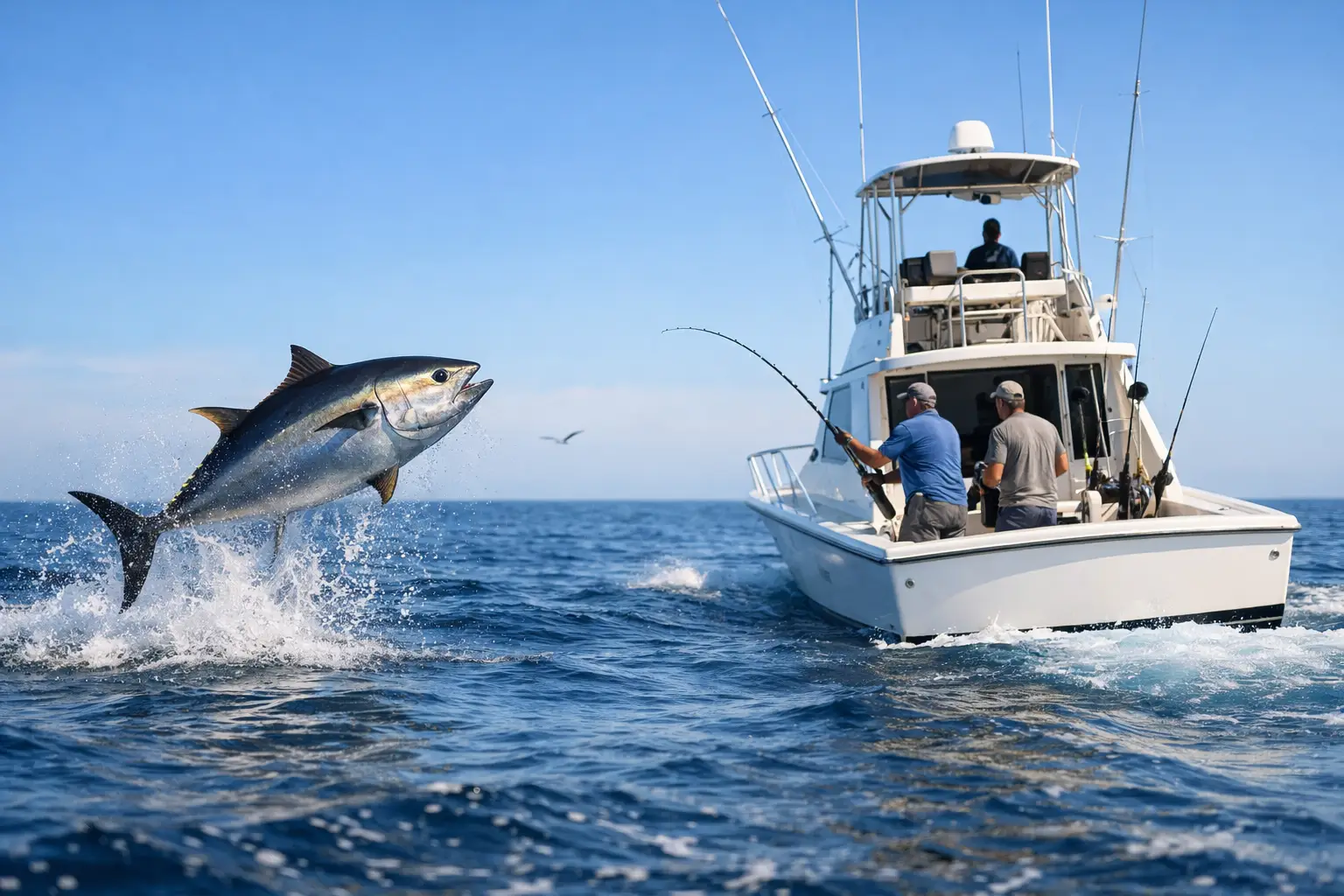
A bluefin tuna charter is not a casual “let’s see what bites” day. You are booking a shot at one of the hardest-pulling, most weather-dependent fish in American saltwater. The right trip puts you on a capable boat with a captain who follows the local bite, understands the regulations, and has the gear to handle a fish that can turn a quiet morning into a full-on deck battle.
That is why bluefin trips should be searched species-first. Start with the tuna, then narrow the field by region, season, trip length, and fishing style. A captain who crushes inshore reds may be an excellent guide, but that does not make them the right call when your goal is a 100-pound bluefin far beyond the beach.
Where to Book a Bluefin Tuna Charter
Bluefin tuna show up in several U.S. fisheries, but the experience changes dramatically by coast. Your best choice depends on the time of year, how far you are willing to travel, and whether you want a quick shot at school fish or a serious hunt for a giant.
The Northeast is the iconic bluefin ground. Massachusetts, Rhode Island, Maine, New Hampshire, New York, and New Jersey all produce opportunities as fish move through the region. Cape Cod is the name many anglers know, and for good reason. Depending on the season, captains may target fish on topwater, live bait, troll spreads, jigs, or chunk baits. This is also where a realistic shot at giant bluefin brings a different class of boat, gear, preparation, and cost.
The Mid-Atlantic can offer strong action when bait and migrating fish line up. Trips out of New Jersey, Delaware, Maryland, and Virginia may involve long runs to offshore structure, temperature breaks, canyon edges, or areas holding bait. Ask exactly how much running is typical. “Offshore” can mean a manageable run for one operation and a very long day for another.
On the West Coast, Southern California bluefin fishing has become a major draw. San Diego-area boats often target Pacific bluefin on overnight, multi-day, and longer-range trips. The bite can be technical: sonar marks, nighttime knife jigs, flyline baits, kite fishing, and heavy rail gear all have their moment. A good crew will tell you what has been working recently, not what worked three months ago.
The Gulf and Southeast may offer bluefin opportunities as well, particularly around offshore waters, but they are not interchangeable with the Northeast or Southern California fisheries. Local conditions, fish size, travel distance, seasons, and rules drive the plan. Pick the region that matches the kind of trip you actually want.
Choose the Trip Length for the Fishery
A bluefin tuna charter can be a half-day, a full-day, an overnight run, or a multi-day offshore mission. More hours do not automatically guarantee a fish, but they can give the captain more workable water and more flexibility around feeding windows.
A same-day trip makes sense when the fish are relatively close, conditions are stable, and you want a focused experience without sleeping on the boat. It can be a great option for first-time tuna anglers, families with capable older kids, or groups working around a tight schedule. The trade-off is simple: if the fish move, the weather shifts, or the bite happens outside your window, there is less room to adjust.
Overnight and multi-day trips are often the better call when the grounds are far offshore or the fish are feeding best at low-light and nighttime periods. These trips require more commitment, but they can put you in the game when daytime-only boats are headed home. They also demand honest planning. Ask about bunks, food, head facilities, motion sickness, safety gear, and how much time will be spent running versus fishing.
For private charters, your group controls the boat and gets more direct access to the captain’s plan. That can be worth it for experienced anglers, corporate groups, or friends splitting the cost. Shared or open-party trips lower the per-person price, but you will fish with other anglers and may rotate through the action. Neither format is automatically better. It depends on your budget, group, and tolerance for sharing the rail.
What a Good Bluefin Tuna Captain Brings
The captain matters more than the boat’s paint job or a flashy photo gallery. Bluefin are moving targets, and the best operators make decisions based on current information: bait concentrations, water temperature, satellite conditions, recent reports, weather windows, and where the fleet has or has not found fish.
Look for a charter that clearly states its tuna focus. A captain who regularly targets bluefin should be able to explain the common techniques used on their trips and what the season has looked like. They should also be direct about uncertainty. Anyone promising a guaranteed tuna is selling fantasy. Great captains promise effort, preparation, safe decisions, and a real plan.
Boat capability counts too. For giant fish or long offshore runs, you need a vessel built for that work, along with reliable electronics, communication equipment, safety systems, and tackle that is not undersized for the job. The rod may look heavy in the rack, but it will feel very different when a bluefin settles deep and starts taking circles under the boat.
A strong crew does more than rig baits and take photos. They teach guests where to stand, how to move around the deck, when to come tight, and how to avoid a bad handoff when a fish changes direction. First-timers should not feel embarrassed to say so. Good mates would rather coach you before the bite than untangle chaos after it starts.
Questions to Ask Before Booking a Bluefin Tuna Charter
Do not book based on a single trophy photo. A quick conversation can tell you whether a charter fits your goal. Ask what size bluefin are most common right now, how long the run usually is, and whether the trip targets tuna exclusively or mixes in other species if the conditions call for it.
Ask which methods are likely. Trolling, popping, jigging, bait fishing, kite fishing, and chunking create very different days on the water. If your dream is casting a popper to fish blasting bait on the surface, say that. If you are happy to work a jig in the dark or wait on a bait rod, say that too. A captain cannot tailor expectations they have never heard.
You should also confirm what is included. Most charters provide rods, reels, terminal tackle, bait, ice, and required safety equipment, but details vary. Clarify licensing, fish cleaning, gratuity expectations, meals, drinks, and whether the captain has a recommended packing list. Bring rain gear and layers even when the forecast looks friendly. Offshore weather has a way of making optimistic anglers regret leaving the jacket in the truck.
Finally, ask about the weather and cancellation policy. Tuna trips are not a place to pressure a captain into running rough water. A weather call protects people, equipment, and the chance of fishing another day. The captain is not canceling your adventure. They are making the professional call that keeps it from becoming a bad story.
Know the Rules Before You Keep a Fish
Bluefin tuna regulations can change by region, season, size class, vessel category, and quota status. Retention rules are not optional, and they are not something to learn after a fish hits the deck. Your captain should handle the trip’s required permits and know the current rules, but anglers should still understand the basics before booking.
On some trips, the goal is a legal harvest. On others, you may catch and release, target a different tuna species if bluefin retention is closed, or continue fishing after a retained fish is aboard only when regulations allow it. If bringing home tuna is a major part of the plan, ask how the captain handles processing and what share of the catch guests can reasonably expect.
Do not assume every bluefin means coolers full of sushi-grade loins. Fish handling, trip conditions, regulations, and group size all matter. The better question is: if we land a legal fish, what happens next?
Prepare for a Real Fight
Bluefin tuna are powerful enough to expose weak knees, loose footing, and bad technique in a hurry. Eat well before departure, hydrate early, wear shoes with grip, and listen when the crew explains the fighting setup. Fighting belts, harnesses, rail rods, and stand-up gear all work differently. Let the mate show you how to use what is on board.
You do not need to arrive as a tournament angler. You do need to stay patient. There may be long stretches of scanning, trolling, marking fish, or waiting for a bite window. Then everything happens at once. That contrast is part of tuna fishing.
When you are ready to find a trip, use Unreel Charters to search bluefin-focused operations by fishing location and trip type, then contact captains with the questions that matter. Find the crew chasing the fish you want, give yourself the right window, and be ready when the rod finally loads up.