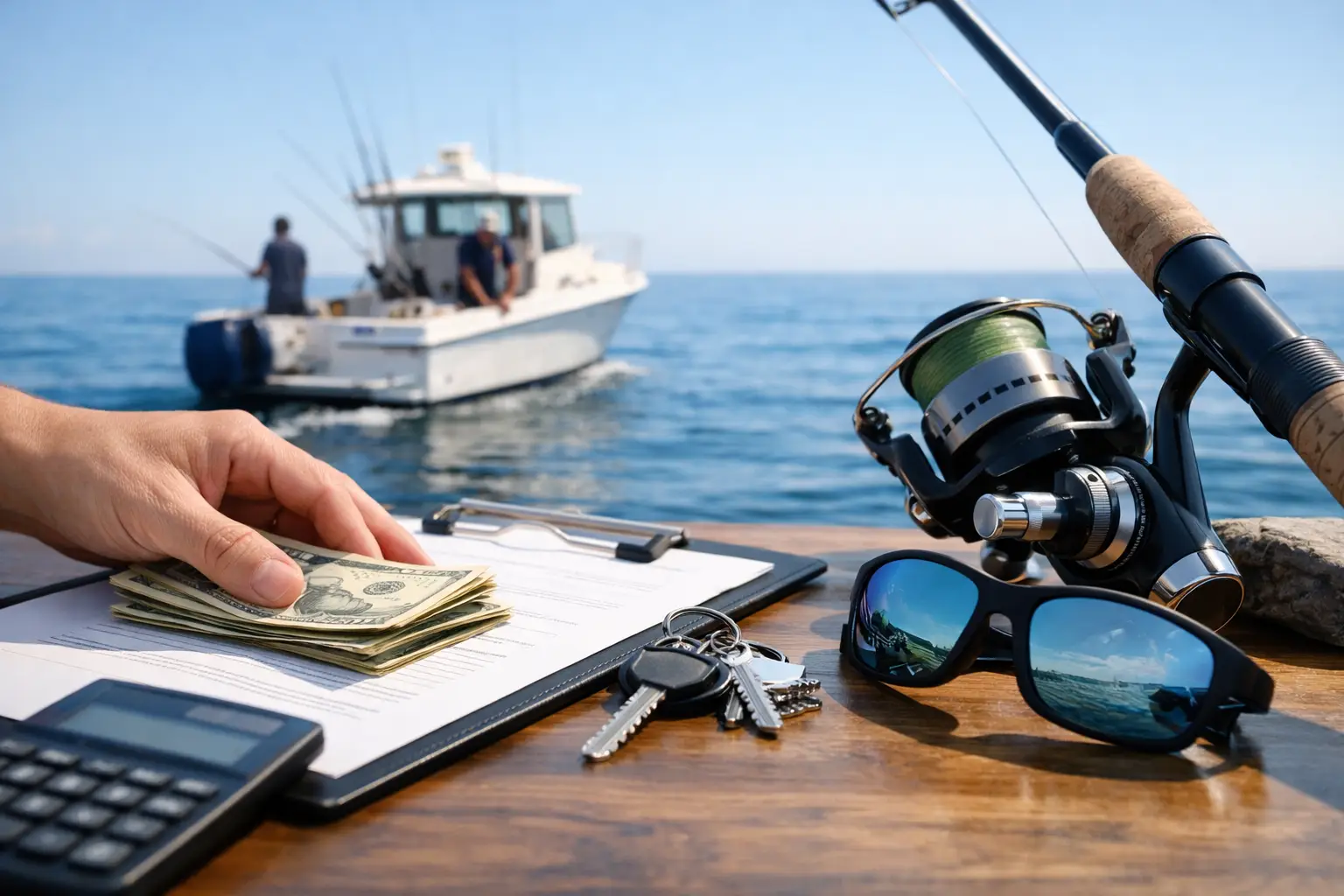
A redfish trip at daylight or an offshore run for tuna starts well before the boat leaves the dock. Charter deposit policies are part of that planning, and they are worth reading before you send money or lock in a date. A clear policy protects your group from surprises, but it also protects the captain from holding a prime fishing day for a booking that disappears.
For most independent charter operators, a canceled Saturday in peak season is not a small inconvenience. It can mean fuel planning, bait orders, crew scheduling, and a full day of revenue that cannot be replaced at the last minute. The right way to approach a deposit is not as a hidden fee. Think of it as both sides committing to the trip.
Why Captains Ask for Deposits
Fishing charter deposits are normal across inshore, nearshore, offshore, fly-fishing, and destination trips. They give the captain a reason to reserve the boat, time slot, and often the fishing plan built around your target species. A half-day bay trip for speckled trout may require less preparation than a full-day canyon run for bluefin, but both put a date on the captain's calendar that another group can no longer book.
Deposit amounts vary. Some captains request a flat amount, while others charge a percentage of the trip price. A shorter inshore trip may carry a modest deposit; a multiday marlin, salmon, or halibut trip may require more because the captain has greater operating costs and fewer chances to refill an open date.
A deposit also helps filter out tentative bookings. That matters when a captain is trying to run a reliable business rather than playing calendar roulette with every weekend tide.
What Good Charter Deposit Policies Should Explain
You should be able to understand a deposit policy without needing a law degree or a string of texts. The terms should state the deposit amount, when the remaining balance is due, acceptable payment methods, and what happens if either side must cancel.
The best policies also separate a customer cancellation from a weather cancellation. Those are not the same situation. If your group changes its mind three days before a prime tarpon date, the captain may have no realistic way to rebook it. If a thunderstorm line, heavy seas, or a small-craft advisory keeps the boat at the dock, that call is usually about safety, not customer preference.
Look for details on whether a deposit is refundable, transferable to another date, or held as a credit. Also check the cancellation window. A policy that allows a full refund 30 days out, a date change 14 days out, and no refund inside 72 hours may be completely reasonable. The exact numbers depend on the fishery, season, location, and trip cost.
Deposit versus full prepayment
A deposit reserves the trip while leaving a balance due later. Full prepayment means the entire trip cost is paid before the outing. Neither approach is automatically better.
For anglers, a deposit can feel more flexible and leave room to settle extras after the trip, such as a mate's tip or an extended run. For captains, full payment can make sense for high-demand dates, large groups, remote lodge-style trips, or charters with substantial up-front costs. What matters is that the payment structure is stated before you book, not introduced after your date is confirmed.
Refunds, credits, and rescheduling
A refund returns your money. A credit applies that money to a future trip. Rescheduling moves the booking to another available date. Those outcomes sound similar when plans are still months away, but they can matter a lot when your crew is flying in for one specific weekend.
Before paying, ask whether your deposit can be transferred if a family emergency, travel delay, or illness prevents your group from going. Ask whether another person can take your group’s spot. A captain may be willing to work with you, especially with enough notice, but do not assume flexibility that is not written into the policy.
If you need a fixed date for a bachelor party, tournament team, or corporate group, it is smart to have a backup plan in mind. A flexible credit is useful only if your crew can realistically return.
Weather Cancellations Need Plain Language
Weather is part of fishing. Wind, lightning, rough seas, flooding, hurricanes, fog, extreme cold, and unsafe marine conditions can change the plan fast. The captain makes the final safety call because they know the boat, the water, the forecast, and the limits of the trip.
A fair weather policy usually explains whether the trip will be rescheduled, refunded, shortened, or changed to a protected-water option. An offshore captain might be able to turn an open-water tuna run into an inshore bottom-fishing trip on a rough day. That can save the day for some groups, but it may not suit anglers who traveled specifically for pelagics. Discuss those possibilities before departure morning.
Do not confuse less-than-perfect fishing with unsafe weather. Fish are wild, conditions move, and no captain can guarantee a trophy catch. A slow bite is usually not grounds for a refund if the trip ran safely as planned. On the other hand, a captain who cancels because conditions are unsafe is doing the professional thing, even when the sky looks calm from the hotel dock.
Questions to Ask Before You Book
The fastest way to avoid a deposit dispute is to ask direct questions while you are choosing a charter. Start with the fish you want to catch, the trip type you want, and the dates you can travel. Then get clear on the money and cancellation terms.
Ask what deposit is required and whether it is refundable. Confirm the final payment amount, due date, and whether taxes, fuel surcharges, bait, licenses, fish cleaning, or gratuity are included. For offshore trips, also ask whether a weather-driven change in trip length or destination changes the final price.
You should also ask what happens if the captain cancels for mechanical trouble or cannot run the trip. Professional operators generally offer a refund, reschedule option, or help finding another boat when possible. Boats are machines, and breakdowns happen. The important part is how clearly the captain communicates and what remedy is offered.
Get the answer in writing, whether it is on the listing, booking confirmation, invoice, or a text thread you save. A verbal understanding is easy to remember differently once a storm rolls in or a group member backs out.
How Anglers Can Be Better Booking Partners
Bring your real group size, target species, and experience level to the first conversation. If you are booking a family-friendly inshore trip, say so. If your crew expects to run 50 miles offshore for mahi, tuna, or billfish, say that too. The captain can recommend the right trip and explain the conditions that may force a change.
Once you book, do not wait until the cancellation deadline to mention that two people might not make it. Early communication gives everyone more options. A captain may be able to move the trip, fill open seats, or suggest a practical alternative when there is time to work with.
Read the confirmation, save the captain's number, and make sure one person in your group is responsible for final payment and departure details. That small bit of organization prevents plenty of dockside confusion at 5 a.m.
The Bottom Line on Charter Deposit Policies
Good charter deposit policies should feel straightforward: you know what you are paying, what reserves your date, what happens in bad weather, and what options exist if plans change. If the language is vague, ask before you pay. If a captain explains the policy clearly and treats your questions with respect, that is usually a good sign you are dealing with a pro.
Pick the fish, find the right water and captain, then book with both eyes open. A clear agreement leaves more room for the part that matters: watching the line come tight when the day finally arrives.