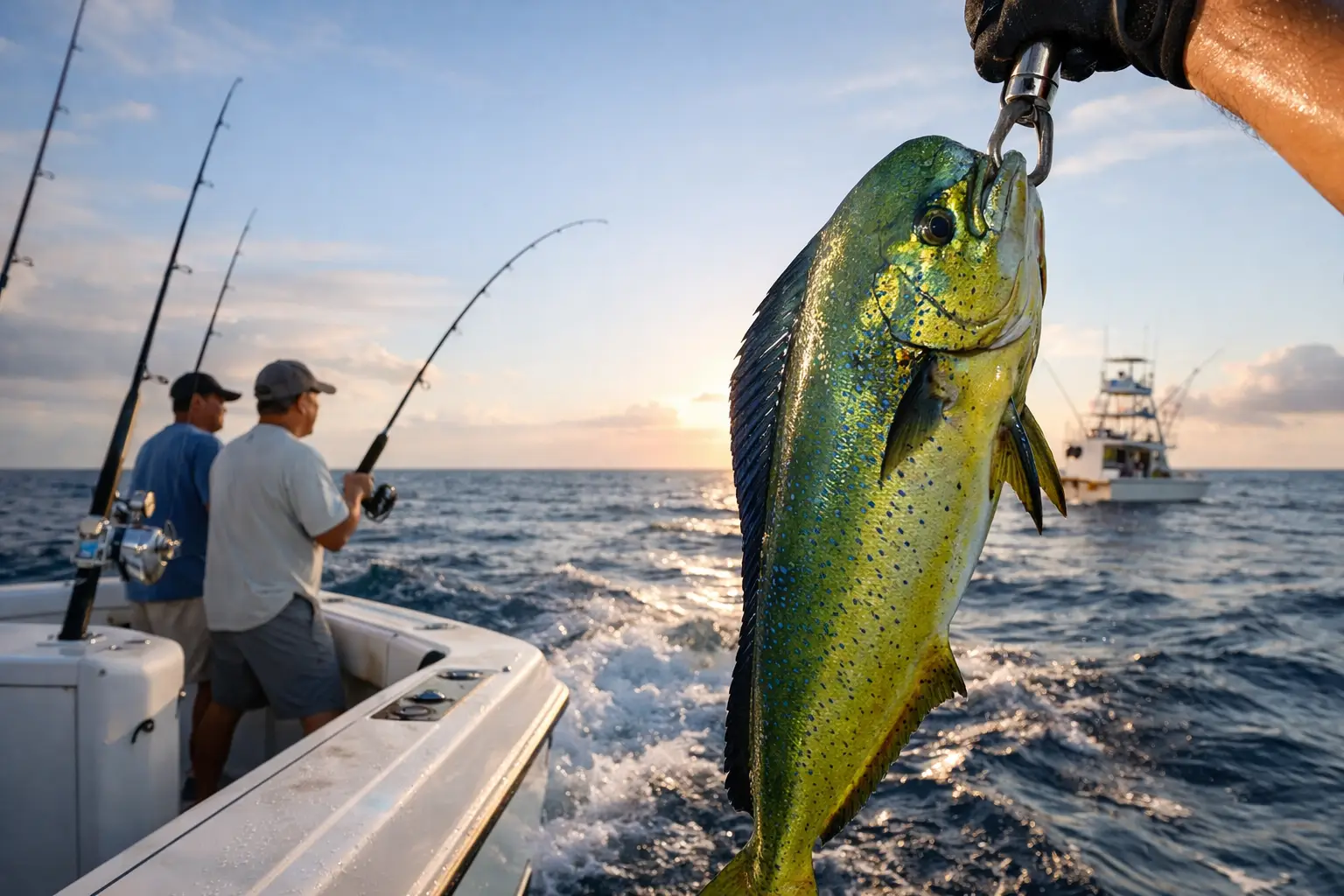
A deep sea fishing trip can mean a sunrise run for king mackerel 10 miles from the inlet or an all-day push to blue water for tuna, marlin, and mahi. Those are not the same trip, even if both get called “deep sea.” Before you book, start with the fish you want to catch, then match it to the distance, boat, captain, and time of year that make sense.
A great offshore day is not just about finding the biggest boat or the lowest advertised rate. It is about putting the right group on the right trip with a captain who fishes your target species regularly. That is how you spend more time with lines in the water and less time wondering why the plan does not match the promise.
What Deep Sea Fishing Actually Means
In charter language, deep sea fishing usually refers to offshore fishing beyond protected bays, passes, and nearshore structure. But there is no universal mileage marker. Off Miami, productive blue water may be close to shore. Along parts of the Gulf Coast, a captain may need a long run to reach deep rigs, ledges, or canyon water. Weather, current, bottom contour, and the species in season matter more than a label.
That distinction affects everything: departure time, fuel use, trip length, ride comfort, and what may bite. A four-hour offshore trip can be perfect for a family looking for action around reefs and wrecks. It is usually not enough time for a serious shot at distant tuna grounds. If catching a specific fish is the goal, ask where the captain expects to fish and how much of the trip is likely to be travel time.
Start With the Species, Not the Zip Code
“Deep sea fishing” is a trip type. The fish is the mission. A charter that is excellent for snapper on bottom structure may not be set up for live-bait sailfish, and a top-notch tuna crew may not offer the relaxed reef fishing a first-time group wants.
If you want fast, visual action and a cooler full of good eating fish, look at species such as mahi, king mackerel, snapper, grouper, amberjack, or blackfin tuna, depending on the region and season. If you want a true offshore hunt, bluefin tuna, yellowfin tuna, marlin, sailfish, wahoo, and swordfish require more specialized planning. Some are seasonal. Some are heavily weather-dependent. Some demand a longer charter and a crew that runs those trips often.
Be realistic about the phrase “target species.” A captain can target tuna. No honest captain can guarantee tuna. Fish move, bait changes, water temperature shifts, and a weather window can close fast. What you should expect is a captain with a clear plan, the right tackle, and a backup option if conditions make Plan A a bad bet.
Choose the Trip Length That Fits the Goal
Shorter trips are often the right call for beginners, kids, mixed-experience groups, and anyone unsure how they will handle the offshore ride. They keep the day manageable and can still produce plenty of fish when nearshore reefs, wrecks, or schools are active.
Six- and eight-hour trips offer more flexibility. The crew can run farther, change areas if the bite is slow, and work multiple techniques. For many anglers, this is the sweet spot between a full fishing day and a long-haul commitment.
Full-day, extended, and overnight trips are built for distance and opportunity. They make more sense when the target is far offshore, when a captain needs time to chum a night bite, or when you are chasing species that live around canyon edges, oil rigs, or distant temperature breaks. The trade-off is simple: more water and more time can create better chances, but they also mean a bigger investment and more exposure to rough conditions.
The Boat Matters, but the Captain Matters More
A large sportfisher may offer a smoother ride, more shade, a cabin, and room for a bigger group. A center console can be faster, more flexible, and closer to the water when the action starts. Neither is automatically better. The right boat depends on group size, your comfort level, the expected conditions, and the type of fishing.
Ask practical questions before booking. Is there a toilet onboard? Is there shade? How many anglers will fish at one time? Is the trip private or shared? Are you expected to bring food, drinks, a fishing license, or a cooler? These details can make or break the day, especially when you are traveling with kids, older anglers, or people new to boats.
More importantly, look for a captain whose profile and recent fishing reports show the style of trip you want. A local captain knows which wind direction turns an easy run into a pounding ride, when a reef bite is worth trying, and when the smart move is staying closer to shore. That knowledge is what you are booking.
Weather Is Part of the Plan
Offshore fishing does not run on a fixed schedule. A calm forecast can turn choppy, and a trip may be postponed when conditions are unsafe or simply miserable. That is not a captain failing to deliver. It is a captain making the call that protects the crew and guests.
Pay attention to the cancellation and weather policy before you put a date on the calendar. Then leave some flexibility in your travel plans if deep sea fishing is the main reason for your trip. If possible, book early in your vacation rather than on the final day. A reschedule is much easier when you still have open days ahead.
Seasickness is worth addressing honestly, too. Even experienced anglers can get sick in a rolling ocean. Get a good night of sleep, hydrate, eat a light meal, avoid heavy drinking the night before, and talk with a pharmacist or doctor about motion-sickness options well before departure. Once you are green at the rail, the hottest bite in the world will not feel like a win.
Ask What Happens to the Fish
Keeping fish is part of the appeal for many charter groups, but regulations and captain policies shape what comes home. Seasons, size limits, bag limits, and protected species rules can change by location and species. A responsible crew follows them, even when the fish are biting.
Ask whether the crew cleans legal catch, how it is packaged, and whether there are limits on what your group can keep. If you are pursuing billfish, sharks, or other catch-and-release species, ask how the captain handles fish boatside. Good handling practices matter. The goal is a hard-fought release, not a photo that costs a fish its chance to swim away.
Also understand that some days are better for dinner than others. A bottom-fishing trip may fill the box. A day trolling for marlin may produce one memorable shot or no shots at all. Both can be excellent deep sea fishing. They just measure success differently.
Build the Right Crew for the Boat
The easiest way to lower the quality of a charter is to put too many people with competing expectations on one trip. The person who wants a quiet trophy hunt, the friend who wants to party, and the child who has never been on a boat may not all be looking for the same day.
Talk it through before you book. Decide whether the priority is catching dinner, chasing a bucket-list fish, teaching new anglers, or simply getting offshore together. Share that with the captain when you make contact. The more clearly you explain your group, the better a good captain can recommend the trip length, departure time, and target species.
Bring sun protection, polarized sunglasses, soft-soled shoes, a light rain layer, and more water than you think you need. Keep loose gear to a minimum. Ocean spray finds everything, and a crowded deck gets chaotic when a fish makes a run.
Find a Captain Built for Your Mission
The right search begins with a species and filters down from there: location, trip type, group size, and available dates. That beats scrolling through generic vacation listings and hoping every offshore charter does the same thing.
On Unreel Charters, anglers can search by the fish they want to catch and narrow the field to captains offering the kind of offshore trip they actually want. Take the extra minute to compare boat details, trip descriptions, and each captain’s fishing focus. A direct match is worth more than a flashy photo.
Your best deep sea fishing day may end with a packed fish box, a released sailfish, or one missed strike that keeps the whole crew talking on the ride home. Pick the captain and trip that give your group a real shot at the experience you came for, then let the ocean handle the rest.