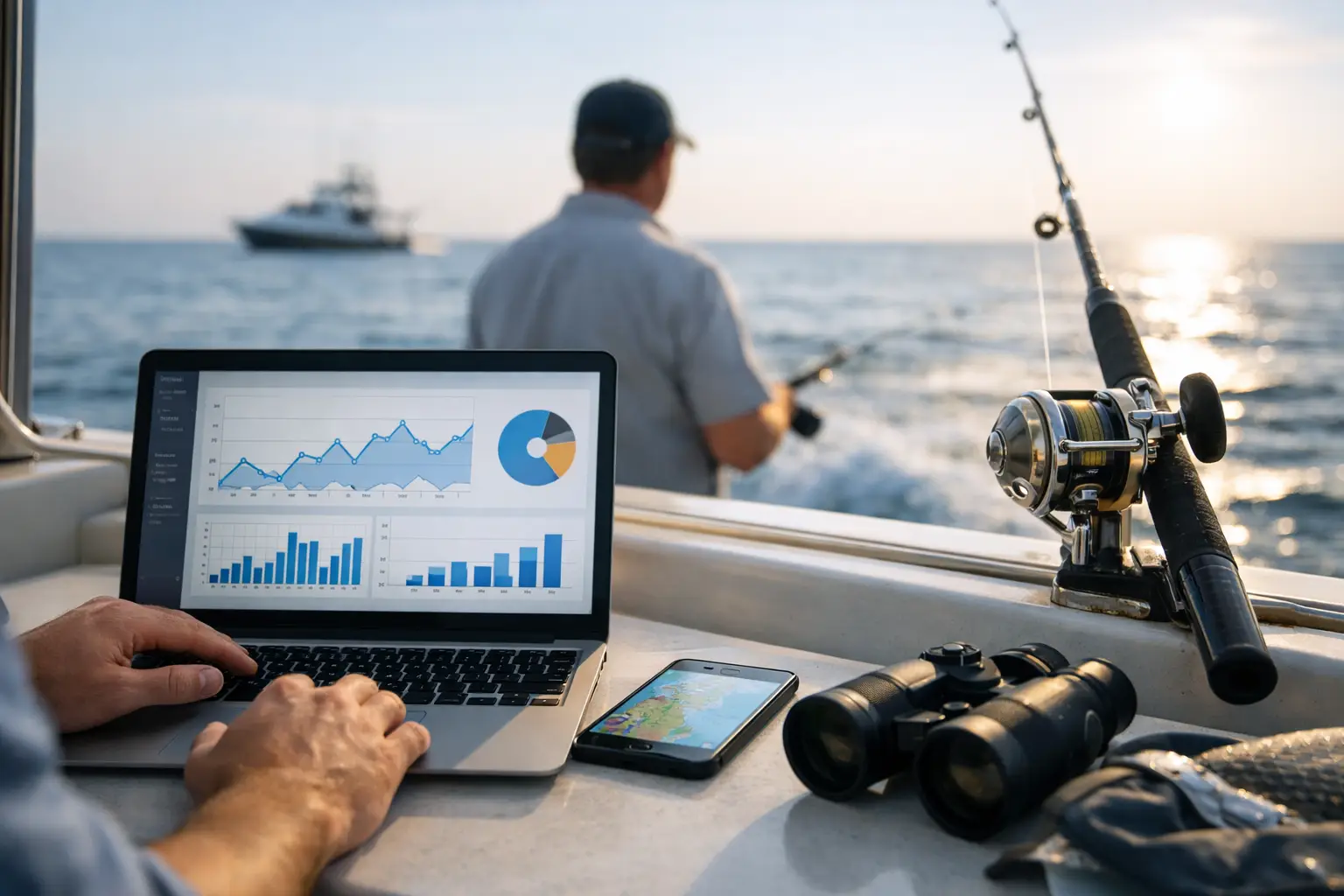
A captain can run a great boat, put clients on fish, and still have an empty weekday on the calendar. The problem is not always demand. Sometimes anglers are finding your fishing charter listing, looking around, then moving on because the trip details, photos, species, or next step do not give them enough confidence to reach out.
That is where fishing charter traffic reporting earns its place. It is not a pile of marketing jargon or a scoreboard for page views. It is a practical look at how anglers are finding your operation, what catches their attention, and whether your listing is doing its job: turning a fishing plan into a direct inquiry.
For independent captains, that information matters. You should not have to hand over a percentage of every trip just to learn whether your marketing is working.
What Fishing Charter Traffic Reporting Actually Tells You
Traffic reporting tracks activity on your charter profile over a set period, usually by day, week, or month. At its most useful, it shows how many people saw your listing, how many opened it, and how many took a meaningful next step such as calling, emailing, or submitting an inquiry.
Those numbers tell a story, but only when you read them together. A spike in profile views after cobia show up along the beach may mean anglers are actively searching for that fish. Strong traffic with no inquiries can point to a different problem: your listing is being seen, but it is not answering the questions anglers need answered before they contact you.
A good report helps you separate three very different situations:
- Not enough anglers are finding your listing.
- Anglers are finding it but are not spending much time with it.
- Anglers are interested but are not contacting you.
- Your listing is generating inquiries, but availability, response time, or pricing expectations are slowing the booking.
Each one calls for a different move. Buying more visibility will not fix a thin profile. Adding more photos will not solve a captain who takes two days to reply to a hot lead.
Views Are the Top of the Funnel, Not the Finish Line
Profile views show that your charter is getting in front of anglers. That is useful, especially when paired with seasonality. If your views climb in spring ahead of tarpon season, or in late summer before fall redfish runs, your listing is matching what people want to catch.
But views alone do not pay for fuel. A person may open five charter profiles before narrowing down a trip. Treat views as an early signal of interest, not proof that a booking is coming.
If views are low, start with discoverability. Make sure your profile clearly reflects the species you target, the waters you fish, and the trip styles you actually run. An angler looking for an inshore snook trip in Southwest Florida should not have to guess whether your boat is built for that day. The same goes for offshore tuna, reef-and-wreck snapper, salmon, striped bass, or family-friendly half days.
Engagement Shows Whether Your Profile Holds Attention
Once an angler lands on a listing, they are trying to answer a few plain questions fast: Can this captain put us on the fish we want? Is this trip right for our crew? What does the boat look like? What is included? How do we get in touch?
Engagement signals, such as photo views, video plays, or clicks into trip details, can show whether your profile is helping them find those answers. A video of a livewell full of fish is fun. A short clip showing the boat, the ride out, the captain explaining the target species, and clients landing fish gives a potential customer a much stronger feel for the day they are buying.
This is where a captain-first profile can do more than a generic booking card. On Unreel Charters, reporting is meant to show operators the activity around their listing so they can make smarter decisions without giving up control of their customer relationship.
Inquiries Are the Signal That Matters Most
Calls, messages, contact-form submissions, and booking requests are closer to real revenue than raw traffic. They show that an angler has moved past browsing and wants to talk dates, rates, group size, and target fish.
Still, do not judge every inquiry the same way. A serious four-person group asking about an October kingfish trip is different from a vague message that says, “How much?” Both are worth responding to quickly, but your report should help you see patterns over time rather than make you obsess over one slow week.
Use Fishing Charter Traffic Reporting to Find the Leak
Think of your listing like a drift over a productive edge. You do not abandon the spot after one quiet minute, but you do pay attention to where the bite is happening and adjust your presentation.
If you have low views, improve how clearly you are categorized. Use accurate service areas, trip types, and species. Be specific. “Fishing trips” is weak compared with “inshore redfish, speckled trout, and flounder trips out of Galveston.” Specific details help the right angler find you and help the wrong fit move on before wasting your time.
If you have solid views but weak engagement, tighten the profile itself. Lead with your strongest offering instead of trying to be everything to everybody. Show the boat, the captain, recent catches, and the kind of anglers who enjoy your trips. A hardcore nearshore grouper crew and a family with two first-time anglers may both be great customers, but they may need different trip descriptions and images to feel confident.
If engagement is healthy but inquiries are weak, make the contact path easier. Put trip length, starting location, likely target species, group limits, and what is included where people can see them. Anglers should not need to send three messages just to find out whether rods, bait, licenses, or fish cleaning are covered.
If inquiries are coming in but bookings are flat, look beyond the report. Check your response speed, the clarity of your pricing, your available dates, and whether you are qualifying leads well. A report can show interest. It cannot reply to a text while you are running offshore.
Watch Trends, Not Just Daily Numbers
Fishing is seasonal, weather-driven, regional, and unpredictable. A traffic dip in the middle of hurricane watches does not mean your listing suddenly stopped working. A jump during a local tournament weekend may not repeat next month.
The better approach is a short weekly check and a deeper monthly review. Weekly, look for surprises: a rush of interest in a species, a new spike in views, or a drop in inquiries after you changed a profile detail. Monthly, compare the bigger picture. Which trips drew the most attention? Which months created the most contact activity? Did a new video, fresh catch photo, or revised trip description change how anglers responded?
Keep notes beside the numbers. If you added fall crappie trips, expanded to sunset snook charters, or posted fresh mahi photos after a strong run, write it down. Six weeks later, you will be able to connect the reporting data to an actual business decision instead of relying on memory.
Let the Data Improve the Trip Before It Starts
The best use of traffic reporting is not chasing clicks. It is making your charter easier for the right people to choose.
Anglers often search with a fish already in mind. They want a captain who understands the bite, the water, and the trip they are picturing. When reporting shows rising attention around a species or trip style, give those anglers better information. Update recent catch photos. Add a clear note about timing and conditions. Explain whether the trip suits beginners, kids, serious anglers, or a mixed group. Be honest about what is realistic.
That honesty protects your reputation. Do not sell an offshore billfish fantasy to a family looking for a calm two-hour outing. Do not promise trophy muskie on a tough weather week. The right expectations lead to better days on the water, stronger reviews, repeat clients, and referrals that no dashboard can fully measure.
Traffic reporting gives you the evidence. Your local knowledge turns it into a better fishing trip. Check the numbers, make one useful improvement, then get back to doing what anglers came for: putting them on fish.