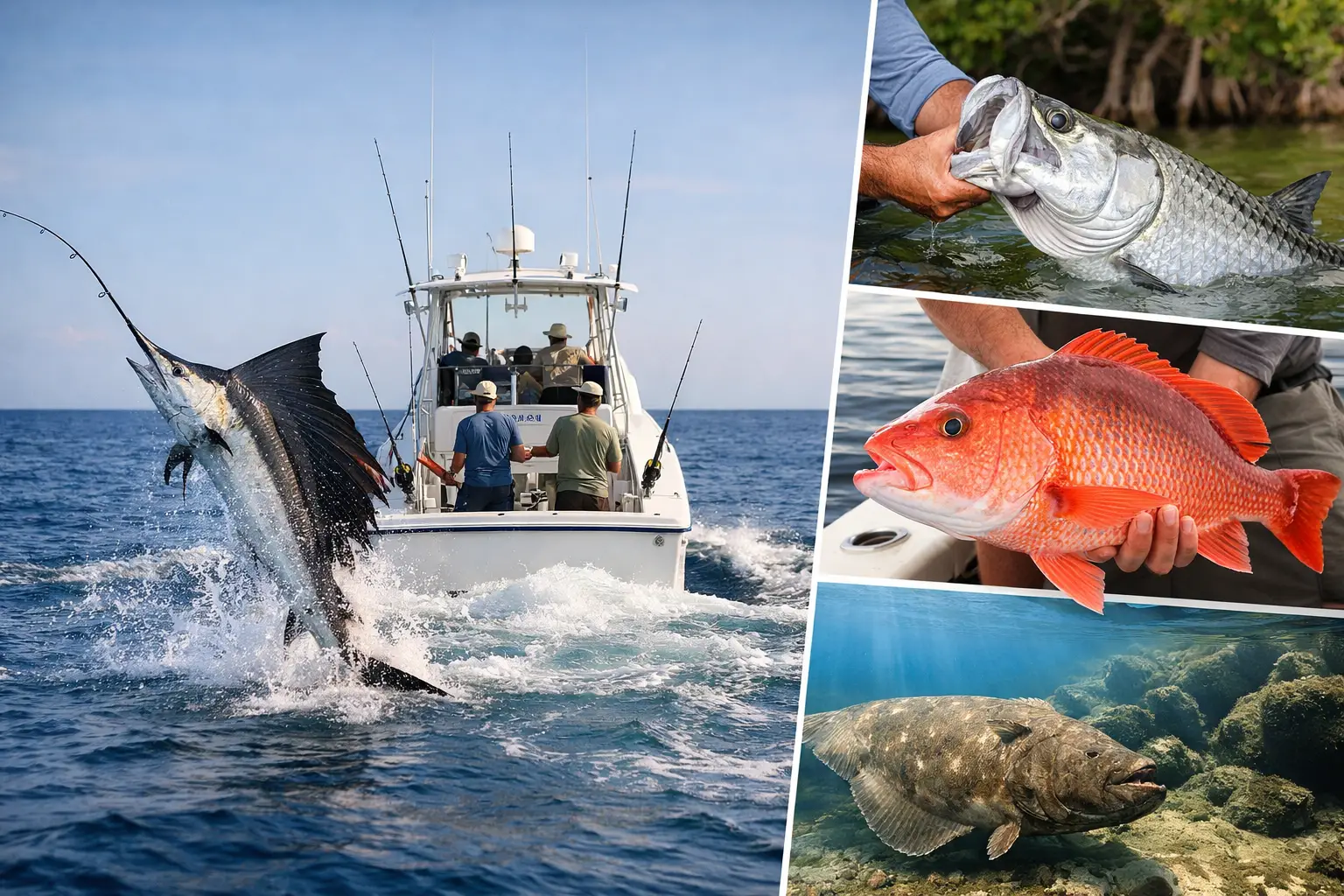
The best fishing charters do not start with a random marina, a vacation zip code, or the first boat with an open date. They start with one question: what do you want to catch? A redfish trip in skinny marsh water is a different day than chasing yellowfin tuna offshore, and both can be great trips when the boat, captain, season, and expectations line up.
That sounds obvious, but it is where plenty of anglers lose time. They book a generic "deep-sea fishing" trip, then realize the boat is geared for bottom fishing when they had pelagic fish in mind. Or they choose the cheapest half-day option and expect a full-day run to the best grounds. Start with the fish, then work backward to the right water, trip type, and captain.
Choose Your Fish Before You Choose Your Boat
Species tells you more about a charter than a boat photo ever will. It points to the water you will fish, the gear in your hands, the likely run time, and the kind of fight you can expect.
Want redfish, snook, speckled trout, flounder, or striped bass? You may be looking at an inshore trip through bays, marshes, flats, tidal rivers, or backcountry creeks. These trips are often a strong fit for families, first-timers, and anglers who want more time fishing and less time running offshore. Light tackle, changing tides, casting around structure, and local knowledge are usually part of the deal.
Want mahi-mahi, wahoo, sailfish, tuna, marlin, or king mackerel? You are generally looking at offshore or deep-sea fishing. The runs can be longer, the weather matters more, and a full-day trip may be the practical choice. Offshore fishing can deliver a bucket-list fish, but it is not always the right move for a group with young kids, limited sea legs, or a hard afternoon flight home.
Reef-and-wreck trips sit in their own useful lane. Snapper, grouper, amberjack, triggerfish, cobia, and sea bass often mean structure fishing over reefs, ledges, oil rigs, or wrecks. It can be action-packed, productive for a fish dinner, and more accessible than a long bluewater run. But regulations, harvest seasons, and size limits can change what goes in the cooler.
Freshwater trips deserve the same species-first thinking. A muskie angler needs a different captain than someone seeking crappie. Smallmouth bass on a river, salmon on the Great Lakes, and trophy catfish on a reservoir all call for specialized local knowledge. A captain who targets your fish regularly knows the seasonal patterns, current conditions, and equipment that give you a legitimate shot.
Fishing Charters Are Not One-Size-Fits-All
Trip length is one of the biggest decisions you will make. A four-hour charter can be perfect for inshore fishing close to the dock. It is often enough time to learn the basics, catch a variety of fish, and keep the day fun for newer anglers.
For nearshore and offshore trips, shorter is not always cheaper in the way it seems. If the captain needs an hour or more to reach productive water, a half-day can leave limited fishing time after the ride out and back. A six-, eight-, or ten-hour trip gives the day room to breathe. It also allows the captain to change plans if the first bite is slow.
Private charters offer the most control. You can talk through your group, target species, skill level, and priorities with the captain before leaving the dock. Shared trips can cost less per person and are a solid choice for solo anglers, but you will be fishing on someone else’s timetable and may have less say in the plan.
There is no universally better format. The right trip depends on whether you want a relaxed family outing, a meat-fishing day, technical fly-fishing, a tournament tune-up, or a hard-charging shot at one serious fish.
Read a Captain Profile Like an Angler
A charter captain is not just a boat operator. They are the person reading tide changes, bait movement, weather windows, water temperature, seasonal migrations, and the mood of the fish. That local pattern knowledge is what you are paying for.
Look for clear signs of specialization. If you want permit on the flats, find a captain who talks specifically about permit, tides, shallow-water presentation, and the areas where that fish is actually pursued. If you want tuna, look for real offshore experience, appropriate trip lengths, and recent fishing reports that match the season.
Photos and videos are useful when they show consistency, not just one memorable catch from three years ago. Pay attention to the species shown, the size of the groups onboard, the fishing style, and whether the captain’s operation feels aligned with your day. A clean center console built for fast offshore runs may not be the same experience as a roomy bay boat designed for shallow-water sight fishing.
Reviews matter, but read beyond the star rating. The most useful reviews mention communication, patience with beginners, safety, equipment, effort, and whether the captain adjusted to conditions. A captain who cannot promise fish but works hard and communicates honestly is worth more than a profile full of vague hype.
Let Season and Conditions Set Expectations
Fishing is not a vending machine. A target species may be present year-round in some places, but its best season, preferred water, and feeding behavior can change dramatically. Tarpon may be the headline fish in a coastal town, yet the most reliable window could be a few months long. Salmon runs have timing. Tuna fisheries shift. Even dependable inshore species respond to cold fronts, water clarity, wind, and tidal movement.
Ask what is realistically biting during your travel dates. A good captain will tell you what is likely, what is possible, and what is a long shot. That answer may lead you to a better trip than the one you had pictured.
Flexibility helps. If your dream fish is not cooperating, a captain may pivot to a productive backup species or change from open water to protected backcountry. That is not a bait-and-switch when it is discussed honestly. It is professional decision-making based on the day you were dealt.
Weather is part of the deal, especially offshore. Wind and sea conditions can turn an ambitious plan into an unsafe or miserable ride. Build a little schedule cushion into a destination trip when possible. If the weather cancels your first date, an extra available day can save the whole experience.
Ask the Questions That Prevent Bad Surprises
Before booking, confirm what the trip includes and what you need to bring. Most charter operations provide rods, reels, tackle, bait, licenses, and safety equipment, but do not assume. Ask about fish cleaning, ice, bottled water, food, fuel charges, gratuity, and whether there is a maximum number of anglers.
Be direct about your group. Tell the captain if someone is six years old, has never held a rod, gets seasick, needs mobility accommodations, or is determined to fish with a fly rod. Those details help the captain recommend the right trip instead of forcing the wrong group into the wrong plan.
It is also smart to ask about the captain’s cancellation policy and the weather call. Reputable operators take safety seriously, and the captain has the final say when conditions are not fit for the boat or the crew. If a policy is unclear before you pay a deposit, get clarity first.
Find the Right Fit, Then Book With Confidence
Searching by species cuts through the noise. Instead of scrolling through broad travel listings and hoping a captain happens to target your fish, narrow the field by what you want to catch, where you want to fish, and the trip style that fits your crew. Unreel Charters helps anglers do exactly that across more than 8,500 charter operations in 49 states.
Once you have a short list, compare the details that matter: target species, trip duration, boat setup, group size, seasonal availability, and captain communication. Do not choose solely on price. The least expensive trip can be a good value, but only if it is built for the experience you actually want.
A well-matched charter can turn one free day on the water into the story your crew talks about for years. Pick the fish that gets you fired up, give the captain an honest picture of your group, and leave enough room for the conditions to shape the plan. That is how you stack the odds in your favor before the first line hits the water.