A good fly fishing day is rarely about showing up with a new rod and hoping the water cooperates. It starts with a clear target: tailing redfish on a quiet flat, trout rising in a cold mountain river, striped bass crashing bait, or a permit that makes every cast count. Use this fly fishing trip guide to match the fish you want with the water, season, and guide who can put you in the right position.
The biggest booking mistake is treating all fly trips as the same experience. They are not. A half-day wade trip for stocked trout, a skiff ride across a Florida flat, and a walk-and-wade pursuit of wild Western trout demand different skills, gear, budgets, and expectations. Start with the catch you want, then build the trip around it.
Start With the Fish, Not the Destination
Choosing a destination first can work if you are planning a broader vacation. But if fishing is the point, let the species lead. A captain or guide may work excellent water and still not offer the trip you actually have in mind.
For newcomers, redfish, speckled trout, smallmouth bass, and many trout fisheries can offer consistent action and plenty of casting reps. They are strong choices for learning how to manage line, read current, and make short, accurate presentations. That does not mean they are automatic catches. Wind, water clarity, pressure, and tide can make any fish selective.
For a technical challenge, look at bonefish, permit, tarpon, steelhead, carp, muskie, or wild trout on heavily pressured rivers. These trips often reward experience, patience, and a willingness to make a lot of casts without a lot of takes. They can be unforgettable, but they are not always the right call for a first-time angler or a group that wants nonstop action.
Be honest about the day you want. If you are bringing kids, celebrating a birthday, or introducing a friend to fly fishing, tell the guide. A skilled pro can choose water and species that give the group a real shot at success instead of forcing everyone into a high-pressure technical fishery.
Match the Water to Your Fly Fishing Trip
Once you have a species in mind, the water type tells you what the day will feel like. This is where photos can be misleading. A calm-looking flat may require long casts into wind. A river full of trout may involve slick rocks, deep wading, and hours of mending line.
Flats and inshore saltwater
Flats trips are built around sight fishing. You may stand on the bow of a skiff while the guide poles through skinny water, calling out fish and directing your cast. Redfish, bonefish, permit, snook, and juvenile tarpon are common targets depending on the region.
Expect early starts, changing tides, bright sun, and wind. The payoff is one of fishing's best visual moments: spotting a tail, push, shadow, or nervous-water wake, then putting a fly in front of a fish you can actually see. If you get motion sick, ask about boat time and running distance before you book.
Rivers and streams
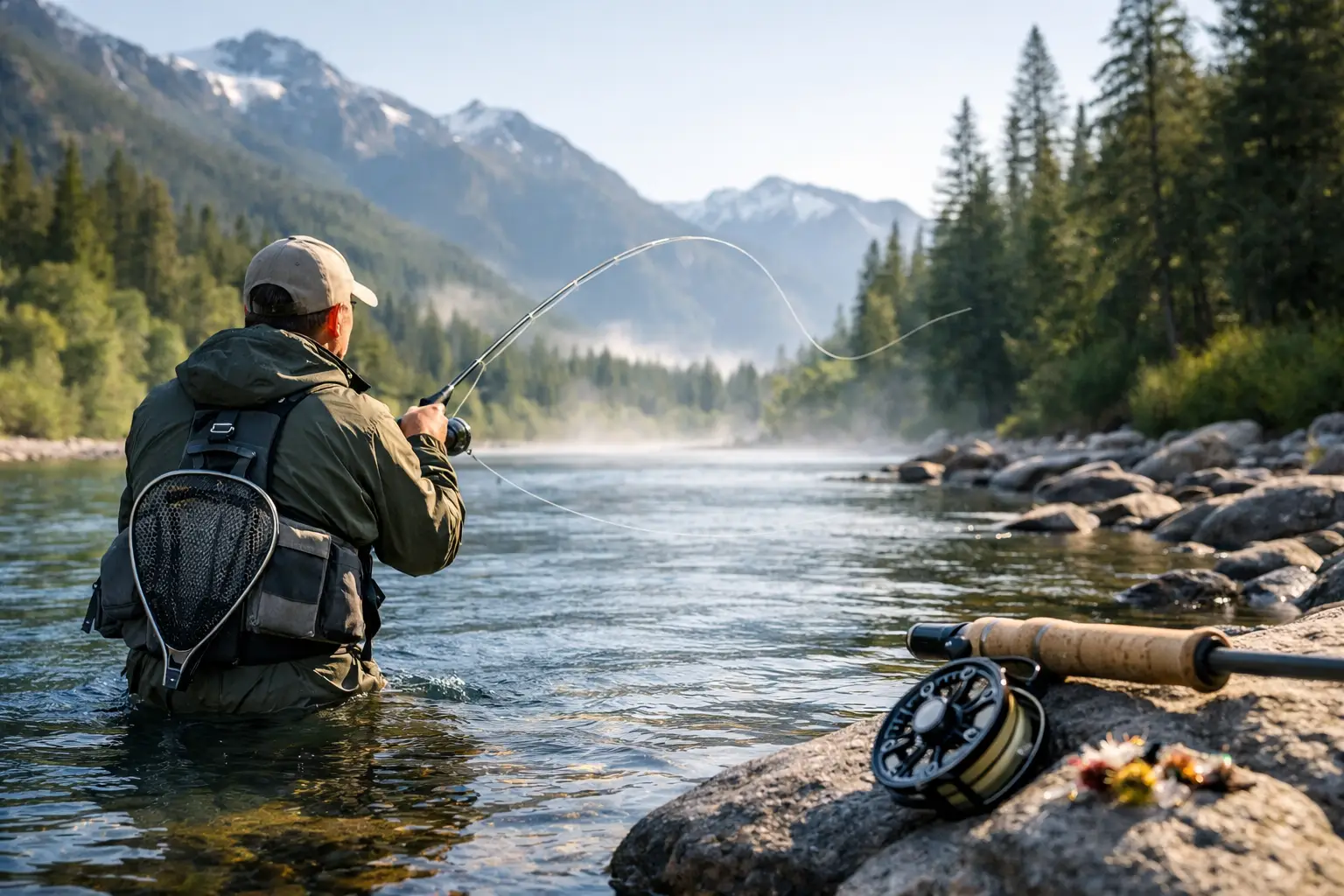
Freshwater trips may involve floating, wading, or a mix of both. Float trips cover more water and can be easier physically, especially for anglers who cannot handle long wades. Walk-and-wade trips are more intimate and often better for learning how to read seams, pocket water, and fish-holding structure.
Ask whether the guide supplies waders and boots, and be clear about your mobility. A "beginner-friendly" river can still include uneven banks, slippery cobble, and cold water. It depends on the access point and the conditions that week.
Lakes, bays, and big water
Stillwater and open-water fly trips can mean bass around vegetation, pike in shallow bays, stripers chasing bait, salmon runs, or even offshore species when conditions allow. These trips are often more boat-dependent, and casting may be repetitive: strip, pause, strip, pause, then hang on.
Big water gives you room to hunt moving fish, but weather has more say in the plan. A responsible guide may change the launch, target species, or trip area to keep the day safe and productive. Flexibility is part of the deal, not a bait-and-switch.
Choose a Guide Who Fits the Mission
The right guide is more than someone with a boat and good fish photos. They should know the water, communicate clearly, and have a plan that fits your experience level. Local knowledge matters most when tides shift, a cold front muddies the flat, runoff changes a river, or fish abandon their usual pattern.
Before booking, get straight answers to a few practical questions:
- What species are realistic during my dates, and what is the backup plan if conditions change?
- Is this a wading trip, a boat trip, or both, and how physically demanding is it?
- Are rods, flies, leaders, waders, licenses, and drinks included?
- How many anglers will fish, and will everyone get meaningful time on the bow or casting lane?
Pay attention to how the guide answers. "We'll catch anything" is not a plan. A better answer sounds like this: redfish should be reliable on a morning flood tide, trout are the fallback if wind kills visibility, and the boat has eight-weights if you do not own one. That is the kind of local, no-BS detail that helps you book with confidence.
When comparing options, search by species and trip type before narrowing by location. Unreel Charters is built around that approach, helping anglers find captains based on what they want to catch instead of scrolling generic vacation listings.
Plan Around Season, Weather, and Tide
Fish do not read travel itineraries. Prime seasons are useful, but they are not guarantees, and shoulder seasons can be excellent when crowds thin out.
In saltwater, tide is often the clock. Redfish may push shallow on a rising tide, while other stages put fish along drains, oyster edges, channels, or deeper holes. Wind direction and water clarity can matter just as much as the calendar. A guide may want to move your departure time to line up with the best tide window. If your schedule allows it, take that advice.
In rivers, water temperature, flow, hatches, and recent weather can change everything. Spring runoff may make wading tough but create opportunities in lower, clearer stretches. Summer can bring dry-fly fishing at dawn and dusk, while midday demands deeper nymphing. Fall may offer aggressive fish and great scenery, but storms can close access fast.
Book early for destination fisheries and peak dates. Then leave room in your travel plan for weather. If a permit day gets blown out or a river becomes unfishable after rain, having an extra day can turn a frustrating trip into the one you remember.
Set a Realistic Budget Before You Commit
The charter rate is only part of the cost. Factor in license requirements, gratuity, travel, lodging, food, rental gear, and flies you may lose to trees, oysters, rocks, or fish. For guided fly fishing, a 15 to 20 percent tip is common when the guide works hard, communicates well, and delivers the trip promised, even if conditions make the bite difficult.
A lower day rate is not always the better value. A guide who includes quality gear, manages a small group, runs a well-maintained boat, and knows the fishery can save you from wasting a vacation day. On the other hand, do not pay for a full-day technical mission if a relaxed half-day nearshore or trout outing better fits your group.
Ask about cancellation and weather policies in writing. Weather calls should belong to the captain or guide when safety is involved. The good ones protect your day when they can, but they will not gamble with people or equipment to avoid a refund conversation.
Show Up Ready to Fish
You do not need to own every piece of fly gear to take a guided trip. Most guides can provide suitable rods and flies, especially for beginners. Still, confirm it beforehand and ask what clothing works for the conditions.
For most trips, polarized sunglasses, a hat, sun protection, water, weather layers, and closed-toe footwear are non-negotiable. Saltwater anglers should favor light, quick-drying clothing and sun gloves. River anglers need layers that stay warm when wet and rain protection that does not restrict casting.
Practice one thing before the trip: getting 30 to 40 feet of fly line out without tangling it around yourself. You do not need a perfect double haul to catch fish, but a little line control gives your guide more time to teach and gives you more shots when a fish appears. On a flats boat, keep the deck clear and listen when the guide calls a fish. A fast, short cast is usually better than a heroic false-casting performance.
Build the Day Around a Good Shot
The best guided fly fishing trips are not measured only by numbers. Maybe the weather turns rough, the fish get spooky, and you land one redfish after six solid chances. If that fish came after a quiet approach, a clean cast, and good direction from a guide who knows the water, that is a day earned.
Pick the species that fires you up, book a guide who speaks plainly about the conditions, and arrive ready to learn. The right water will do the rest when the moment comes.