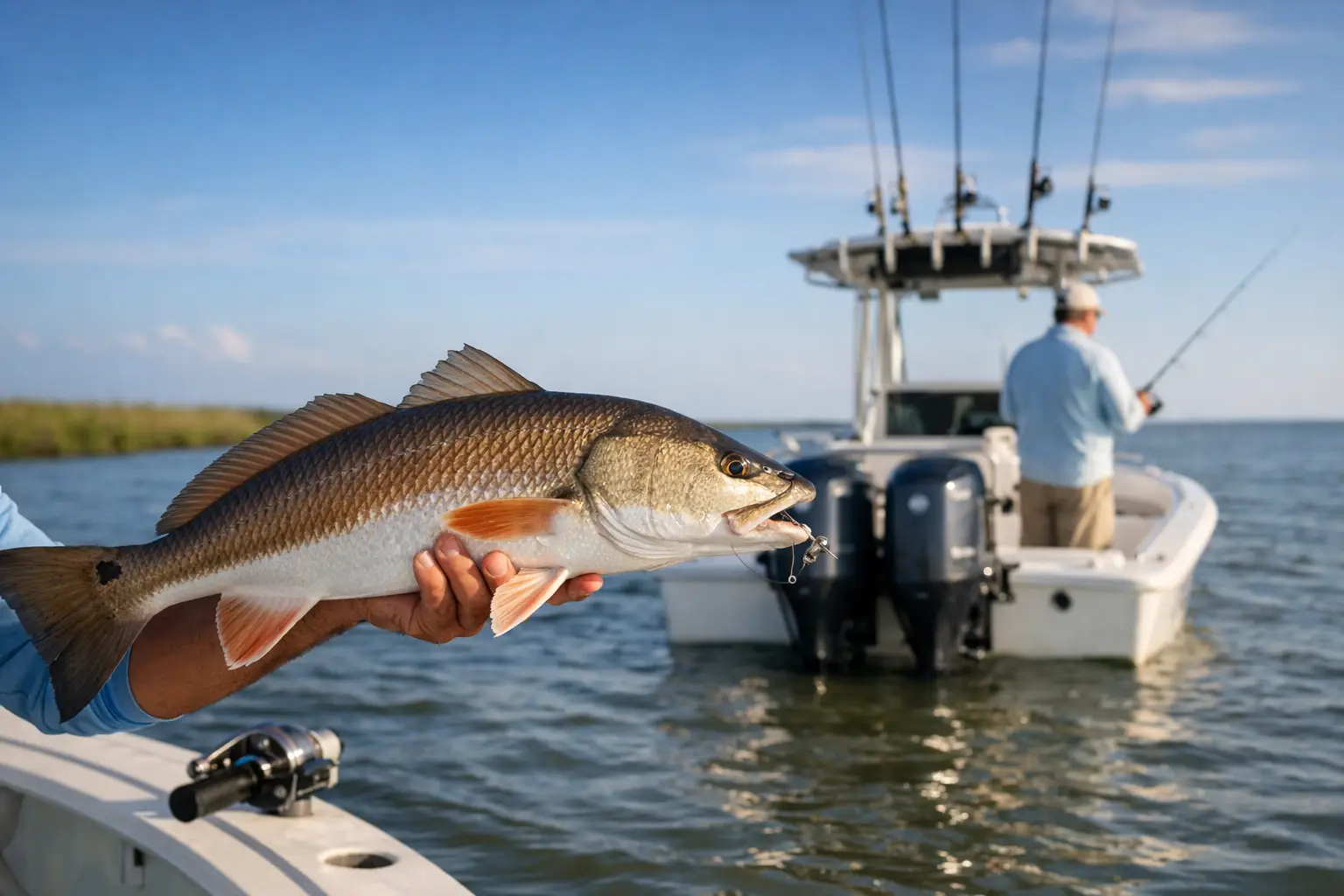
A redfish tail breaking the surface over a flooded grass flat is the kind of sight that turns a casual inshore trip into a full-blown addiction. But redfish fishing charters are not all the same. The right captain, tide, boat, and fishery can mean steady shots at copper-colored bruisers. The wrong fit can leave your group running long distances, fighting wind, or fishing water that does not match what you had in mind.
Redfish are available in a huge stretch of coastal water, from the Gulf Coast around Florida and up the Atlantic seaboard. That range is good news for anglers, but it also means “redfish trip” can describe very different days on the water. Start with the fish you want, then match the trip to the place, season, and experience you actually want.
Redfish Fishing Charters Start With Your Goal
Before you compare captains, decide what a successful day looks like for your crew. A first-time angler may want consistent action, protected water, and a captain who is comfortable teaching the basics. An experienced angler may be looking for a sight-fishing day on the fly, a slot-limit fish for dinner, or a shot at a 30-pound bull red in open water.
Those goals affect everything from where you fish to how long you should book. A family-friendly backcountry trip often focuses on redfish alongside speckled trout, flounder, black drum, or sheepshead. It keeps the rods bending and gives everyone more chances at a fish. A dedicated redfish hunt can be more technical. You may pole shallow flats, make long casts to cruising fish, and wait for the right tide window.
Be direct when you contact a captain. Say whether you want to catch your first redfish, target a trophy, sight-cast artificial lures, bring kids, or fill a cooler within local regulations. A good guide will tell you whether that plan fits the current conditions instead of promising a fantasy bite.
Pick a Redfish Fishery That Fits Your Style
Redfish live around marsh edges, oyster bars, grass flats, mangrove shorelines, docks, passes, and beaches. The setting changes by region, and so does the trip.
Louisiana is a strong choice for marsh fishing, especially for anglers who want frequent opportunities and a real shot at oversized reds. The shallow-water program is often built around baitfish, broken marsh, and muddy ponds. Visibility can vary, so the day may lean more toward casting to likely structure than spotting every fish from a distance.
Florida offers a wide menu. The Gulf Coast has grass flats, mangrove shorelines, and beach opportunities. Florida’s Atlantic side can produce excellent lagoon and inlet fishing, with seasonal runs of big fish around passes and nearshore waters. If sight-fishing is the priority, ask specifically whether the captain expects clean enough water and the right sun angle to find fish.
The Texas coast is known for expansive bays, marsh drains, and shallow flats. It can be a great fit for anglers who like a mix of artificial-lure fishing and live-bait action. The Carolinas and Georgia offer productive marsh systems, creeks, and estuaries, where tide movement plays a major role in where reds feed.
There is no single “best” state for every angler. The best destination is the one that aligns with your season, budget, travel plans, and preferred style of fishing. A nearby half-day trip with a captain who knows the local tide can beat an expensive destination trip booked at the wrong time of year.
Know the Difference Between Slot Reds and Bull Reds
A slot redfish is a fish that falls within the harvest size range set by state regulations. Exact limits change by state and can change over time, so your captain should confirm the current rules before the trip. These fish are common targets in marshes, bays, and shallow inshore water.
Bull reds are the larger, mature fish often found near passes, beaches, jetties, and deeper channels during seasonal movements. They pull hard, make long runs, and are often catch-and-release fish because of regulations or conservation-minded captain practices. If a photo with a big red is your main goal, tell the captain. It may require a different launch point, heavier tackle, and a longer run than a standard inshore trip.
Match Trip Length to the Bite and Your Crew
A four-hour charter is a smart call for young kids, first-timers, or groups with tight travel schedules. It is enough time to learn the rhythm of inshore fishing and catch fish when the bite is close to the dock. It also leaves less room to adjust if wind, weather, or a slow tide gets in the way.
Six- and eight-hour trips give a captain more options. They can fish a stronger part of the tide, move between areas, and spend time looking for better-quality fish rather than settling into the first spot that produces. For dedicated anglers, a full day is usually the better value because redfish behavior often changes with water movement, temperature, and light.
Do not assume a longer trip guarantees bigger fish. It increases flexibility, not certainty. The captain is still working with weather and the conditions that day. But if you are traveling for a specific redfish experience, extra time on the water is usually worth considering.
What to Ask Before Booking a Redfish Charter
You do not need to interrogate a captain. A few useful questions will quickly show whether the trip is a match. Ask what type of water you will fish, whether the trip is mostly live bait or artificials, and how much hands-on instruction is included. If you have a target, ask how realistic it is during your travel dates.
Also ask about the boat. A shallow-draft skiff is ideal for skinny-water redfish but may offer less shade, less seating, and a rougher ride on open bays. A larger bay boat can handle rougher water and accommodate more people, though it may not reach every shallow flat. Neither setup is automatically better. It depends on who is coming and how you want to fish.
Clarify what is included, too. Most charters provide rods, reels, tackle, bait, licenses, and safety gear, but details vary. Confirm the meeting location, departure time, recommended clothing, what happens in bad weather, and whether fish cleaning is available when legal harvest is part of the plan.
If you are comparing several options, use a species-first search rather than scrolling through generic vacation listings. Unreel Charters helps anglers narrow the field by target fish, location, and trip type, so you can look for a redfish captain before you commit to a random dock or marina.
Timing Matters More Than a Perfect Forecast
Redfish can be caught year-round in much of their range, but every season has a different personality. Cooler months can bring fish into shallow sun-warmed water and make them easier to pattern on certain flats. Summer brings early starts, hot conditions, and productive low-light windows. Fall can produce excellent feeding activity and, in many areas, a chance at larger fish moving toward passes and beaches.
Tide often matters more than the calendar. In marsh country, a rising tide may push fish into flooded grass. As water falls, reds can funnel through drains and cuts. On flats, the best window might be the hour when enough water covers the fish but not so much that they scatter into endless shoreline habitat.
Your captain will make the final call based on the day’s wind, water clarity, tide stage, and recent pattern. That local decision-making is a major reason to book a guide instead of trying to force a plan from a fishing report written last week.
Show Up Ready to Fish, Not Overpacked
Bring polarized sunglasses, sun protection, water, and footwear that works for wet decks. Wear quick-dry layers instead of heavy cotton, and pack a light rain shell when the forecast is uncertain. If you get motion sickness, take your preferred medication early enough for it to work before leaving the dock.
Leave most tackle at home unless you have discussed it with the captain. Charter gear is selected for the fishery, and a pile of extra rods can crowd the boat. If you are a fly angler or have a favorite lure setup, mention it beforehand. A captain can tell you whether it fits the conditions and make room for it.
The best redfish day is not always the one with the biggest fish. It might be a kid feeling that first hard thump, a clean cast landing ahead of a cruising tail, or a captain putting your group on fish when the wind tried to wreck the plan. Choose the captain who understands the kind of day you want, then let the tide write the rest of the story.