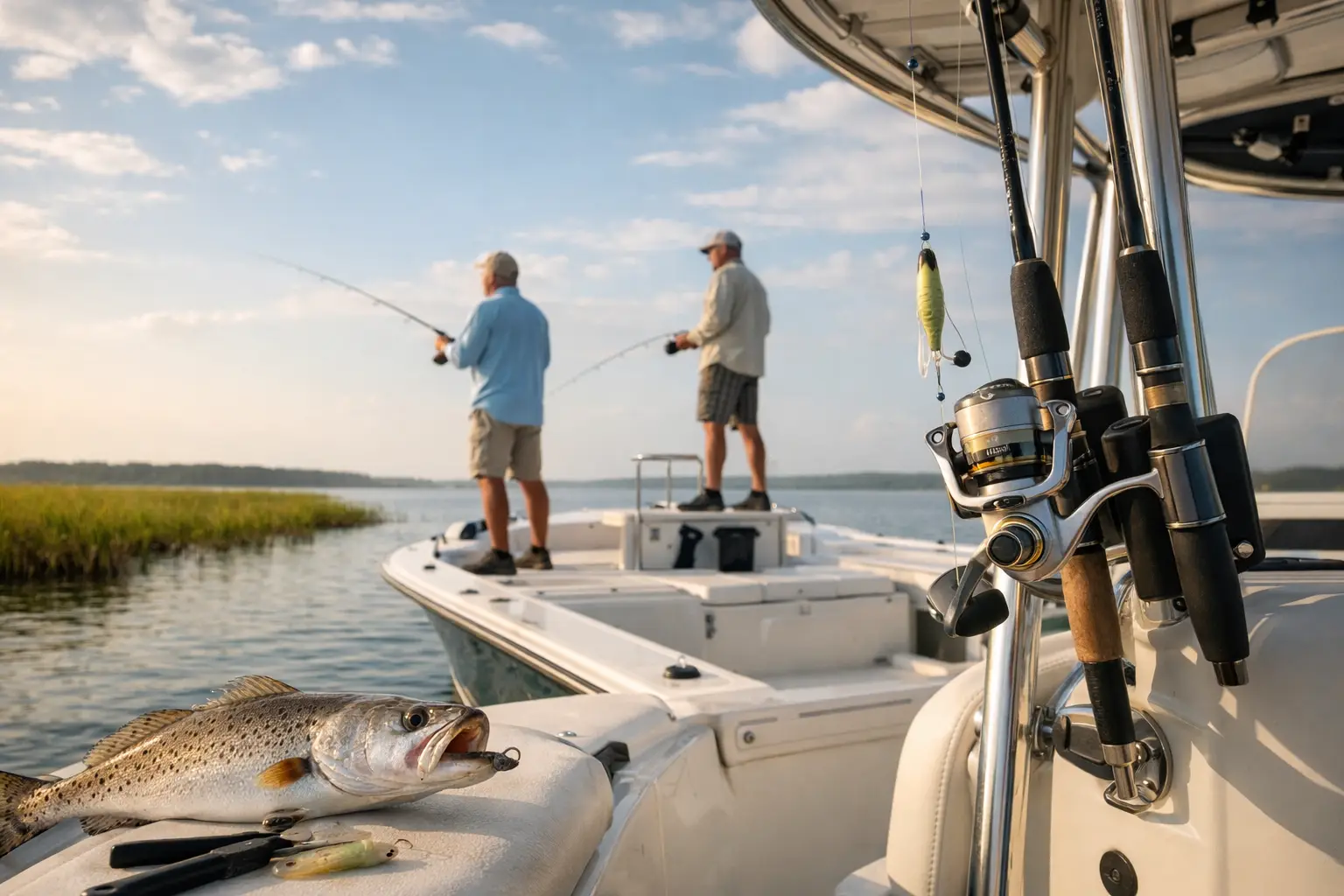
The best inshore fishing charters do not start with a random marina or the cheapest open date. They start with a fish. Maybe you want a redfish pushing across a Louisiana marsh flat, snook tucked beneath a Florida mangrove line, speckled trout over grass, or flounder waiting along a Carolina creek mouth. Name the catch you want, then find the captain who spends real time putting clients on it.
Inshore trips are one of the most accessible ways to fish saltwater, but they are not all the same. Water depth, tides, boat layout, local seasons, and a captain's specialty can turn two trips advertised as inshore fishing into completely different days. A little homework before you book means less time guessing and more time making a cast when it counts.
What Inshore Fishing Charters Actually Cover
Inshore fishing generally happens in protected or near-protected water: bays, estuaries, marshes, tidal creeks, sounds, backcountry channels, flats, and rivers near the coast. Boats commonly run from shallow-draft skiffs to bay boats, often working water that is just a few feet deep. You may be sight-fishing, casting lures around structure, drifting grass flats, or soaking bait near an oyster bar.
That protected-water setting is a big reason inshore trips work for so many anglers. You are usually closer to the launch, less exposed to rough offshore seas, and able to spend more of the day actively fishing. It is a strong fit for first-timers, families with kids, and serious anglers who want technical light-tackle action without a long run to blue water.
Still, inshore does not automatically mean easy. A tailing redfish in skinny water, a laid-up snook under a dock, or a permit cruising a flat can demand quiet boat handling, accurate casts, and good timing. The captain handles the local puzzle. Your job is to choose one whose puzzle matches the day you want.
Start With the Species You Want to Catch
Location matters, but species should lead the search. A captain who is excellent at winter trout on Texas bay systems may not be the right call for a summer sight-fishing trip for redfish. A Florida backcountry guide may be dialed in on snook and tarpon but rarely target flounder. The fish tells you what water, season, tackle, and captain experience to look for.
Common inshore targets vary by coast and season. Redfish are a top draw from the Gulf through the Southeast and Mid-Atlantic. Speckled trout, black drum, flounder, striped bass, snook, tarpon, sheepshead, bonefish, and permit can all be inshore possibilities in the right region. On the West Coast, anglers may work bays and harbors for halibut, spotted bay bass, calico bass, and white seabass depending on the fishery and the trip's range.
Be specific when you contact a charter. Tell the captain whether you care most about a personal-best fish, steady action, table fare, fly fishing, artificial lures, or a mixed-bag day. There is no wrong answer, but there is a difference between a kid-friendly live-bait trip built around bent rods and a technical sight-casting day where a dozen good shots may be a win.
Season Changes the Game
Fish follow water temperature, bait, spawning patterns, and changing tides. That means the best target in one month may be a poor bet the next. For example, cooler months can bring strong trout and striped bass opportunities, while warmer weather may put snook, tarpon, and topwater redfish higher on the list in some regions.
Do not book based on a photo from last year without asking what is happening now. A good captain will set realistic expectations and may steer you toward a better seasonal option. That is useful local knowledge, not a sales pitch.
Choose a Trip That Fits Your Group
A four-hour inshore trip can be enough for a family to learn the basics, catch fish, and get back before the heat or afternoon storms build. A six- to eight-hour trip gives a captain more room to follow a tide, make a longer run, change tactics, and wait out a slow bite. If you are traveling for one big fishing day, the longer option often gives you more chances to capitalize on changing conditions.
Group size matters just as much. A flats skiff may be perfect for one or two anglers who want a quiet, technical experience. It can feel cramped with four adults casting at once. A bay boat may provide more deck space, shade, and stability for families, but it may not pole as shallow as a skiff. Ask how many people will fish comfortably, not simply how many the boat is licensed to carry.
Think honestly about your crew's experience. New anglers benefit from captains who enjoy teaching knots, casting, bait presentation, and fish handling. Experienced anglers may want room to bring fly rods, throw artificials, or focus on a single species. Both are legitimate trips. They just call for different guides.
What to Ask Before Booking Inshore Fishing Charters
A quick conversation can tell you far more than a generic trip description. Ask what species the captain expects to target during your dates and what a typical day looks like. Find out whether the trip uses live bait, artificials, fly gear, or a mix. If you have a preference, say it up front.
You should also ask what is included. Most captains provide rods, tackle, bait, licenses where required, safety equipment, and a cooler for drinks. Policies vary on fish cleaning, food, fuel surcharges, and whether guests should bring their own rain gear or polarized sunglasses. Clear details prevent marina-side surprises.
Weather is another conversation worth having before you send a deposit. Inshore waters are often more forgiving than offshore waters, but wind, lightning, extreme cold, and unsafe tides can still affect a trip. Ask about the cancellation and rescheduling policy, then stay flexible if your captain recommends moving the date. A captain who calls off an unsafe day is protecting your group, not costing you a fishing trip.
Finally, ask about the captain's recent fishing reports in plain language. You do not need secret spots. You need to know whether the guide is actively focused on the species and style of fishing you booked.
Read a Charter Listing Like an Angler
Photos of big fish are fun, but they should not be the only factor in your decision. Look for the details that explain how a captain fishes: target species, trip length, boat type, departure area, group capacity, and whether the trips are built for beginners, families, or advanced anglers.
Video can be especially useful. It shows the boat's layout, the actual water being fished, how guests move around onboard, and the captain's style. A polished fish photo is nice. A clear look at a captain running a shallow flat, helping an angler cast, or working a tide line tells you what the trip may really feel like.
Search tools should make this easier, not bury the good options under generic vacation listings. On Unreel Charters, anglers can narrow the field by species, fishing location, and trip type, then contact the operations that fit. That species-first approach matters when your goal is a redfish in the marsh rather than just a boat near the beach.
Prepare for a Better Day on the Water
Pack light, but pack smart. Bring polarized sunglasses, sunscreen, a hat, water, weather-appropriate layers, and shoes with good grip that will not mark the deck. If you get motion sickness, ask your captain whether the planned water is likely to be rough and take any medication well before departure.
Listen during the safety briefing and let the captain know about physical limitations, first-time anglers, or kids who may need extra help. On a shallow-water trip, quiet movement can matter. On a dock or mangrove bite, a cast placed two feet differently can be the difference between a strike and a missed chance.
The goal is not to force a postcard version of fishing. Tides shift, weather moves, and even the best local bite can slow down. Book a captain who communicates clearly, choose a target that fits your dates, and show up ready to fish. When the water comes alive and a redfish wakes across the flat, you will be glad you planned for the real trip instead of the brochure version.