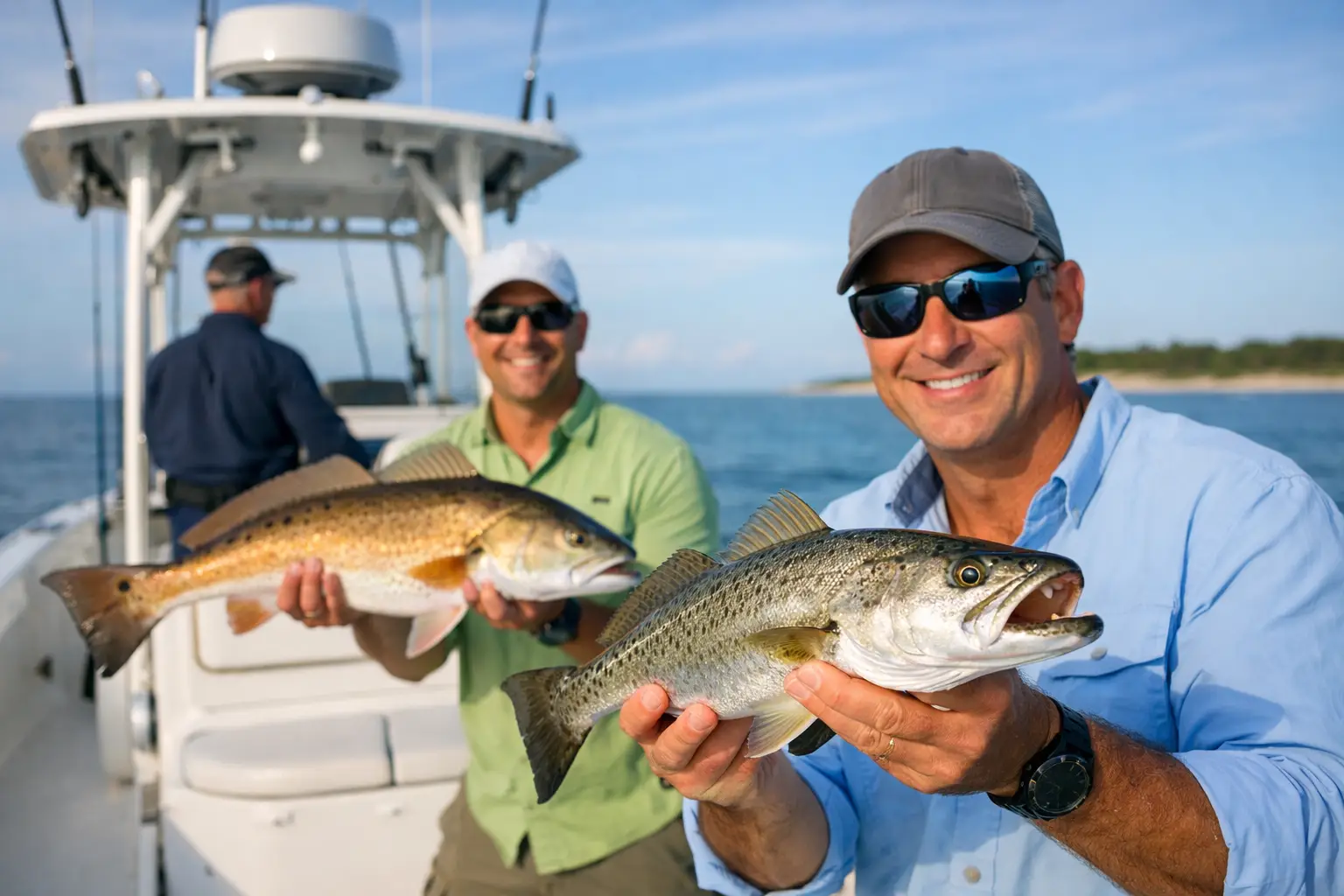
A reef line comes alive faster than most anglers expect. One minute you are running out of the pass with the shoreline still in sight. The next, somebody is tight on a hard-pulling amberjack, a snapper is thumping a live bait, and the captain is calling for another drop. That is the appeal of nearshore fishing charter trips: legitimate saltwater action without committing to a long offshore run.
Nearshore is not a single kind of trip. It can mean trolling for king mackerel off a beach, bottom fishing a wreck for snapper, working a near-coastal reef for grouper, or chasing cobia along a buoy line. The right trip starts with one question: what do you want to catch?
What Counts as a Nearshore Fishing Charter Trip?
Nearshore fishing generally happens outside the bays and inlets but closer to land than a true offshore or deep-sea trip. Depending on the coast, a captain may fish anywhere from a few hundred yards beyond the breakers to 15 or 20 miles out. Local geography matters more than a hard mileage rule.
On Florida's Gulf Coast, productive reefs and wrecks can sit close enough for a short run. Along the Carolinas, nearshore anglers may target Spanish mackerel, kingfish, cobia, sharks, and bottom species around artificial reefs. In the Northeast, a nearshore run might put you on striped bass, black sea bass, fluke, or bluefish. On the West Coast, kelp beds, rock piles, and islands can produce calico bass, yellowtail, rockfish, and more.
The distance is less important than the trip format. A nearshore charter is built around accessible ocean water, manageable run times, and a broad mix of species. It is usually the sweet spot for anglers who want bigger-water excitement without spending half the day running 30-plus miles offshore.
Why Nearshore Often Beats Offshore for a First Saltwater Trip
Offshore fishing has its place. If your goal is blue marlin, swordfish, yellowfin tuna, or a long-range pelagic run, there is no substitute. But offshore is not automatically the better charter.
Nearshore trips often give groups more time with lines in the water. The boat can reach fishing grounds quickly, which matters on a four- or six-hour booking. Shorter runs also make nearshore a practical choice for families, newer anglers, and anyone unsure how they will handle open water.
That does not mean nearshore fishing is easy or watered down. Big king mackerel can scream line. Cobia are stubborn. Amberjack fight like they have somewhere else to be. Sharks, tarpon in the right regions, and heavy reef fish can turn an ordinary day into a story your crew repeats for years.
The trade-off is species certainty. Nearshore captains work with weather, water temperature, bait movement, season, and regulations. A captain can target a fish, but nobody can promise one will cooperate. Be wary of any listing that makes fishing sound guaranteed.
Pick the Fish Before You Pick the Port
Many anglers start by choosing a beach town, then search for whatever charter is nearby. That works if the only goal is getting on the water. It is not the best path if you are hoping for a specific catch.
Start with the fish. Want a cooler of legal-eating fish? Look for nearshore bottom-fishing trips targeting species such as red snapper, mangrove snapper, vermilion snapper, black sea bass, flounder, or grouper where season and regulations allow. Want fast action and a reel-screaming bite? Spanish mackerel, kingfish, bonito, jacks, and bluefish may be a better fit. Want a single heavy fish? Ask about cobia, amberjack, bull redfish, shark, or tarpon opportunities in that region.
Then match the target to the right coastline and time of year. Red snapper seasons are tightly regulated and vary by state and federal waters. Cobia timing shifts with migration. Kingfish can be outstanding in warm months but location and bait patterns matter. A good captain will tell you what is realistically biting during your travel dates, not simply repeat the species printed on a website.
Unreel Charters makes that search easier by letting anglers begin with the species, then narrow down the location and trip type. That is a much better starting point than booking the first boat with an open calendar.
Match the Trip Length to the Kind of Fishing
A half-day nearshore charter is often enough for a solid introduction, especially when the captain's spots are close and the bite is active. It can be ideal for families with kids, vacation groups, or anglers who want to fish hard without turning the day into an endurance event.
A six- or eight-hour trip gives the captain more options. There is time to run farther if conditions allow, switch tactics when one bite slows, and spend longer working reefs, wrecks, or bait schools. If catching keepers for dinner is the priority, extra time is usually worth considering.
Do not book an eight-hour trip just because it sounds more serious. A nervous first-timer may have more fun on a productive four-hour run. On the other hand, experienced anglers should not expect a short trip to cover multiple distant spots, troll for kings, and fill the box on bottom fish. Tell the captain your priority and let the trip length follow it.
Questions That Separate a Good Booking From a Guess
Before putting down a deposit, get practical. A charter's photos can look great while leaving out the details that affect your day. You do not need to interrogate the captain, but you should know what you are buying.
Ask these questions before you book:
- What species are the best nearshore targets during my dates?
- How long is the normal run to the fishing grounds?
- Is this a private boat or a shared trip, and how many anglers will be aboard?
- Are rods, tackle, bait, licenses, fish cleaning, water, and ice included?
- What happens if wind or seas make the planned trip unsafe?
- Is the price the full boat rate, per-person rate, or does it exclude fuel or gratuity?
The weather question matters most. Nearshore fishing is generally less exposed than a far-offshore run, but it is still ocean fishing. Wind direction, swell period, tide, and a passing storm can change the plan quickly. A professional captain will cancel or alter the trip when conditions call for it. That is judgment, not bad service.
Read the Boat and Captain Profile Like an Angler
A center console with a high bow may be perfect for a small crew chasing mackerel or cobia. A larger sportfisher can offer more shade, seating, and stability for mixed-age groups. Neither is universally better.
Look at the number of anglers the boat can fish comfortably, not only its legal capacity. Six people on board may be fine for trolling, but six people dropping bottom rigs around a wreck can get crowded fast. If your group includes young kids, older family members, or someone prone to motion sickness, ask about shade, seating, restroom access, and the expected sea conditions.
Also pay attention to how a captain describes the trip. Specific language is a good sign: target species, typical techniques, seasonal shifts, and an honest weather policy. Generic claims about catching everything, every day, are less useful than a captain who knows exactly when to pivot from trolling to bottom fishing.
Gear Up Without Overpacking
Most nearshore charters provide the fishing gear and terminal tackle you need. Confirm it, then leave the giant tackle bag in the car unless you have cleared personal gear with the captain. Space is limited, and a deck cluttered with unnecessary bags is no help when the bite starts.
Bring sun protection, polarized sunglasses, a hat that will not blow away, non-slip shoes, and a light rain layer. Pack any motion-sickness medication according to its directions, and take it before you get queasy. Food and drinks are worth discussing in advance, especially if there is a cooler on board or limits on glass containers.
If you plan to keep fish, bring a cooler for the ride home. Ask whether fish cleaning is included and make sure you understand local possession limits. A full cooler is only a win when the fish were legally harvested and handled well.
Let the Captain Fish the Conditions
The plan you imagined when booking may not be the plan that catches fish. A captain may leave the dock intending to troll for kings, then find dirty water, no bait, or an uncomfortable swell. Switching to a protected wreck bite may be the smartest move available.
Give input on your goal, but trust the local professional to read the day. Tell them if you care most about action, a meal, a trophy fish, or getting a beginner their first saltwater catch. Those priorities shape decisions throughout the trip.
The best nearshore days are rarely about following a rigid script. Choose the fish you want, book a captain who targets it honestly, show up ready to listen, and let the water decide the rest.