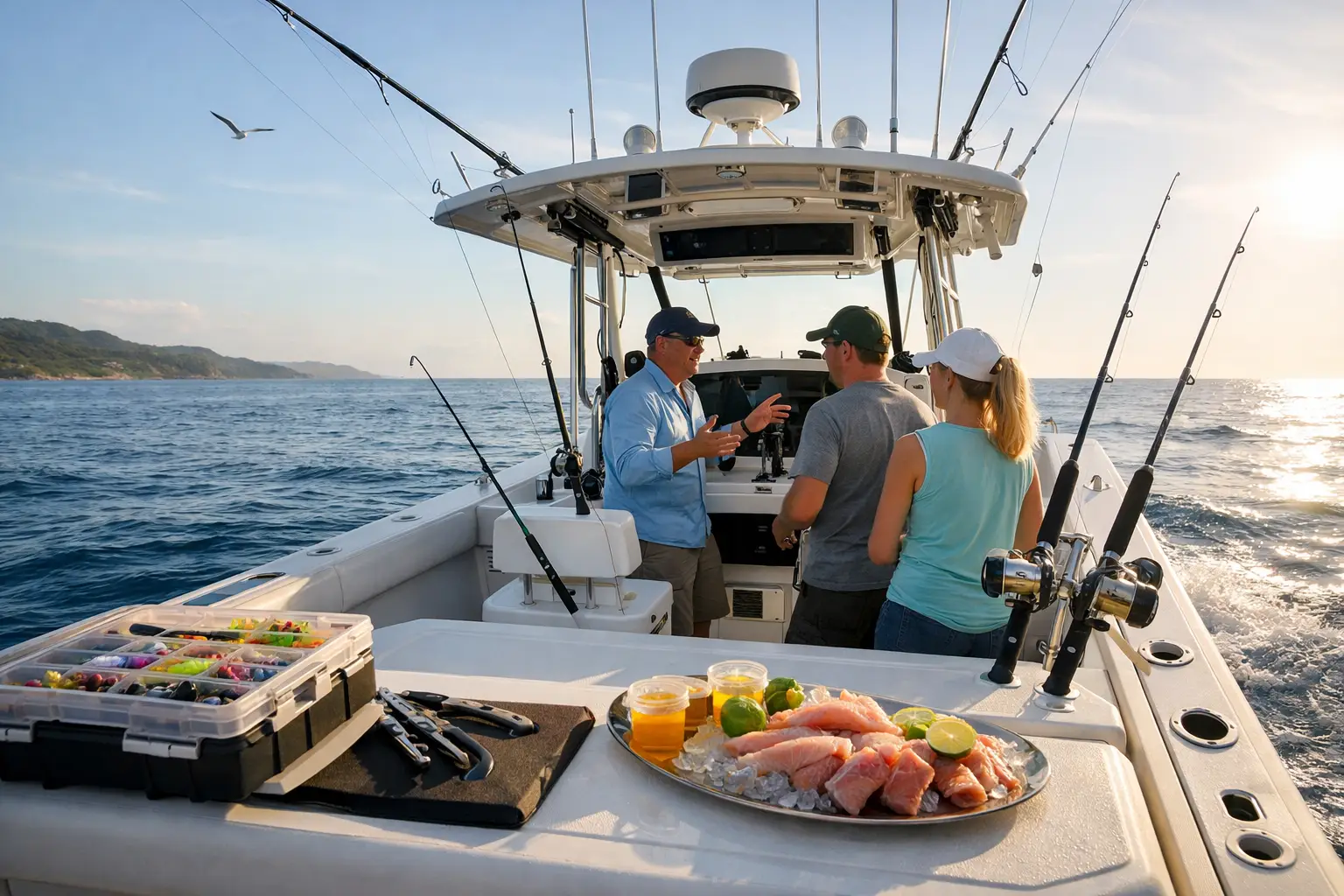
A four-hour redfish trip with your family is not priced like a 12-hour offshore tuna run, and it should not be. Private fishing trip cost comes down to the boat, the water you fish, the species you want, and how long it takes to put you on them. The number on a charter listing is only useful when you know what kind of day it buys.
For most anglers, a private charter means you are booking the whole boat, not buying a single seat. You choose who comes along, work directly with the captain on the plan, and split the price among your group however you like. That can make a private trip a better value than it first appears, especially for families, fishing buddies, or a crew with one fish in mind.
Typical Private Fishing Trip Cost in the U.S.
A short private inshore trip commonly runs about $450 to $750 for two to four hours. Half-day trips often land between $600 and $1,000, while full-day inshore or nearshore charters commonly range from $900 to $1,500. Those are broad working ranges, not a promise. A small skiff on protected water costs less to operate than a big offshore boat burning fuel to reach blue water.
Offshore and deep-sea trips usually start higher. Expect roughly $1,200 to $2,500 for an eight-hour private offshore charter in many markets. A serious 10- to 12-hour run for tuna, marlin, swordfish, or far-off reefs can run $2,000 to $4,000 or more. Boats built for long runs, heavy tackle, multiple anglers, and rougher water carry bigger fuel, maintenance, insurance, and crew costs.
Freshwater pricing has its own curve. A half-day bass, crappie, walleye, trout, or muskie trip may range from $350 to $700, with full days often falling between $500 and $1,000. Destination fisheries, specialty boats, peak-season salmon runs, and remote water can push that higher.
The useful question is not, “What is the cheapest private charter?” Ask, “What does it cost to fish for the species I want in the way I want to fish?” A low-priced trip is not a deal if it cannot reach the water or target the fish on your list.
What Changes the Price of a Private Charter?
Target species and distance offshore
Distance is one of the biggest cost drivers. Inshore redfish, snook, speckled trout, flounder, and striped bass may be close to the dock or reached with a short run. Offshore pelagics can require an hour or more of travel each way, plus substantial fuel. Chasing bluefin tuna out of the Northeast or billfish off South Florida is a different operation than working a marsh shoreline for reds.
Specialized fisheries can also require premium gear, live bait, extra rigging, or a captain with highly specific local knowledge. Permit on fly, trophy muskie, winter steelhead, halibut, and big-game offshore trips are often priced for that expertise and preparation.
Trip length
A four-hour trip is a smart fit for kids, first-timers, a quick vacation outing, or a calm-weather inshore bite. It is usually not enough time for a captain to make a long offshore run and still give you meaningful fishing time.
Six to eight hours gives a captain more flexibility to follow the bite, change techniques, or make a second move if the first plan is slow. Longer trips cost more, but they can be the better play when weather windows, travel distance, or a specific species are part of the mission.
Boat size and group size
A 22-foot bay boat and a 40-foot sportfisherman do not have the same operating bill. Bigger vessels often offer more room, range, shade, stability, electronics, and capacity. They also cost more to fuel, maintain, dock, insure, and crew.
Many charters post a base price for a set number of anglers, then charge an additional per-person fee above that number. Read the passenger limit closely. A boat legally carrying six passengers may not fish comfortably with six adults casting at once, especially on a technical inshore or fly-fishing trip.
Location, season, and demand
High-demand destinations and prime seasonal runs raise rates because good dates disappear quickly. Tarpon season, salmon season, summer coastal vacation weeks, tournament weekends, and major holiday periods can all affect availability and price.
Location matters beyond demand. A captain operating in a remote area may have higher logistics costs. A city marina may bring higher dockage and overhead. The same species can also require a totally different game plan from one state to the next.
What Should Be Included in the Price?
Most private charter rates include the captain, boat, fuel for the planned trip, fishing licenses when required under the boat’s license, rods, reels, tackle, and standard bait. On many saltwater trips, the crew will also clean and bag a reasonable catch for you to take home.
But do not assume every listing includes every extra. Live bait, premium lures, specialized fly gear, fish processing, deckhands, ice, drinks, food, and park or marina entry fees can vary by operation. Offshore boats with a mate may have a customary gratuity expectation. Twenty percent is common when the crew works hard and delivers a good experience, though it is separate from the charter rate unless clearly stated.
Before you book, ask the captain what is included, what you should bring, how many people the price covers, and whether there are any fuel surcharges or bait charges for your chosen trip. Straight answers up front prevent dockside surprises later.
Private Trip vs. Shared Trip: Which Is the Better Value?
Shared or split charters sell individual spots on a boat. They can be less expensive per person and are a good choice for solo anglers who want offshore access without paying for the whole boat. The trade-off is less control. You may be fishing with strangers, following a general plan, and sharing limited rail space or casting lanes.
A private charter costs more upfront, but your group sets the tone. Want to focus on kid-friendly action? The captain can keep the plan simple. Want to spend the day working artificials for snook instead of soaking bait? That conversation is easier. Want to leave early, stop for lunch, or bring a few non-anglers? A private boat gives you more flexibility, within the captain’s safety rules and trip plan.
For four anglers splitting a $1,000 half-day boat, the math is $250 each before tip. That may be competitive with premium shared-trip pricing, while giving your crew the entire experience.
How to Compare Charter Prices Without Getting Burned
Start with the fish, not the postcard. Decide whether you want redfish inshore, mahi offshore, lake trout, striped bass, salmon, or another target. Then compare captains offering the right trip type in the right season.
When two listings have different prices, compare the actual day on the water: trip duration, departure marina, boat type, passenger limit, target species, tackle provided, and what happens if the weather turns. An inexpensive six-hour trip that spends two hours running to the grounds may not offer more fishing time than a higher-priced four-hour inshore trip.
Captain experience matters, too. You are paying for local decision-making - reading tide, current, bait movement, water color, weather, and seasonal fish behavior. The best captains do not promise a cooler full of fish every day. They set realistic expectations, explain the conditions, and give your group the strongest available shot.
If you are comparing options through Unreel Charters, use the species and trip-type filters first. That narrows the field to captains already built around your goal instead of making you sort through generic vacation activities.
A Better Way to Set Your Budget
Set your budget around a full fishing day, not just the posted rate. Add the charter price, expected tip, food and drinks, travel to the marina, any lodging, and fish processing if you plan to bring dinner home. If you are flying to a destination, account for weather flexibility too. Booking a backup day can save a trip when wind or storms cancel your first choice.
For a family trying fishing for the first time, a half-day inshore private trip is often the sweet spot. It keeps the commitment manageable and puts the focus on active fishing. For experienced anglers traveling specifically for tuna, sailfish, marlin, or a trophy freshwater species, spend for the boat and time that actually match the pursuit. Cutting corners on range or trip length can mean paying to ride rather than paying to fish.
The right charter is not the one with the lowest number. It is the captain, boat, and plan that give your crew a real shot at the fish you came for. Pick the species, ask clear questions, and book the trip that makes the day worth remembering.