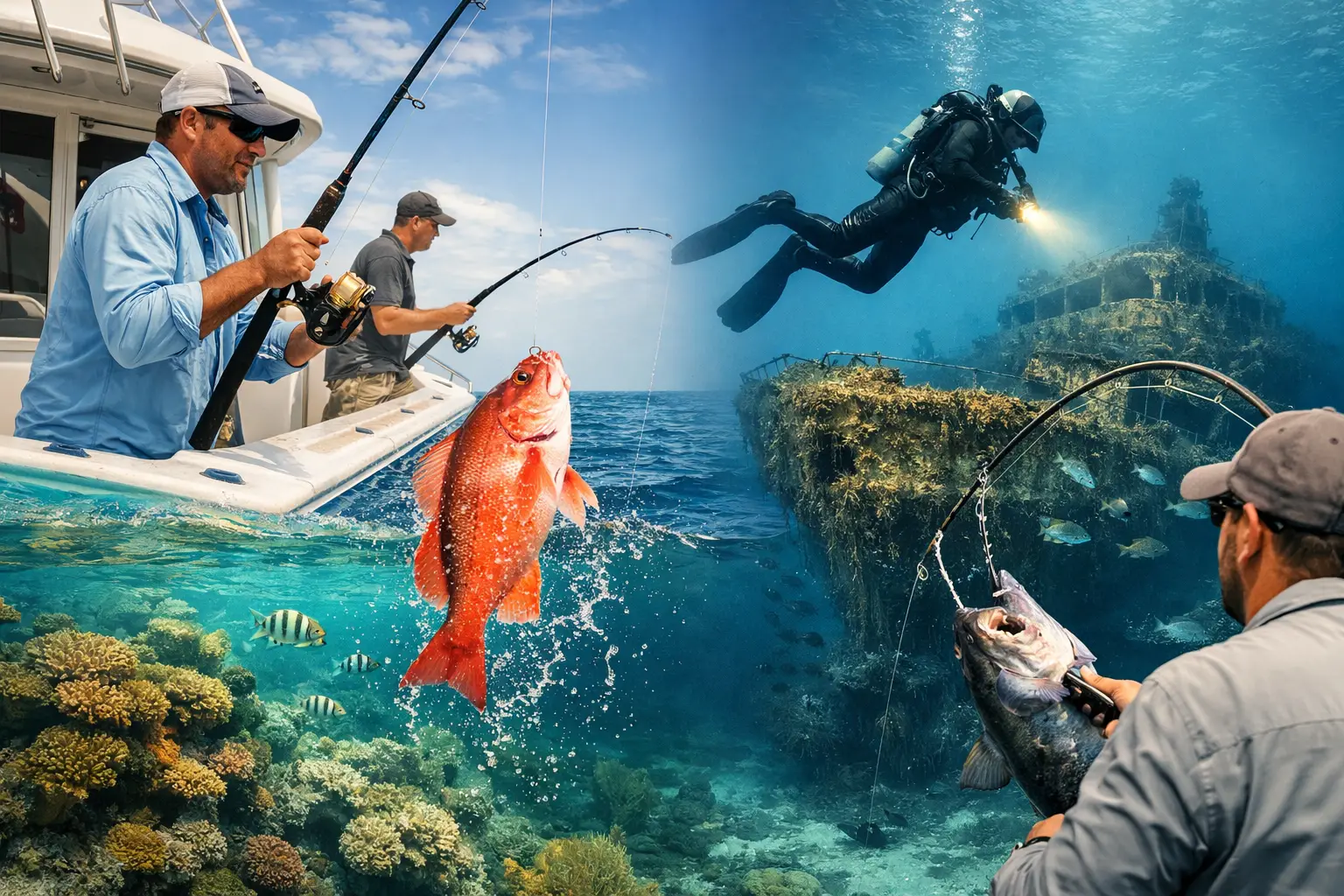
A live bait gets crushed halfway down, the rod loads up, and suddenly you are connected to a fish that knows every sharp ledge, cable, and piece of structure below. That is the appeal of reef and wreck fishing charters. These trips put anglers over fish-holding structure, where predators stack up, bait gathers, and every hookup can turn into a hard-fought battle.
They are not all the same trip, though. A nearshore wreck 5 miles from the inlet fishes very differently from a deep offshore artificial reef, a natural bottom patch, or a sunken freighter in 150 feet of water. The right charter starts with the fish you want to catch, then matches the boat, run time, season, and fishing style to that goal.
Why Structure Holds So Many Fish
Reefs and wrecks create habitat in open water. Natural reefs provide rock, ledges, coral, and bottom changes. Artificial reefs can include purpose-built modules, concrete, bridge rubble, and other approved structures. Wrecks add vertical relief, hiding places, current breaks, and plenty of surfaces where bait can gather.
That food chain is what makes the bite happen. Small fish and crustaceans use the structure for cover. Bigger predators move in to feed. Depending on the region and depth, that can mean red snapper, grouper, amberjack, triggerfish, black sea bass, cobia, king mackerel, mahi-mahi, barracuda, sheepshead, or yellowtail snapper.
A good captain is not simply parking over a waypoint. They are reading current, wind, tide, bait marks, water temperature, and how fish are positioned around the structure. Sometimes the fish want a bait dropped straight down. Other days, the productive move is drifting a live bait off the edge, slow-trolling the perimeter, or chumming fish up behind the boat.
Reef vs. Wreck: Similar Water, Different Game
The labels get grouped together because both trips revolve around structure, but there are meaningful differences.
Reef fishing is often about working the bottom
On reefs and bottom habitat, anglers commonly use cut bait, live bait, jigs, and weighted rigs to reach fish holding close to the structure. Snapper and grouper are classic targets, although the species mix changes fast from Florida to the Gulf Coast, the Carolinas, California, and beyond.
Reef fishing can be a solid choice for families and newer anglers because there is usually frequent action. That does not make it easy. Getting a grouper out of a hole or keeping a snapper away from a sharp ledge takes quick reactions and a captain who knows where legal, catchable fish are holding.
Wreck fishing can bring bigger pulls and tougher fights
Wrecks often hold larger, more aggressive fish because of their height and complexity. Amberjack, big grouper, cobia, and trophy-class bottom fish may patrol a wreck, especially when current is moving. The trade-off is that wrecks eat tackle. A fish can run a line across rusted steel, cables, or barnacle-covered edges in a heartbeat.
Wreck fishing may involve heavier conventional gear, stronger leaders, and a more physical fight. If your group wants a cooler full of table fare, a reef-oriented trip may be the better fit. If the goal is to test your back against an amberjack over hard structure, tell the captain that before you book.
Pick the Trip by Your Target Fish
Do not start with a vague search for a fishing boat and hope the rest works itself out. Start with the fish. A captain who is excellent at shallow-water sheepshead may not run the same equipment, distance, or season as a crew targeting deepwater grouper.
Ask whether your target is realistic during your travel dates, whether the fish is in season, and whether local size and bag limits allow harvest. Regulations can change by state, federal waters, and species. A responsible captain stays current and will tell you plainly when a fish is closed, undersized, or better pursued another time of year.
Trip length matters, too. A four-hour nearshore outing may offer plenty of action on smaller reefs, especially for a first-time group. An eight-, 10-, or 12-hour trip makes more sense when the best structure is far offshore or when you want time to move between spots and focus on larger fish. More hours do not automatically mean more fish, but they usually give the captain more options.
When comparing reef and wreck fishing charters, look for a captain whose listed targets match your priorities. If you want snapper for dinner, choose someone who regularly fishes productive snapper grounds. If you want an amberjack fight, find a captain who talks specifically about wrecks, heavy gear, and the physical nature of the trip. Unreel Charters makes that search easier by letting anglers begin with the species and trip type, not just a pin on a map.
Ask the Questions That Actually Matter
Before putting down a deposit, get clear on the practical details. Ask how far the boat typically runs, what species are likely during your dates, and whether the trip is private or shared. Confirm the number of anglers included, because a boat that is comfortable for four can feel crowded with six people dropping baits at once.
Find out what is included. Many charters provide rods, reels, bait, tackle, licenses, ice, and fish cleaning, but policies vary. Ask whether fuel surcharges, gratuity, parking, or processing are separate costs. Straight answers upfront make for a better dockside morning.
You should also ask about the expected ride. A 20-mile run across calm water is one thing. A long offshore run with a strong forecast can be rough, especially for kids or guests prone to seasickness. Take motion-sickness medication according to its instructions before leaving the dock, not after the boat starts pitching. Bring water, sunscreen, polarized sunglasses, a hat, and food if the charter does not provide it.
The Captain Matters More Than the Coordinates
Good reef and wreck fishing is local knowledge in action. Productive structure changes with current direction, fishing pressure, bait movement, storms, and season. Captains protect their hard-earned spots for a reason, so do not expect a list of coordinates. What you should expect is a plan built around conditions and honest communication when the plan needs to change.
The best captains also manage the crew. They show newcomers how to drop without tangling lines, set drag correctly, keep steady pressure on a fish, and react when a bite happens. They know when to move after a slow drift and when to stay put because the tide window is about to turn on.
Experience shows up in safety as well. Offshore structure fishing means hooks, heavy sinkers, moving decks, and sometimes rough water. Listen to the safety briefing, keep loose gear stowed, and let the mate know if you are uncomfortable or need help. Nobody wins points for trying to muscle a big fish while off balance near the rail.
Set Expectations for the Day You Booked
A charter is a guided fishing trip, not a guarantee that every species will cooperate. Weather can cancel a run. Current can make a favorite wreck unfishable. A cold front can turn a hot bite quiet. The captain may shift from a deep wreck to protected nearshore structure if that is the safest move.
That flexibility is not a bad sign. It is often the difference between forcing a poor plan and finding a productive one. If your group is focused on action, tell the captain you are open to mixed-bag fishing. If one species is the entire point of the trip, say so early and understand that a narrow target can mean fewer backup options.
Keep harvest expectations realistic, too. Catch-and-release may be the right call for certain fish, closed seasons, or a great fish that you simply do not need to keep. For keeper fish, ask how to care for the catch on the ride home. Fresh fillets deserve a cooler, ice, and a meal plan better than forgetting them in a hot vehicle.
The right day over a reef or wreck is not measured only by the heaviest fish. It is the moment a kid feels their first bottom bite, a crew watches bait light up on the sonar, or an experienced angler finally turns a stubborn fish away from the structure. Choose a captain who fishes the way you want to fish, show up ready to listen, and let the next hard pull tell the story.