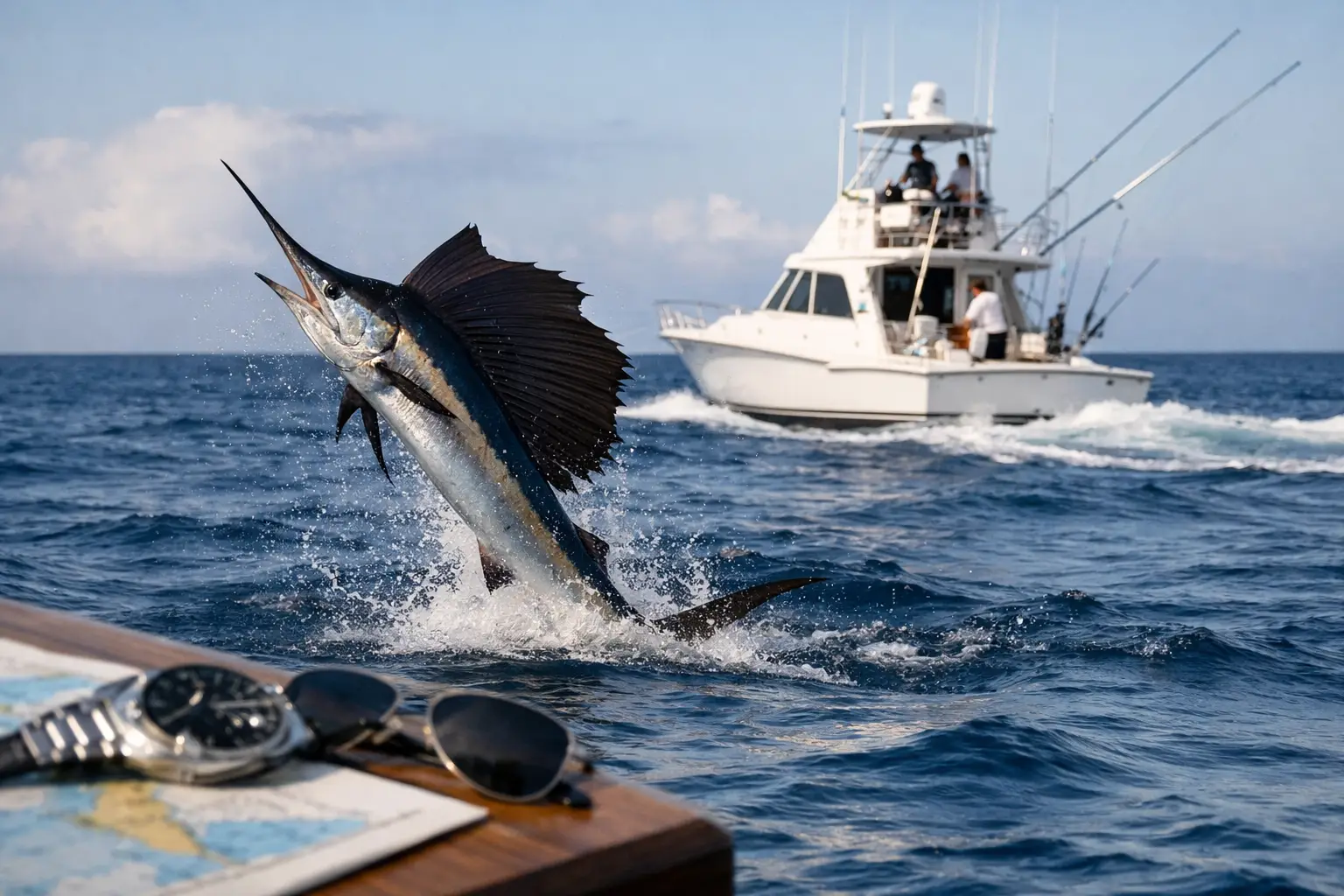
A sailfish can turn a quiet troll into pure chaos in seconds: a bill slashing at bait, a lit-up fish exploding clear of the wake, a captain calling for a tight line. But sailfish season timing decides whether you are booking into that kind of day or simply hoping one crosses your spread.
The good news is that sailfish are not a one-month fish. The catch is that the best window changes hard by coast, bait migration, water temperature, wind, and the style of trip you want. A winter kite-fishing run off Palm Beach is a different game than a summer Pacific trip out of Southern California. Start with the fish you want to catch, then choose the region and captain built for that bite.
Sailfish Season Timing by Region
For most US anglers, South Florida is the first place to look. It has the most established sailfish charter scene in the country, strong seasonal patterns, and access to fish relatively close to shore when conditions line up.
South Florida: November Through April
The most dependable sailfish season along Florida's Atlantic coast generally runs from late fall through spring, with December through March often producing the biggest concentration of opportunities. Palm Beach, Jupiter, Stuart, Fort Lauderdale, Miami, and the Florida Keys all have their moments, but winter is the headline act.
Cold fronts are a major part of the equation. When a front pushes through, north or northeast winds can tighten up the current, move bait along the reef edge, and create the kind of conditions South Florida captains watch closely. That does not mean every windy day is automatically a great day. Sea state can get rough fast, especially for first-timers or families. A skilled captain weighs the bite against what the group can comfortably handle.
Winter sailfish trips here often use live baits, kite fishing, slow-trolling, or a combination of techniques. On the right day, multiple fish can show up behind the boat at once. That is why serious anglers plan around forecast windows rather than only selecting a random Saturday in February.
April can still be excellent, particularly when bait remains available and water conditions hold. By late spring and summer, sailfish are still caught, but the reliable winter concentration usually fades. Offshore crews may shift attention toward dolphin, tuna, wahoo, and other warm-water targets while keeping a sailfish bait in the spread.
Florida Keys: Winter Into Spring
The Keys offer a wider menu than many anglers expect. Sailfish show up from late fall through spring, with winter and early spring typically the safest bet. The exact bite can vary between the Upper Keys, Marathon, and Key West, so do not treat the island chain as one uniform fishery.
A Keys charter can make sense for anglers who want sailfish as the priority but would also be happy with mahi, tuna, king mackerel, reef fish, or a mixed offshore day. That flexibility matters when wind or changing currents make a pure sailfish plan less practical. Tell the captain upfront whether you would rather wait on a sailfish bite or keep rods bent with other species between opportunities.
Texas Gulf Coast: Late Spring Through Fall
Sailfish are not as predictable off Texas as they are off Palm Beach, but they are a legitimate offshore target during warmer months. Late spring through fall is generally the window to watch, especially on longer offshore and deep-sea runs where blue water, current edges, bait, and structure come together.
This is not usually a short, nearshore sailfish trip. Texas crews may run significant distance to rigs, weed lines, or offshore current breaks, and the fish are often part of a broader blue-water spread. If a captain says sailfish are possible rather than guaranteed, that is straight talk. A strong Texas offshore trip can also put yellowfin tuna, blackfin tuna, wahoo, mahi, and marlin in play depending on the port and conditions.
Southern California: Summer and Early Fall
Southern California sailfish are a warm-water event. The best chance generally falls from roughly July through October, sometimes stretching later when warm currents and bait stay in the area. Fish are most associated with the warmer offshore zone, and many trips target them alongside striped marlin, bluefin tuna, yellowtail, and dorado.
This is a highly condition-dependent fishery. Water temperature alone does not tell the full story. Captains also track current breaks, offshore temperature charts, bait reports, and where recent fish have been seen. A warm-water push can create a short but exciting window, while a change in current can move the opportunity well outside the range of a standard day trip.
Hawaii: Year-Round Opportunity, Seasonal Peaks
Hawaii offers sailfish opportunities through much of the year, with fish commonly encountered on offshore trolling trips. Depending on the island and local conditions, late winter through summer can produce strong action. Still, Hawaii is not a place to book a trip based on one generic peak-month chart.
Ask what has been biting recently, how far the boat typically runs, and whether the crew is targeting sailfish specifically or fishing a mixed offshore spread. A captain who knows that local water every day is more valuable than a broad seasonal promise.
What Actually Moves the Sailfish Bite
Calendar timing gets you in the right neighborhood. Conditions determine whether the fish are there now.
Bait is the engine. Pilchards, ballyhoo, sardines, flying fish, and other forage pull predators into an area. Offshore captains pay attention to bait schools, birds, current edges, color changes, and rips because those signs often reveal the food chain before a sailfish ever shows itself.
Water temperature matters, but it is not a magic number. Sailfish favor warm, clean water, yet a productive edge between water masses can be better than a large area of uniformly warm water. Current also matters. In South Florida, the placement and speed of the Gulf Stream can change where a crew starts looking. In the Pacific, warm-water fingers and offshore breaks can concentrate fish far from the beach.
Weather is the trade-off every angler has to accept. Some of the best South Florida sailfish days happen after a winter front, when the wind is up and the ocean is not exactly calm. If you are chasing a bucket-list fish and have sea legs, that may be the day you want. If you are bringing young kids or someone new to offshore fishing, a more protected inshore trip or a calmer-weather offshore target may be the smarter call.
How Far Ahead Should You Book a Sailfish Charter?
For prime winter dates in South Florida, book as early as you can, especially if your trip falls over a holiday week, school break, tournament period, or weekend. Two to four months ahead is a practical target for desirable boats and dates. If you can fish on a weekday, you will usually have more options.
The best move is to leave room in your travel schedule. Rather than flying in for one nonrefundable day, give yourself two or three possible fishing days. Then work with the captain to select the forecast that offers the best mix of fishable conditions and sailfish potential. That flexibility can make a bigger difference than obsessing over a single “best” month.
When speaking with a charter, ask direct questions: Are sailfish the main target right now? What technique are you using? How far offshore is the bite? What else is likely to be available if sailfish do not cooperate? You are not asking for guarantees. You are making sure the trip matches your expectations and your group's experience level.
Match the Trip to Your Goal
A dedicated sailfish trip is right for anglers who care most about shots at a billfish, are comfortable releasing their catch, and are willing to let conditions dictate the day. Sailfish are generally catch-and-release targets, and a clean, fast release protects the fish and keeps the fishery strong.
A mixed offshore trip is better for groups that want action and variety. You may fish the same blue water, but the captain can pivot toward mahi, tuna, wahoo, kingfish, or reef species when that is where the bite is. Neither approach is better. One is a focused hunt; the other is an insurance policy against a slow billfish day.
For your search, use sailfish as the species filter first, then narrow by the month, departure port, trip length, and the kind of crew you want aboard. On Unreel Charters, that species-first approach keeps you from sorting through generic boat listings that were never built around your target fish.
The right sailfish trip is rarely about finding a calendar date that promises perfection. Pick a proven region, give yourself a weather window, and book a captain who fishes that bite regularly. When the bait stacks up, the current turns right, and a sail rises behind the spread, you will be glad you planned for the conditions instead of just the month.