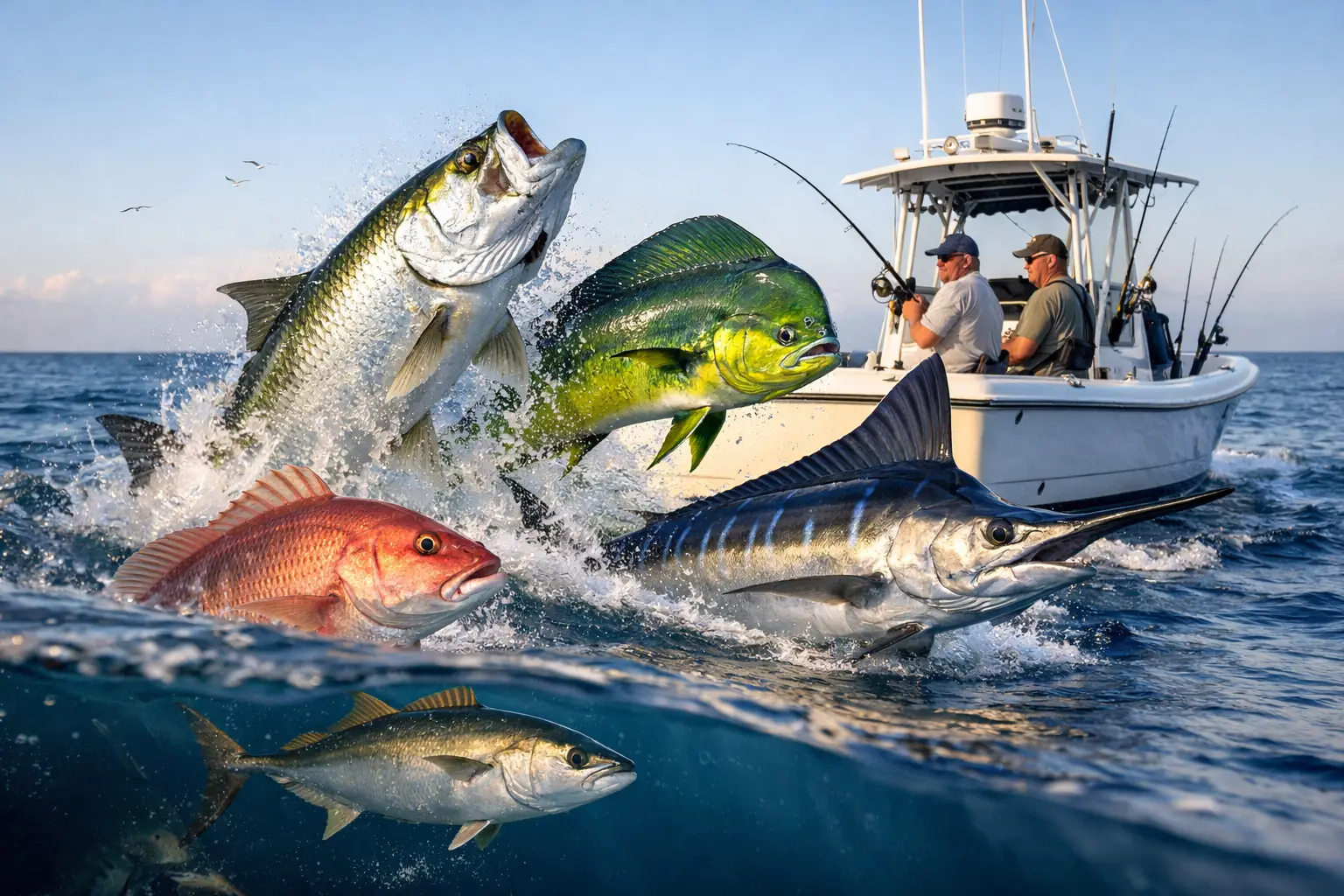
You do not book a redfish trip the same way you book a bluefin tuna run. The boat, season, water, travel distance, tackle, and captain experience can all change when the fish changes. That is why target species fishing charters are the smarter starting point: pick the fish first, then find the captain and trip built to put you around it.
A generic “fishing charter near me” search can get you on the water. It does not always get you on the bite you came for. If you are planning around a bucket-list sailfish, a kid’s first snook, a limits-focused walleye day, or a serious offshore tuna mission, species-first searching cuts through the noise.
Why the Fish Should Drive the Charter Search
Captains are local specialists. A great inshore captain may know every oyster bar, mangrove edge, and moving tide that holds redfish and speckled trout. That does not automatically make them the right choice for an overnight swordfish trip or a bluewater marlin spread. Both are real skills. Both require local knowledge. They are just different games.
Starting with a target species helps answer the questions that matter before a deposit changes hands. Where is that fish available? Is it in season? What trip length gives you a fair shot? Will the conditions suit a beginner, or is this a weather-dependent run for experienced anglers? You get closer to the right answer before you are halfway through a dozen generic listings.
It also keeps expectations honest. A captain can target a species without guaranteeing it. Fish move, water warms or cools, bait disappears, wind blows, and a perfect plan can turn into a grind. The right charter is not the one promising a dock full of trophies. It is the one with a sound plan, the right equipment, and the judgment to adapt when the bite changes.
Match Target Species Fishing Charters to the Water
The fish tells you what kind of day you are booking. That is the useful part of species-first planning.
Inshore species: action close to shore
Redfish, snook, speckled trout, flounder, striped bass, and tarpon often put anglers in protected bays, marshes, flats, rivers, bridges, and backcountry water. These trips can be a strong fit for families, first-timers, and anglers who want frequent casting without a long offshore ride.
But “inshore” is not a shortcut for easy. Sight-casting a tailing redfish on a shallow flat, pitching a live bait to a dock for snook, or working a tide line for big stripers can be highly technical. Ask whether the captain fishes bait, artificial lures, or fly gear, and whether the trip is built around casting, trolling, drifting, or a mix of approaches.
Nearshore and reef trips: variety with a shorter ride
Nearshore reefs, wrecks, ledges, and hard-bottom areas can hold cobia, king mackerel, amberjack, snapper, grouper, black sea bass, and plenty of regional mixed-bag fish. These are often the sweet spot for groups who want hard pulls and good table fare without committing to a full offshore day.
The trade-off is that regulations and seasons matter a lot. A captain may find grouper all day and still be unable to keep them if the season is closed. If bringing fish home is part of the plan, ask what is currently open, what size limits apply, and what the captain expects to target as a legal harvest species that day.
Offshore species: commit to the run
Tuna, mahi-mahi, wahoo, billfish, swordfish, and big pelagic sharks usually mean more boat, more fuel, more time, and more weather exposure. Offshore trips are not all the same. A half-day mahi trip off one coast may be realistic, while a serious tuna trip elsewhere can require a long run, a full day, or an overnight schedule.
This is where a captain’s recent pattern matters. Ask how far the boat has been running for the species, whether the trip trolls, chunks, kites, jigs, or fishes live bait, and what backup targets are available if conditions shut down the primary plan. A good backup is not a consolation prize. It is part of a captain’s job.
Freshwater species: location is half the bite
Muskie, salmon, walleye, bass, crappie, catfish, and trout are driven by seasonal patterns just as hard as saltwater species. Water level, current, temperature, spawning cycles, and forage can determine whether a day means casting shorelines, pulling boards, drifting river seams, or working deep structure.
For destination freshwater trips, do not assume the famous fish is available year-round. A salmon charter may be strongest in a narrow seasonal window. Muskie can demand long casts and patience. Crappie can provide outstanding action but may be best during a specific pre-spawn or spring pattern. The right time is often more valuable than the cheapest date.
What to Ask Before You Book
A quick conversation can separate a captain who occasionally encounters your fish from one who spends real time targeting it. Start by stating your priority plainly: “We want the best shot at keeper redfish,” or “This is a fly-only permit trip,” or “We want to chase tuna and understand it may be a long day.” That gives the captain something useful to work with.
Then ask about the current bite, the recommended trip length, and the group’s experience level. If four people are coming, find out whether everyone can fish at once. On some technical boats, one or two anglers at a time is normal. That can be perfect for a focused crew and frustrating for a group expecting nonstop rod time.
You should also confirm what is included. Bait, tackle, licenses, fish cleaning, drinks, fuel surcharges, and gratuity policies vary by operation and region. There is no problem with a captain charging appropriately for a specialized trip. The problem is finding out the real cost after you thought the plan was set.
If you have a hard constraint, say it early. Maybe someone gets seasick, a child needs a shorter ride, your group wants artificial-only fishing, or you need a boat with room for six. The best captains would rather steer you toward the right trip than force a poor fit.
A Big Name Fish Is Not Always the Best Choice
Anglers naturally chase marquee species. Marlin, permit, giant bluefin, tarpon, halibut, and muskie have earned their reputations. But the fish that makes a trip great depends on who is standing on the deck.
For a first saltwater trip, a mixed inshore day for redfish, trout, and flounder may create more action and more smiles than an ambitious offshore run in rough water. For a seasoned angler, the opposite might be true. One clean shot at a permit can be worth more than a cooler full of easier fish.
Be open to a captain’s local recommendation. If your dream species is between seasons or the weather has made the main grounds unreachable, a skilled captain may suggest a nearby bite that is on fire. Flexibility gives you a better fishing day. It does not mean abandoning the goal. It means fishing what the water is giving you.
Search Like an Angler, Not a Tourist
The cleanest booking path is species, location, then trip type. Start with what you want to catch. Narrow it to the state, coast, lake, river, or port where that fish is realistically available. Then choose the experience: inshore, nearshore, offshore, deep sea, fly-fishing, reef-and-wreck, or tournament fishing.
That approach is built into Unreel Charters, where anglers can sort through thousands of captain listings without starting from a generic travel page. It respects a simple truth: the destination matters, but the fish is usually why you are packing a cooler, checking the forecast, and setting the alarm before daylight.
A species-specific search also lets you compare captains on the details that count. Look for recent catch photos that match the fish you want, trip descriptions that explain the water and method, boat capacity that fits your crew, and clear communication about conditions. A polished listing is nice. Evidence that a captain regularly fishes your target species is better.
Bring the Right Expectations to the Dock
A charter captain controls the boat, the tackle, the timing, and the plan. Nobody controls the fish. Respecting that difference makes the day better for everyone.
Show up ready to listen, especially if you are new to the technique. Practice a quick cast before the first school of fish appears. Let the captain know if you want to keep fish, release everything, take photos, or prioritize a particular style of fishing. And if the captain changes the plan because of weather or a dead bite, understand that smart adjustments are often what save the trip.
Pick the fish that gets you fired up, find the captain who pursues it for real, and give the day enough time to work. The next unforgettable catch rarely starts with a broad search for “something to do.” It starts with a clear answer to one question: what do you want to catch?