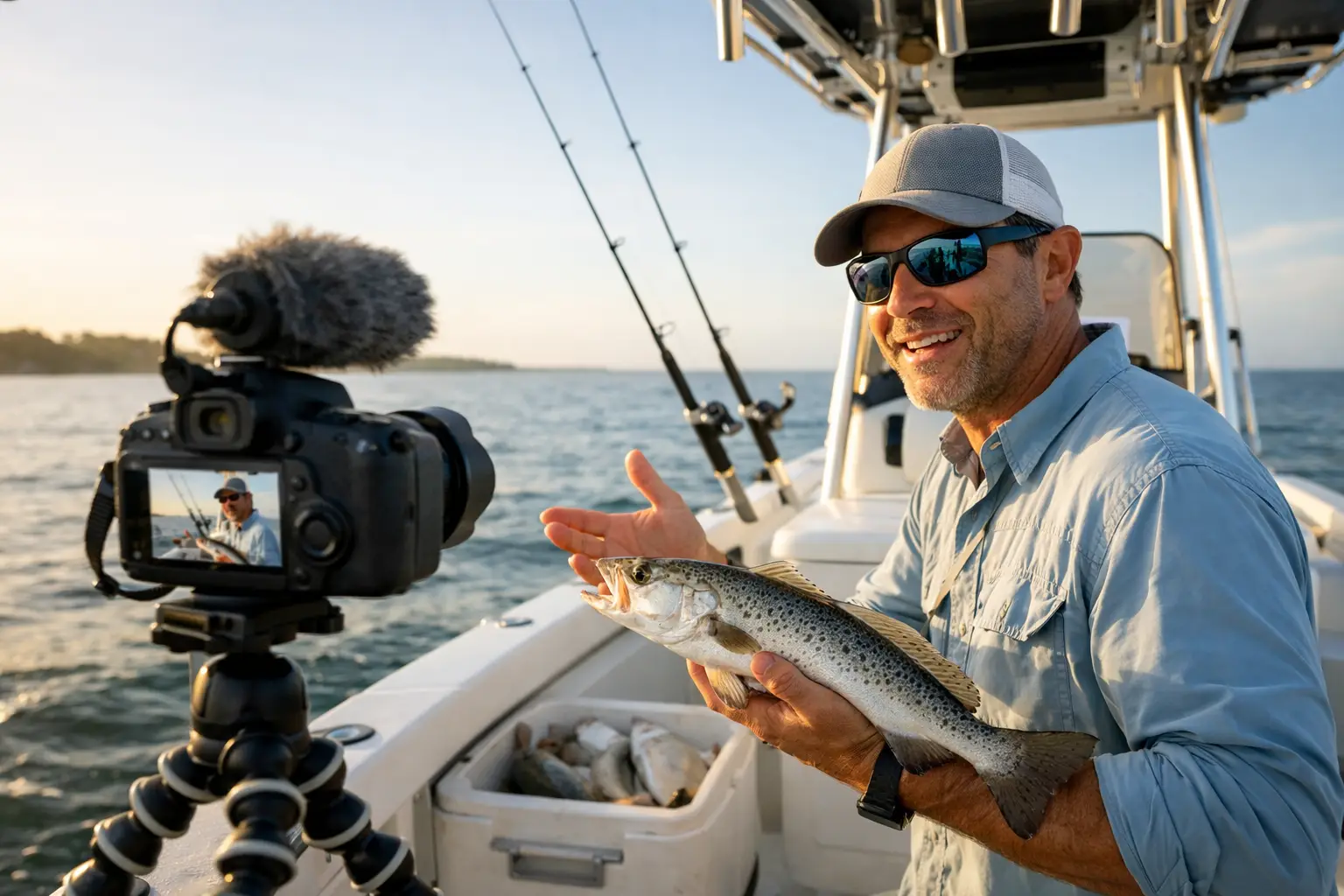
The dock is quiet at 5:30 a.m. Then the crew shows up, the livewell starts bubbling, and a first-time angler lands a redfish that pulls harder than expected. That is the stuff anglers want to see before they book. Video marketing for charter captains is not about making your operation look like a national travel brand. It is about showing the real trip, the fish, the water, and the captain behind the wheel.
A good charter video answers the question every serious customer has: “Is this the trip I’m actually looking for?” If you target tarpon, show tarpon. If your strength is calm-water family trips for snook and trout, make that clear. If you run 50 miles offshore for tuna, let the run, spread, and payoff speak for themselves.
Why Video Marketing for Charter Captains Works
Fishing trips are not one-size-fits-all purchases. An angler booking a half-day inshore trip with two kids needs different proof than a crew chasing blue marlin or a fly angler looking for permit. Written descriptions help, but video gives people a fast read on your boat, pace, personality, fishing style, and likely experience.
It also builds trust before the first phone call. A clean photo can show a big fish. A short video can show that the fish was caught on your boat, in your fishery, with real customers having a real day on the water. That difference matters, especially when an angler is comparing several captains in an unfamiliar destination.
The goal is not to go viral for the sake of it. A video with 800 views from anglers actively planning a trip in your area can be worth more than a clip with 100,000 random views. The right people need to see enough proof to contact you directly and feel good about putting down a deposit.
Show the Trip You Actually Want to Book
The fastest way to waste time on content is filming whatever happens and posting it without a plan. Start with the trips you want more of. Maybe that is weekday nearshore bottom fishing, premium offshore tuna runs, family-friendly inshore trips, or fall muskie packages. Your videos should pull the same customers you want filling your calendar.
A captain who wants more beginner-friendly redfish trips should not make every post a high-speed montage of offshore runs and giant gaffers. That might get attention, but it can attract the wrong inquiries. Match the content to the charter product.
Build videos around species, trip type, and season
Anglers search with a target in mind. They want to know where they can catch striped bass in spring, whether the mahi bite is on, or what a reef-and-wreck trip looks like for a group of four. Give every video a clear fishing purpose.
A simple opening line on screen can do the job: “Half-day Tampa Bay snook trip,” “Winter striped bass charter out of Cape Cod,” or “What a Louisiana redfish trip looks like in October.” You are not trying to sound fancy. You are helping a potential customer recognize their trip.
Seasonal video is especially useful because it creates urgency without fake sales pressure. Show what is biting now, what is coming next, and what kind of weather or water conditions customers should expect. A quick dockside update can fill openings when the bite turns on.
The Videos Every Charter Operation Should Have
You do not need a library of polished commercials. You need a handful of useful, honest videos that remove booking hesitation. Start with these five categories:
- A 30- to 60-second captain introduction that explains where you fish, what you target, and who your trips are best for.
- A trip overview that shows the boat, the ride, the gear, and the general flow from launch to return.
- Species-specific catch footage, labeled by fish and location when possible.
- A customer-experience video featuring families, beginners, returning anglers, or serious fishing crews that match your ideal client.
- A seasonal conditions update that tells anglers what is happening in your fishery right now.
The captain introduction matters more than many operators think. Customers are booking your judgment as much as your boat. Let them hear how you approach safety, changing conditions, kids on board, first-time anglers, or a tough bite. Keep it conversational. You do not need a script that sounds like a car commercial.
Your trip overview should be honest about the day. Show the clean boat, sure, but also show the rod holders, cooler space, bait prep, and fishing time. If it is a serious offshore operation, show that reality. If it is a relaxed backcountry trip, show the shallow-water setting and light-tackle action. Clear expectations lead to better customers and fewer mismatched bookings.
Keep Production Simple and Fishy
The best camera is the one you will use consistently. A current smartphone, a small action camera, and a basic clamp or chest mount are enough for most charter content. Audio can be rough on a running boat, so use short voiceovers recorded later when needed, or add clear text captions.
Prioritize stable, well-lit clips over constant filming. Capture a few seconds while leaving the dock, setting lines, spotting bait, fighting fish, landing fish, releasing fish, and celebrating. A dozen short clips can become several useful posts. Film vertically for quick social content, but consider a few horizontal clips for your website or longer profile video.
Do not force the action. The ocean and the fish already provide plenty. What customers cannot get from a generic fishing clip is your local context. Explain why you moved spots, why the tide matters, what bait is working, or why today’s trip is set up for a certain species. That local knowledge is your edge.
Make Customers Part of the Story
Most anglers do not expect a tournament highlight reel. They want to picture themselves on board. A kid holding their first keeper, a couple laughing through a missed bite, or a group of friends working together on a fish can be more persuasive than another hero shot of the captain with a giant catch.
Always ask permission before featuring customers, especially children. A quick verbal yes is better than assuming, and a simple release process is wise if you plan to use footage in paid advertising. Respect the customer who wants to fish without being on camera. The trip comes first.
When a guest is comfortable, ask one easy question after the trip: “What was the best part of your day?” Their answer will sound more believable than a scripted testimonial. Keep it short and let their excitement carry the clip.
Use Video Where Anglers Make Decisions
Posting a video once and hoping for magic is not a strategy. Put your strongest clips in the places where anglers compare trips and decide who to contact. Your captain profile, social channels, booking-related messages, and local search presence should all tell the same story about what you offer.
At Unreel Charters, a video-forward captain profile gives anglers another way to judge whether your trip matches the fish and experience they want. Use that space for your clearest overview video, not a random highlight with no context. A customer should understand your home waters, target species, and trip style within the first few seconds.
Add a plain call to action in captions and descriptions. Tell people what to do next: check available dates, call for a weather update, ask about a family trip, or inquire about a specific species. Keep it direct. You earned the attention, so make the next step obvious.
Consistency Beats a Big One-Time Shoot
A professionally produced brand film has its place, particularly for larger operations or destination lodges. But it can get expensive, and it goes stale when seasons change, the boat gets upgraded, or your fishery shifts. Most independent captains will get better results from a steady stream of real, current footage.
Aim to gather clips on every trip, then post two or three useful pieces each week during your busy season. You do not need to create from scratch every day. One successful trip might produce a catch clip, a short fishing report, a customer reaction, and a behind-the-scenes look at rigging or release technique.
Watch which videos lead to the inquiries you want. If your inshore family clips bring in qualified calls and your offshore fish photos only collect likes, that is useful information. Marketing should help you steer the business, not just feed an algorithm.
The next time the bite is right and the customers are smiling, take thirty seconds to film it. Show the fish, explain the trip, and let anglers see why your boat is the right place to be when they are ready to get on the water.