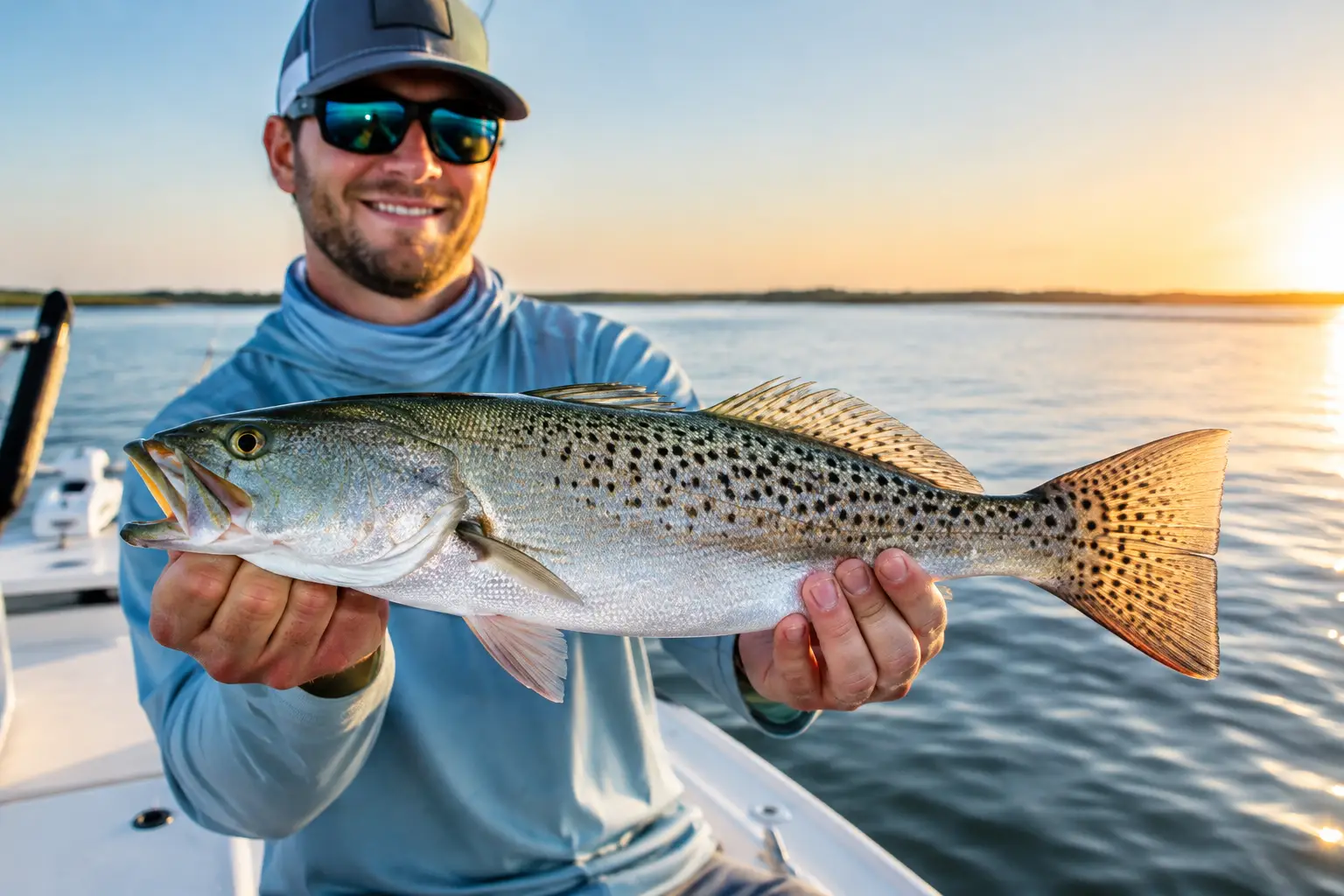
A 20-inch speckled trout that eats a topwater plug over ankle-deep grass is the kind of fish that turns a casual inshore trip into a story your crew tells for years. But trout fishing is not the same from one coast to the next. The best speckled trout charter destinations depend on what you want from the day: numbers of fish, a true trophy shot, calm water for the family, wade-fishing access, or a mixed bag with redfish and flounder.
Speckled trout, also called spotted seatrout, live across the Gulf Coast and up the southern Atlantic coast. Local water, seasonal weather, bait movement, and harvest rules shape the fishing more than a destination's reputation alone. Start with the kind of trip you want, then find a captain who spends real time chasing trout in that specific fishery.
The Best Speckled Trout Charter Destinations
Louisiana: Big numbers and serious trophy potential
Louisiana belongs at the top of nearly every trout conversation. The marshes, bays, bayous, and barrier-island waters around the southeastern coast hold huge amounts of forage and an enormous footprint of fishable habitat. Anglers often come here for fast action, especially when shrimp, mullet, and other bait are moving through the marsh.
Venice is the headliner for anglers who want a legitimate shot at oversized trout while also having access to redfish and other Gulf species. Nearby coastal communities and the waters around Delacroix, Hopedale, and the Biloxi Marsh can also produce excellent trout fishing. This is a destination for anglers who do not mind early starts, changing conditions, and longer runs when the bite calls for it.
The trade-off is weather. Wind can make open bays rough, and the right area can change quickly with water clarity, river influence, and tide. A local captain earns their keep here by knowing whether the day calls for protected marsh ponds, outer-bay reefs, current lines, or a shoreline with cleaner water.
Texas: Grass flats, shell, and long seasons
The Texas coast offers some of the most recognizable speckled trout water in the country. From Galveston Bay south through the Laguna Madre, anglers can fish expansive grass flats, shell reefs, channels, and wind-protected shorelines. The state is especially attractive for anglers who want a technical inshore day with room to cast artificials, work topwaters, or target fish around structure.
The Lower Laguna Madre near Port Mansfield and South Padre Island is a standout for clear, shallow-water trout fishing. The area can reward patient anglers with quality fish over grass and potholes, often alongside redfish. Farther north, the Corpus Christi area, Aransas Bay, Rockport, and Port Aransas offer varied water and strong mixed-bag potential.
Texas is not always easy fishing. Persistent wind is part of the deal, and shallow flats can demand precise boat handling and a captain who knows how to position anglers without blowing up the water. If you are bringing newer anglers, ask whether the trip can focus on protected water and steady action rather than a full day of wading or long drifts.
Mississippi and Alabama: Productive Gulf Coast access
Mississippi's coast is often overlooked by travelers chasing bigger-name Gulf destinations, which is exactly why it deserves attention. The marshes, bays, and nearshore structure around Biloxi, Gulfport, Pascagoula, and the barrier islands can produce reliable trout fishing through much of the year. It is also a practical choice for groups staying along the coast who want an inshore charter without building an entire vacation around fishing.
Across the line, Alabama's Mobile Bay system and the waters around Dauphin Island offer another strong trout fishery. This is classic coastal inshore fishing: working grass, points, shell, creek mouths, and moving water while staying ready for redfish, flounder, and black drum.
Both states shine when a captain can adjust to water conditions. Heavy rain, wind, and freshwater runoff can change the bite, so do not book based solely on a season chart. Tell the captain whether catching a pile of keeper-sized trout, throwing lures, or finding one better fish matters most to you.
Florida's Panhandle: Clear water and family-friendly trips
Florida's Panhandle is a strong fit for anglers combining a beach trip with a half-day or full-day inshore charter. Pensacola, Destin, Panama City, and the Big Bend region all offer access to bays, grass flats, and protected shorelines where speckled trout feed on shrimp, pinfish, and small mullet.
The appeal is variety. A morning trout trip can also bring shots at redfish, flounder, sheepshead, Spanish mackerel, or other seasonal inshore species. That makes the Panhandle a smart pick for families and mixed-experience groups. Someone who has never made a cast can have a real chance at a fish, while experienced anglers can work plugs, soft plastics, and popping corks around productive water.
Keep expectations realistic in clear water. Bright skies and calm conditions can make trout cautious, particularly on heavily fished flats. The best captains adjust lure selection, boat position, and timing around low-light windows, tide movement, and wind-driven water.
Coastal Georgia: Marsh-country trout fishing
Georgia's coast offers a different look from the broad, open bays of the Gulf. Tidal creeks, oyster beds, spartina marsh, and winding estuaries define the fishing around Savannah, St. Simons Island, Brunswick, and the Golden Isles. Speckled trout push into these systems to feed, and the moving tide is often the key to putting a pattern together.
This is a great destination for anglers who enjoy active, visual fishing in smaller water. You may cast along a grass edge on a falling tide, work an oyster point as water drains off the marsh, then slide into a creek bend where bait is concentrated. It is also a strong choice for an inshore slam-style day, with redfish commonly sharing the same water.
Tides matter here more than most visiting anglers expect. A captain may schedule the trip around a particular stage of the tide rather than the most convenient departure time. That is not a complication. It is a sign the trip is built around the fish.
The Carolinas: Estuary fishing with a seasonal rhythm
North Carolina and South Carolina offer excellent speckled trout fishing, particularly for anglers who like tidal creeks, marsh drains, docks, and protected estuaries. The Lowcountry around Charleston, Beaufort, and Hilton Head is a natural starting point in South Carolina. In North Carolina, the waters around Wilmington, Morehead City, and the Outer Banks can deliver strong trout opportunities when conditions line up.
Cooler months are a major part of the appeal. Winter trout fishing can be outstanding in protected water, where fish group up around deeper bends, docks, creek mouths, and darker-bottom areas that hold warmth. But cold snaps can make the fishing more weather-dependent than a Gulf Coast trip.
For traveling anglers, the Carolinas reward flexibility. Ask whether your captain prefers live bait, artificials, or a combination, and whether the trip is built around tide windows, dock fishing, or open-flat casting. The answer tells you far more than a generic promise of a "great day on the water."
How to Choose the Right Trout Charter
A destination gets you near fish. The right charter puts you in the right water at the right time. Before booking, decide whether you want a numbers trip, a chance at a large trout, or an easygoing inshore outing that keeps everyone involved. Those are different missions, and a good captain will be direct about what the local fishery can deliver during your dates.
Ask about the expected water type and trip style. Will you be drifting grass flats, casting shorelines, fishing live bait under popping corks, wading, or throwing lures all morning? None is automatically better. Live bait can keep beginners busy, while artificial-focused trips may suit anglers who want to learn techniques and cover water more actively.
Also ask about the run, the weather backup plan, and what else may be biting. A trout trip can become a better overall day when redfish, flounder, or black drum are available, especially if a front muddies the preferred trout water. Good captains adapt without pretending every day is a trophy-trout day.
When to Book Your Trip
Spring and fall are broadly reliable seasons across much of the trout range because bait moves and water temperatures tend to be comfortable. Spring often brings hungry fish and changing patterns. Fall can produce aggressive feeding around bait schools and some of the year's most exciting topwater opportunities.
Summer means early departures, heat, and a focus on low-light periods, moving water, and cleaner conditions. Winter can be excellent from Louisiana to the Carolinas, but it is more location-specific and more dependent on stable weather. If trophy potential is your priority, tell your captain that upfront and be prepared for a more patient, selective day.
Start species-first when you plan. On Unreel Charters, search for speckled trout in the state or coastal region you are visiting, then compare the trip styles that actually match your crew. Pick the captain whose local approach fits the fish you want to catch, and leave enough room in your schedule to fish the best weather window.