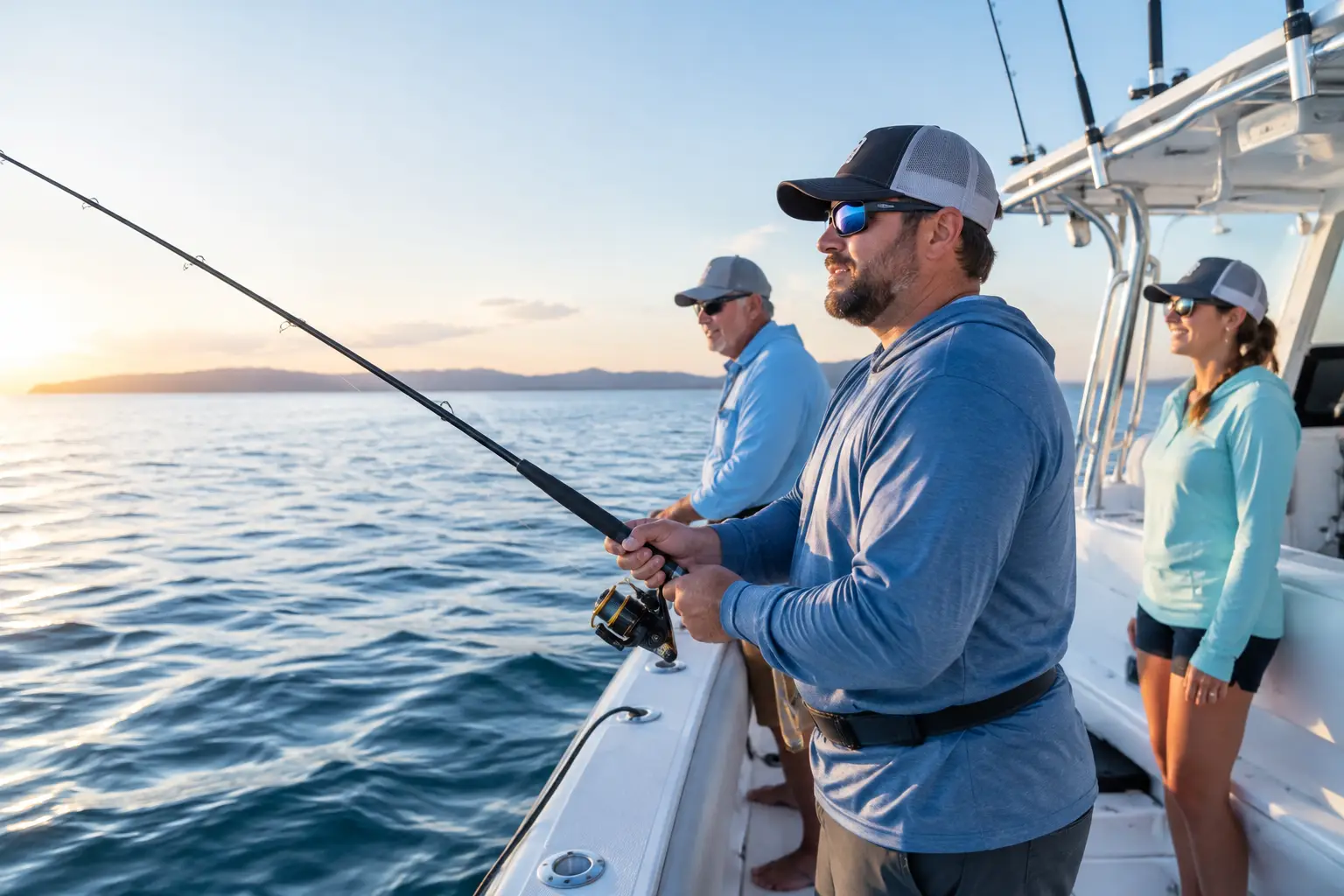
The fish photo gets your attention. The guided trip reviews tell you whether that trip fits the day you want on the water.
A review can show far more than whether somebody had fun. Read closely, and you can learn whether a trip suits beginners, whether the captain adjusts to conditions, how much hands-on help anglers receive, and whether the boat matches your group. The trick is reading for patterns instead of getting hung up on one glowing sentence or one disappointing report.
When we are choosing a charter, we want feedback that helps answer the real question: Can this crew give our group a good shot at the fish and experience we came for?
Start With Reviews From Similar Trips
Not every happy review applies to your trip. A family taking young kids for a calm inshore morning is looking for different signs than a crew chasing tuna offshore or a serious fly angler targeting permit. Start by finding comments from anglers whose plans look like yours.
If you are booking an inshore trip for redfish, trout, snook, or flounder, look for mentions of water conditions, casting opportunities, steady action, and help with bait or tackle. Parents should pay attention to comments about patience, clear instruction, and how the day was paced. A great kid-friendly trip is not necessarily about the biggest fish caught. It is about keeping everyone involved and comfortable enough to enjoy the next bite.
For offshore, deep-sea, reef, wreck, or nearshore trips, read for details about the target species, the run to the grounds, and the kind of fishing anglers actually did. A review saying, “We caught fish all day,” is positive but vague. A review explaining that the group spent the morning trolling for pelagics before bottom fishing a wreck tells you much more about the trip.
Experienced anglers should also look for reviews from people using similar methods. If your goal is sight fishing, fly fishing, jigging, live-baiting, or casting artificials, find out whether those approaches were part of the day or whether most guests fished another way. There is no wrong method when the bite is on. But it helps to know what you are booking.
Read Guided Trip Reviews for Specific Details
The strongest reviews usually include details that are hard to fake and useful to future anglers. They mention what the weather did, how the bite changed, what species showed up, or how the crew adjusted when Plan A did not work.
Pay attention when multiple anglers describe a captain moving spots, changing techniques, or shifting targets based on conditions. Fishing is not a guaranteed-results business. Wind, tide, water temperature, bait movement, and season all have a say. What matters is whether the review shows a thoughtful response when the fish do not follow the script.
The same goes for communication. Useful feedback may mention whether directions were clear before the trip, whether the meeting point was easy to find, and whether guests understood the plan once they left the dock. That is especially valuable if you are bringing friends from out of town, children, or first-time anglers. A smooth start leaves more energy for fishing.
Details about gear are worth reading, too. You do not need a full tackle inventory in every review, but comments about well-kept rods, appropriate tackle, fresh bait, or useful instruction can tell you how prepared the day felt. If you have a specific request, such as bringing your own fly rod or targeting a fish with artificials, use the reviews as a starting point, then ask directly before booking.
Separate Fishing Results From the Overall Experience
A slow day can still produce a strong review. A banner day can still hide a poor fit for your group.
That does not mean results do not matter. We all book a charter because we want to catch fish. But the best reviews put the catch in context. Maybe a cold front shut down the inshore bite, but the captain found a protected shoreline where the group could keep casting. Maybe the offshore conditions limited the run, so the trip shifted to reef species and everyone stayed on the rods. Those are signs of good decision-making, not excuses.
Be cautious with reviews that only celebrate a single giant fish without saying anything about the rest of the day. That fish may have been the catch of a lifetime, and that is awesome. Still, if you are planning a full-day trip for a group, you also want to know about action level, instruction, comfort, and how the crew handled the hours between big bites.
Likewise, do not automatically rule out a charter because of one review from a tough weather window or a seasonal slowdown. Read nearby reviews and look for the broader pattern. Fishing changes fast. Consistent comments about effort, preparation, honesty, and adaptability usually matter more than a single day's tally.
Watch for Clues About Your Group
A charter can be excellent and still not be right for your crew. Reviews often reveal this better than a basic trip description.
For a family outing, notice whether reviewers mention kids catching their first fish, learning to cast, or getting help when a fish is on. For a corporate group or a group of friends, look for comments about whether everyone had opportunities to fish rather than one or two anglers doing all the catching. If somebody in your party is new to saltwater, check whether the crew explained the basics without making people feel out of place.
For hard-core anglers, search for language around target species, technique, conditions, and persistence. You may be perfectly happy spending a morning waiting for one serious shot at a trophy fish. Another group may want constant rod bends. Reviews can help you spot which style of trip a captain tends to run.
Boat-related comments deserve a practical read as well. Anglers may mention shade, deck space, ride comfort, or how easy it was to move around while fishing. Think about your group size, how far you expect to run, and whether anyone is uneasy on open water. The biggest boat is not automatically the best choice. The right setup depends on the trip.
Give More Weight to Recent, Repeated Feedback
Recent reviews are usually the best window into what a trip feels like now. Fishing patterns change by season, but service, communication, and the way a crew runs a day should show some consistency over time.
Look for repeated themes across several reviews. If anglers regularly mention clear instruction, a clean boat, good energy, and a crew that stayed engaged, that pattern is meaningful. If multiple reviews mention the same mismatch, such as a trip being more physically demanding than expected, take that seriously and decide whether it works for your group.
Older reviews still have value, especially when they describe a long-running specialty such as salmon, muskie, striped bass, halibut, or bluefin tuna. Just use them alongside newer feedback. A review from a different season may be helpful for understanding the fishery, but it cannot tell you exactly how this week's conditions will fish.
Ask the Question the Reviews Cannot Answer
Reviews narrow the field. A direct conversation helps you make the final call.
Once you have found a trip that looks promising, contact the captain with your date, group size, experience level, and top target species. Be clear about what matters most. Maybe you want your child to catch anything that pulls hard. Maybe your crew wants to spend the day casting for snook. Maybe you are willing to run farther for a shot at pelagics if conditions allow.
A good answer should set expectations without draining the excitement from the trip. The captain may tell you that a different departure time, trip length, or nearby fishery gives you a better chance. That is useful information. The goal is not to force a plan that sounded good online. It is to choose the adventure that makes sense when you are actually on the water.
Guided trip reviews are a tool, not a scoreboard. Use them to find the crew whose fishing style, boat, and local knowledge fit your people. Then show up ready to listen, fish hard, and enjoy whatever the day gives you.