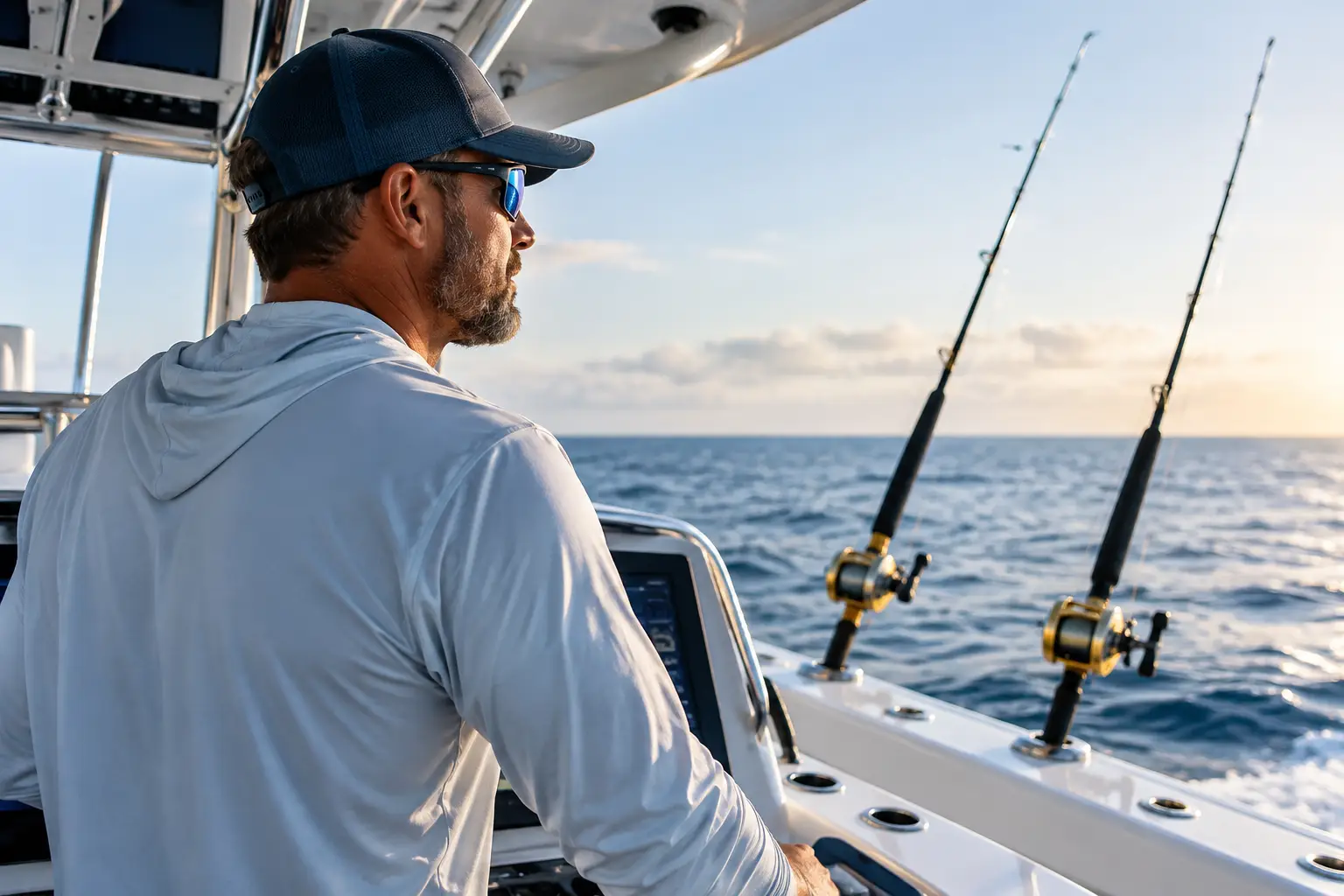
A tuna trip can look simple from the dock: point the bow offshore, find birds or bait, and wait for the rods to bend. In reality, learning how to choose a tuna captain starts well before departure. The right captain for a short albacore run may not be the right fit for a long-range bluefin mission, and a great family trip can look very different from a hard-charging trip built around casting to feeding fish.
Your job is not to find the most impressive-sounding boat. It is to match the captain, port, season, trip length, and fishing style to the tuna you want to catch and the kind of day your group actually wants on the water.
Start With the Tuna You Want to Catch
“Tuna fishing” covers a lot of ground. Bluefin, yellowfin, blackfin, bigeye, skipjack, and albacore all demand different decisions about where to go, how long to fish, and what gear is likely to be in play.
A bluefin trip in the Northeast or Southern California may involve trolling, chunking, jigging, kite fishing, or working fish on the surface, depending on the bite. Yellowfin trips out of the Gulf Coast, South Florida, Hawaii, or the Outer Banks can mean long runs to floating structure, overnight fishing, live-bait work, or chasing schools near the surface. Pacific Northwest albacore trips are often built around an offshore run and a fast-paced trolling bite when conditions line up.
That is why the first question is not, “Who catches the biggest tuna?” Ask yourself what fish you are targeting, when you can travel, and whether you want a day trip, an overnight, or a longer offshore run. Once those pieces are clear, you can focus on captains whose trips are built for that exact opportunity.
Let the Season Choose the Shortlist
Tuna are migratory, and the best window changes by region. A captain who fishes your target species during its strongest local season has current knowledge of where bait, water temperature, currents, and fish have been setting up.
If your dates are fixed, be flexible about the exact tuna species available. If catching one specific species is the whole point of the trip, build your travel dates around the established local season instead. No captain can schedule a bite, but a captain who spends the season on that fish gives you the best shot at being in the right water when conditions come together.
How to Choose a Tuna Captain by Fishing Plan
A good tuna captain should be able to explain the plan in plain language. You do not need their secret numbers, but you should understand the expected run, the likely techniques, the trip length, and what may change if weather or fish movement changes the picture.
Start with range. Offshore tuna can be close one week and far offshore the next. A boat that is a great platform for nearshore fishing may not be intended for a long run to distant tuna grounds. Ask how far the boat typically travels for the trip you are considering, and whether the listed trip length leaves enough actual fishing time after the run.
Then look at the fishing method. Trolling is a classic way to locate tuna and can be a good fit for anglers who want to cover water. Live bait, chunking, jigging, popping, and kite fishing can be more hands-on and more technical. None is automatically better. The right method is the one that fits the local fishery and the experience you want.
Gear matters, too. Tuna put serious pressure on tackle, especially when a larger fish shows up close to the boat. Ask whether the captain provides the rods, reels, terminal tackle, bait, and ice or fish storage needed for the trip. If you want to bring your own popping rod, jigging outfit, or fly gear, check first. The captain can tell you what is practical for the boat and current conditions.
Read the Trip Details for What They Actually Mean
A tuna charter description should tell you more than the species name. Look for the departure time, planned duration, number of anglers, fishing area, likely techniques, and what is included. A trip leaving before daylight may be designed to make the run and fish a morning bite. An overnight departure may be tied to a distant area, nighttime chunking, or arriving on the grounds ready to fish at first light.
Pay attention to the number of people fishing. Tuna fishing is exciting when several rods go down, but cockpit space and hands-on opportunity matter. A group of close friends may be perfectly happy sharing the action. If each person wants significant time on the rod, a smaller group or a trip designed around active techniques may fit better.
Also separate the possibility of tuna from the focus of the trip. Many offshore trips can encounter tuna while targeting a mixed bag of mahi, wahoo, billfish, or bottom fish. That can be a fantastic day, but it is different from booking a trip built specifically around tuna. If tuna is your priority, say so clearly when you contact the captain.
Ask Direct Questions Before You Book
The fastest way to narrow your choices is a short, honest conversation. Tell the captain who is coming, what everyone has done before, and what kind of tuna experience you want. A few direct questions will reveal whether the trip is a real fit:
- Which tuna species are you most likely to target on my dates?
- How long is the run, and how much fishing time does this trip usually allow?
- What techniques are most likely that time of year?
- Is this trip a good fit for first-time offshore anglers, experienced anglers, or a mixed group?
- What should we bring, wear, and plan for if the trip runs long or conditions change?
Listen for useful specifics, not guarantees. Good answers often include a little uncertainty because tuna fishing changes with weather, current, bait, and fish movement. That honesty helps you set the right expectations before you leave the dock.
Match the Captain to Your Group’s Pace
The best tuna captain for a serious angler may not be the best tuna captain for a family group, and that is not a knock on either trip. Some crews run a focused, fast-moving offshore day where everyone needs to be ready when a fish blows up behind the spread. Others are especially good at coaching newcomers through the basics, from fighting a fish to moving around the cockpit when multiple rods go off.
If you are booking for kids, first-timers, a corporate group, or anglers who are unsure about a long offshore run, say that upfront. Ask what the day feels like, not just what it targets. Will there be time to learn? Is the ride typically long? What happens if someone needs a break from fishing? A captain who understands your group can recommend the right trip length and target plan.
Experienced anglers should be equally clear about what they want. If your goal is to cast topwater plugs, work a jig, fly fish, or target a specific class of tuna, ask whether that is realistic during your travel window. Bringing a clear goal gives the captain a chance to steer you toward the trip that makes sense.
Think About the Whole Offshore Day
Tuna trips are often longer and more demanding than an inshore charter. Before booking, make sure everyone in the group is comfortable with an early start, a potentially long ride, sun exposure, and a full day around moving water. Bring the clothing and personal items the captain recommends, plus food and drinks if they are not included.
Weather deserves flexibility. Offshore conditions can be very different from what you see near the marina, and a captain may adjust the plan, change the departure, or recommend another target when the forecast does not support the original trip. That is part of booking a real offshore fishing day, not a failure of the plan.
If you hope to take fish home, ask how the catch is handled and what local rules apply. Tuna can mean a lot of quality meat, but species rules, retention limits, and processing arrangements vary by location. Knowing the plan before the trip saves confusion at the dock.
Choose the Trip That Gives You a Real Shot
The right choice comes down to fit: the right tuna species for the season, enough range for the likely fishing grounds, a technique you are excited to try, and a captain whose pace works for your crew. Big tuna photos are fun to look at, but the better clue is whether the trip details match the day you want to have.
Pick the captain who gives you a clear plan, realistic expectations, and a reason to be fired up when the horizon disappears behind the stern. That is how a tuna trip starts feeling less like a gamble and more like the adventure you came for.