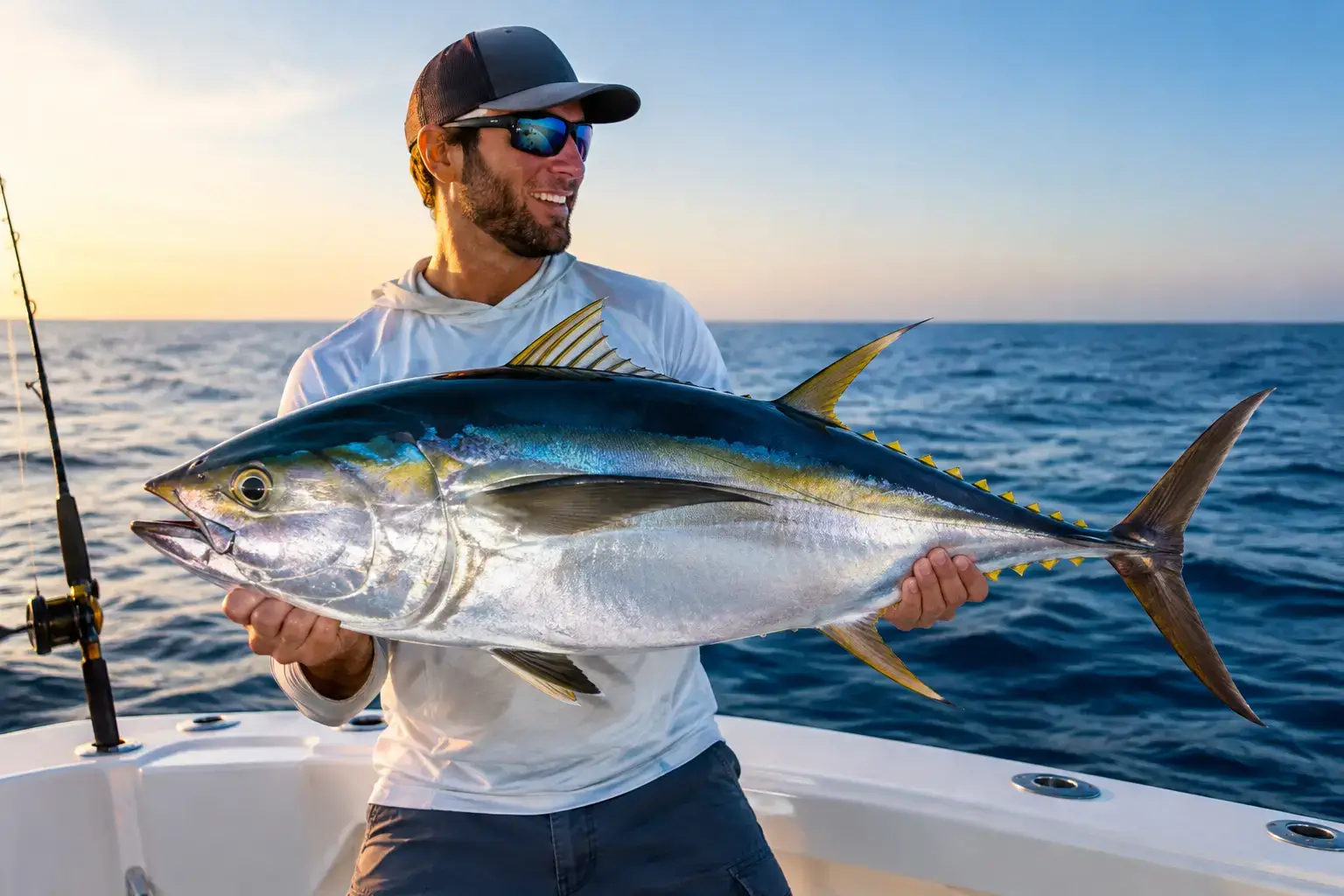
The short answer to when is tuna season is that there is no single tuna season. A bluefin trip off New England runs on a completely different calendar from a yellowfin run in the Gulf, and blackfin may be available close to home when bigger fish are well offshore. If tuna is the fish that has you checking weather windows and clearing your calendar, choose the species and fishing ground first. Then match the trip to the time of year.
Tuna move for water temperature, bait, current, and spawning patterns. They can show up early, linger late, or shift a long way from the dock after a change in conditions. A good charter plan starts with the seasonal pattern, but it leaves room for what is actually happening on the water.
When Is Tuna Season in the United States?
For most anglers, tuna fishing peaks from late spring through fall, roughly May through November. That broad window covers many offshore opportunities around the country, but it is only a starting point. Winter can be prime time for yellowfin in parts of the Gulf of Mexico and South Florida. Bluefin fishing can fire in spring and again in fall along the Northeast. On the West Coast, albacore commonly become a summer and early-fall target.
The best time also depends on the trip you want. A half-day offshore run for blackfin is a different plan from an overnight canyon trip for yellowfin and bigeye. Bluefin may demand an early departure, heavy tackle, a long run, and a crew ready to fish hard around the right bite window. When booking, be clear about whether your goal is simply to catch tuna or to target a specific species.
Bluefin Tuna Season: Northeast and Mid-Atlantic
Atlantic bluefin are the fish many anglers build a whole trip around. In the Northeast and Mid-Atlantic, the practical window often begins in late spring and can extend into late fall. May and June can produce quality fish as they move into productive water, while summer brings more stable weather and a wider range of trip options. September and October are often high-interest months, especially when bait stacks up and larger fish are on the move.
Massachusetts, Rhode Island, New York, New Jersey, and North Carolina all have bluefin opportunities, though the timing and distance offshore vary sharply. In some places, fish may be within reach on a day trip. In others, the better grounds call for a longer offshore commitment.
Bluefin regulations are tightly managed and can change during the season. Retention rules, size limits, and daily availability affect what happens after the hookup. Ask before booking whether the trip is geared toward harvest where legal, catch-and-release, or a mix based on current rules. That conversation avoids the wrong expectations and helps you pick the right charter for the day.
Best time to book a bluefin trip
For a first bluefin charter, late summer into early fall is often the most comfortable place to start. Weather is generally more forgiving than spring, and there is usually a better chance of finding a schedule that works. That said, experienced anglers chasing a particular class of fish may specifically want the spring or fall bite. The “best” month depends on what is running, not just what looks good on a calendar.
Yellowfin Tuna Season: Gulf, Florida, and Hawaii
Yellowfin offer one of the most flexible tuna calendars in the country. In the Gulf of Mexico, yellowfin can be available year-round around offshore structure and deep-water rigs, with many anglers targeting them from late fall through spring. Cooler months can bring excellent fishing, though conditions offshore can be less predictable. Summer gives you warmer water and often easier weather windows, but the ride can still be substantial.
Louisiana is especially well known for yellowfin trips because deep water and offshore structure are accessible from several departure points. Texas, Mississippi, Alabama, and the Florida Panhandle also put anglers within range depending on the season and the trip length.
South Florida yellowfin opportunities can build when warm currents, bait, and clean blue water line up. Hawaii has its own rhythm, with yellowfin, often called ahi, available throughout the year. Seasonal peaks vary by island and local conditions, so asking about the recent bite matters more than relying on a generic month-by-month chart.
If yellowfin is your target, consider the difference between a daytime trip and an overnight trip. Some of the strongest opportunities happen after dark, often around offshore structure or floating objects where bait gathers. An overnight run is not the right fit for every group, especially first-timers with limited offshore experience, but it may give dedicated tuna anglers more time in the zone.
Blackfin Tuna Season: The Accessible Tuna Option
Blackfin are smaller than bluefin and yellowfin, but they are fast, hard-pulling fish and excellent table fare. For many anglers, they are the most realistic way to add tuna to an offshore day. Blackfin are common targets off Florida and in parts of the Gulf, where they may be available through much of the year.
Spring, fall, and winter are often productive, particularly when bait is concentrated around reefs, wrecks, ledges, and offshore structure. They can mix with bonito, mahi, king mackerel, and other offshore species, which makes a blackfin-focused trip a smart choice for groups who want steady action rather than waiting all day for one giant bite.
Do not treat blackfin as a consolation prize. On light tackle, a good blackfin is pure fun, and a livewell or fish box with a few quality fish can make the ride home feel like a win. For a family or mixed-experience group, this is often the tuna trip that makes the most sense.
Albacore and Bigeye: Timing Matters More
On the Pacific Coast, albacore are closely tied to summer and early-fall offshore conditions. Anglers from Southern California through Oregon and Washington watch water temperatures, current breaks, and reports of fish moving within range. July through September is a familiar target window, although a season can arrive early, stay late, or never set up close enough for easy access.
Bigeye tuna are a prized offshore target in several regions, including the Northeast canyons and the Gulf. They are often part of longer-range yellowfin trips rather than a species you can reliably plan a short day around. Late summer and fall can be productive in the Northeast when warm water pushes toward canyon country. A captain may find bigeye while targeting yellowfin, but nobody should promise one on a single trip.
How to Choose Your Tuna Trip by Season
Start with your travel dates, then work backward. If you are locked into a family vacation in July, look for the tuna species that are most likely around your destination then. If the fish matters more than the destination, follow the strongest seasonal window for that species instead.
Before you commit, ask a few direct questions: What tuna species have been the most consistent lately? How far is the run on the trip being offered? Is this trolling, chunking, jigging, popping, live-bait fishing, or a combination? And is the trip appropriate for everyone in your group?
Technique changes the experience. Trolling can cover ground and works well for anglers new to offshore fishing. Jigging and popping are more physical and hands-on. Chunking may mean long periods of watching a spread, followed by sudden chaos when a tuna finds the bait. None is automatically better. Pick the method that fits how you want to fish.
Weather deserves equal weight. The calendar may say it is prime season, but offshore conditions make the final call. Build a little flexibility into your trip if you can, particularly for long-range tuna runs. A backup day may be the difference between forcing a marginal weather window and getting the kind of day you came for.
Tuna season is really a moving target shaped by species, region, and the water that week. Pick the fish you want, choose a destination during its strongest window, and talk through the current plan before you leave the dock. When the bait is right and the reel starts screaming, the calendar stops mattering.