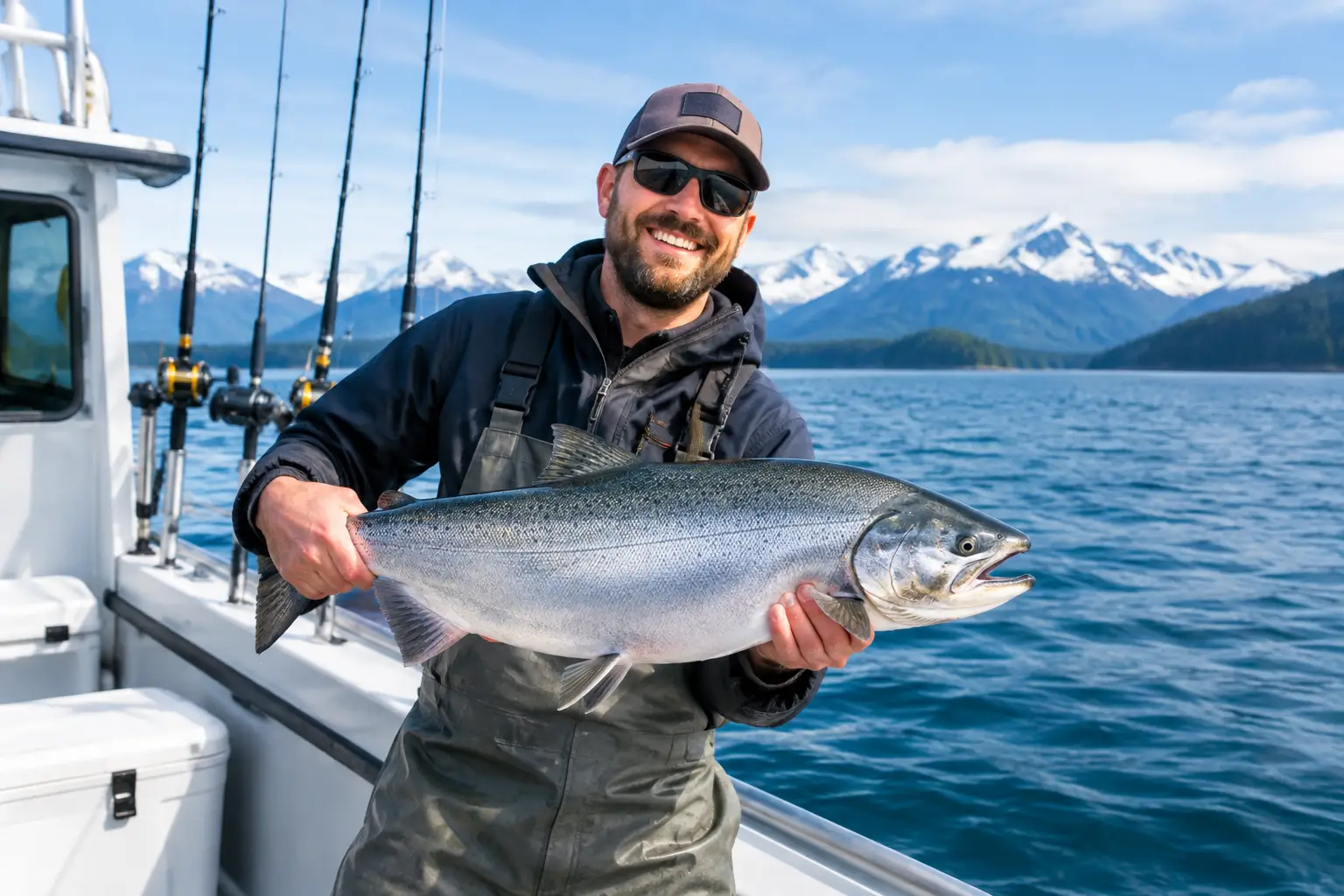
A salmon trip can mean trolling wide open Lake Michigan at first light, back-trolling a river seam in Oregon, or running through Alaskan saltwater with a box full of ice and a hard-fighting king on the line. The best salmon charter destinations depend on the species you want, the time of year you can travel, and whether your crew wants a high-action day, a trophy hunt, or fish for the freezer.
Salmon are not a one-size-fits-all charter target. Chinook, coho, sockeye, pink, chum, and Atlantic salmon all bring different seasons, regulations, water types, and expectations. Start with the fish and the kind of experience you want. Then find a captain who fishes that run, that water, and that season for a living.
Alaska: The Big-Run Salmon Destination
Alaska belongs at the top of nearly every salmon angler’s list, but it is not one fishery. Southeast Alaska, the Kenai Peninsula, Kodiak, Prince William Sound, and Bristol Bay each offer a different trip. A captain’s home port matters as much as the state on the listing.
For anglers chasing Chinook, often called king salmon, Southeast Alaska is a classic saltwater choice. These are the heavy, powerful fish that make a trolling rod look overmatched. A day may produce a mix of kings, coho, halibut, rockfish, or lingcod depending on the area and the season, which makes it a strong option for groups that want a varied catch.
The Kenai Peninsula is better known for big-river salmon culture. If your goal is a king or sockeye experience in moving water, this is where the details matter. River trips can involve drifting, back-trolling, casting, or fishing from the bank depending on the captain and access. They are less about covering miles of open water and more about reading current, timing tides, and putting a bait or lure through a specific lane.
Alaska rewards anglers who book early and stay flexible. Weather can change the plan, regulations can shift with run strength, and a captain may recommend targeting coho instead of kings if that is where the best opportunity is. That is not a downgrade. Coho are aggressive, acrobatic, and one of the most fun salmon species to catch on light tackle.
Pacific Northwest: Salmon Fishing With Local Knowledge
Washington and Oregon offer some of the most accessible salmon charter fishing in the country, but these fisheries are highly seasonal and highly local. A great bite in one marine area or river system does not guarantee the same action an hour away.
Washington’s Puget Sound and the Strait of Juan de Fuca can produce outstanding Chinook and coho opportunities, with saltwater trolling as a common charter format. It is a good fit for anglers who want scenic coastal water, a manageable day trip from major population centers, and a chance at more than one salmon species over the course of the season.
On the Oregon coast, ports such as Astoria, Newport, and Charleston put anglers near ocean salmon and river-bound runs. The Columbia River region is especially well known, though timing, access, and rules change from run to run. Oregon trips can be a smart choice for anglers who want to combine a salmon day with bottom fishing, crabbing, or a coastal weekend.
The trade-off in the Pacific Northwest is that you should not book based on a generic promise of “salmon fishing.” Ask what species is currently being targeted, whether the trip is in the ocean, bay, river, or estuary, and what technique the captain expects to use. The best captains will be plain about the current bite rather than selling yesterday’s report.
The Great Lakes: Big Water, Big Salmon, Easy Access
For many anglers east of the Rockies, the Great Lakes are among the best salmon charter destinations because they offer serious fish without the logistics of a long-distance wilderness trip. Lake Michigan is the headline act, but Lake Ontario, Lake Huron, and Lake Superior all have salmon opportunities that can be excellent at the right time.
Lake Michigan charter fishing is famous for hard-running Chinook, along with coho and a mixed bag that can include lake trout, brown trout, and steelhead. Most trips are trolling-based, using downriggers, divers, planer boards, and carefully tuned spreads. It is technical fishing, but guests do not need to be technical anglers. A good crew handles the program and talks you through the fight when a rod fires.
Ports in Michigan, Wisconsin, Illinois, and Indiana make Lake Michigan unusually flexible for travel planning. You can build a salmon trip around a family vacation, a reunion, or a quick weekend without sacrificing the chance at a legitimate fish. Summer is the obvious planning window, while late summer and early fall can bring strong staging fish closer to tributary mouths.
Lake Ontario deserves equal consideration for anglers in the Northeast. Its Chinook fishery has a loyal following, and charters out of New York ports can offer a direct route to big-water salmon action. Conditions can get sporty, especially for crews unused to open water. If motion sickness is a concern, say so before booking and choose a weather window, shorter trip, or calmer departure time.
California: Ocean Salmon When the Season Lines Up
California salmon fishing has long drawn anglers looking for ocean-going Chinook, especially out of Northern California ports. The appeal is straightforward: deep Pacific water, powerful fish, and a chance to fish close to iconic coastal towns.
But California is also the destination where anglers need to check current regulations before getting attached to a date. Salmon seasons can be limited, delayed, or closed based on stock conditions and management decisions. A captain who specializes in salmon will know the current rules and may offer alternatives such as rockfish, halibut, or albacore when salmon access is not available.
If the fishery is open, book with a captain who clearly states the departure port, target species, trip length, and realistic expectations. Ocean salmon fishing often means a pre-dawn start and a longer run. That effort can be worth it, but it is better to know the plan before you pack the cooler.
Choosing the Right Salmon Trip for Your Crew
The destination gets attention, but the trip format often decides whether the day feels right. Saltwater trolling charters are generally the easiest entry point for first-timers. There is room to move around, the captain and mate manage the gear, and several people can take turns fighting fish.
River salmon trips can feel more hands-on. You may cast spinners, drift eggs, pull plugs, or fish bait through a run. They suit anglers who want to learn technique and do not mind slower stretches between bites. They can also be better for people who prefer sheltered water over open-lake or ocean swells.
Fly anglers should be especially specific. Salmon on the fly is not just a standard charter with a different rod. Ask whether the guide provides fly gear, what casting ability is needed, whether the water is wadeable, and whether the trip targets fresh fish in tidal water or fish farther upriver. Those are completely different days.
When comparing charters, look past the hero photos. Confirm the species the captain is targeting during your travel dates, the typical trip length, what licenses or stamps you need, what happens if weather changes, and whether fish cleaning is included. If you are bringing kids or anglers new to boats, tell the captain upfront. The right operator can recommend a trip that fits the crew instead of forcing the crew into a trophy-focused plan.
Timing Matters More Than a Destination List
Salmon follow runs, water temperatures, bait, and spawning schedules. That means there is no single best month nationwide. Alaska’s summer opportunities may be peaking while Great Lakes salmon are setting up for late-season action and Pacific Northwest rules are changing by area.
Treat broad seasonal advice as a starting point, not a guarantee. Before you book, ask one direct question: “What salmon are you realistically catching on this trip during my dates?” A clear answer tells you far more than a destination’s reputation.
Use a species-first search when you are ready to narrow the field. On Unreel Charters, start with salmon, choose the state or port that fits your travel plan, then compare trip types and captain details. The best trip is not necessarily the farthest one or the most expensive one. It is the one matched to the run, the water, and the anglers stepping aboard.
Pick the fish you want to chase, give yourself a little room around the weather, and let a local salmon captain put you where the run is moving.