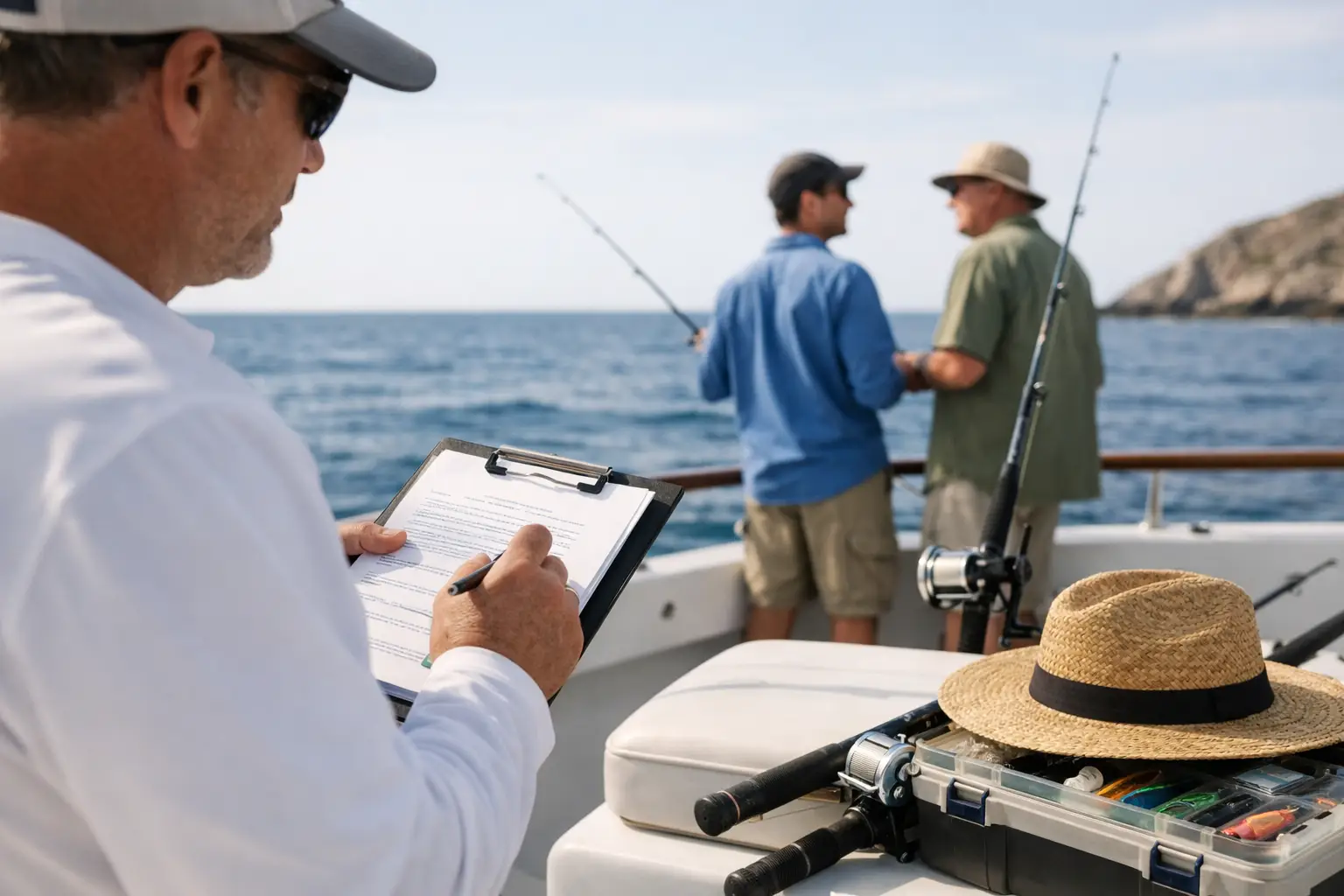
A hot redfish bite, a weather window, and a full crew can make a charter feel locked in - until someone asks the question that can stop the trip at the dock: do captains supply fishing licenses? Often, yes. But the real answer depends on the state, the water you fish, the species you target, and how the charter is permitted.
The cleanest rule is this: many licensed charter boats can legally cover their paying passengers under a vessel or charter license. That does not mean every guided trip includes every license requirement. Before you book, confirm what the captain’s license covers and whether you need to buy anything yourself.
When a charter license usually covers anglers
On many saltwater charter trips, the boat operates under a for-hire or blanket license. When that license is valid, passengers fishing from that boat during the trip generally do not need individual state saltwater licenses. The captain is not handing each angler a personal fishing license. Instead, the charter’s operating license covers eligible passengers while they are aboard and fishing under that trip.
This is common on inshore, nearshore, offshore, reef, and wreck trips. If you are headed out for redfish, snook, speckled trout, flounder, striped bass, mahi-mahi, snapper, kingfish, tuna, or marlin, the charter may have you covered. Still, “may” is doing real work here. Rules are set by state agencies and can change by fishery, season, or jurisdiction.
A professional captain should be able to tell you plainly whether their charter license covers your trip. You should not have to guess at the marina.
Do captains supply fishing licenses for every trip?
No. Freshwater trips are where anglers most often need to slow down and ask more questions. Many freshwater guides require every client to carry an individual state fishing license, even when the guide is fully licensed and insured. That can apply to bass, crappie, walleye, muskie, trout, salmon, catfish, and other inland fisheries.
Some waters have their own arrangements, while others follow the state’s standard license rules. A guide fishing a major river, a reservoir near a state line, or a lake with special management regulations may face a different set of requirements than an offshore captain leaving a coastal marina.
The same goes for certain saltwater situations. A blanket charter license may cover basic recreational fishing but not a required stamp, endorsement, harvest tag, or species-specific permit. In some places, shore-based fishing before or after the charter is not covered by the boat’s license either. If you plan to cast from the beach at sunrise or fish a pier after the trip, you may need your own license for that separate outing.
Why the answer changes by location and species
Fishing regulations are local by design. States manage their own licenses, and many fisheries overlap with federal rules, tribal waters, parks, wildlife refuges, or neighboring states. A captain who fishes one bay system every day knows the rules that apply to that water. An angler booking from out of town should not assume the rules work the same way they do at home.
Crossing a state line on the water can matter. So can fishing in a boundary river or running offshore into federal waters. For highly managed species, the boat may need specific permits, reporting authority, or a federal charter endorsement. Those requirements often fall on the operator, but your captain should explain what they mean for passengers and harvest.
Regulations can also shift between seasons. A trip targeting reef fish may require different documentation or carry different possession rules than a summer inshore trip for speckled trout. The license question is only one part of legal fishing. Bag limits, size limits, closed seasons, and protected species rules still apply to everyone on board.
What to ask before you book
You do not need to become a regulation expert before choosing a charter. You do need to ask one direct question before putting down a deposit: “Does your charter license cover every angler on this trip, or should we purchase individual licenses or stamps?”
Ask early, especially if you are booking for a family, a corporate group, or friends flying in from another state. If anyone in the group is underage, a senior, a military veteran, or otherwise eligible for an exemption, tell the captain. Age-based and residency-based exemptions vary widely, and the captain can point you toward the right answer for that trip.
It also helps to confirm the details in writing in your booking message or trip confirmation. That protects both sides from a simple misunderstanding. If the captain tells you to buy a license, do it before arrival and keep a digital or printed copy handy. Do not assume spotty marina cell service will cooperate when it is time to board.
A quick pre-trip license checklist
Use this short check before departure:
- Confirm whether the charter’s vessel license covers all paying passengers.
- Ask whether your target species requires a separate stamp, tag, or endorsement.
- Verify whether the trip crosses into another state’s waters or federal waters.
- Find out whether fishing before or after the charter requires your own license.
- Purchase any required license before you leave home and bring proof with you.
This takes a few minutes and keeps the day focused on bait, tides, and tight lines instead of paperwork.
What a good captain will handle - and what remains your responsibility
A good captain handles the operational side: a legally equipped boat, required charter permissions, safety gear, local knowledge, and a plan built around the weather and target species. They should also communicate license requirements without making you chase down vague answers.
Your responsibility is to provide accurate information when asked, follow onboard rules, and hold any individual license you are required to have. If the captain says a special permit applies, do not treat it as optional. Fishing without the right license can mean fines, a ruined trip, and trouble for the charter operator who is trying to run a clean business.
There is a practical reason experienced captains are careful about this. Their livelihood depends on protecting the fishery, following the regulations, and getting clients home with a great story instead of a citation. Respect that local expertise. The captain knows the water, but they also know the rulebook that comes with it.
Finding the right charter starts with the fish
License coverage is easier to confirm when you start with a specific trip, not a vague search for “fishing near me.” First decide what you want to catch and what kind of day you want on the water. An easygoing inshore trip for redfish and trout can have a very different setup from an offshore tuna run, a fly-fishing day for bonefish, or a freshwater muskie hunt.
When comparing charters, look for clear trip descriptions that identify the target species, fishing area, trip length, and what is included. Then ask the license question before booking. Platforms like Unreel Charters make it easier to narrow the search by species, location, and trip type, so you can get that answer from a captain whose fishing program actually matches your goal.
The best booking conversations are simple: Here is the fish we want to catch. Here is who is coming. Here is our experience level. What license, if any, do we need? A straight answer before the boat leaves is one less thing between your crew and the next unreel catch.