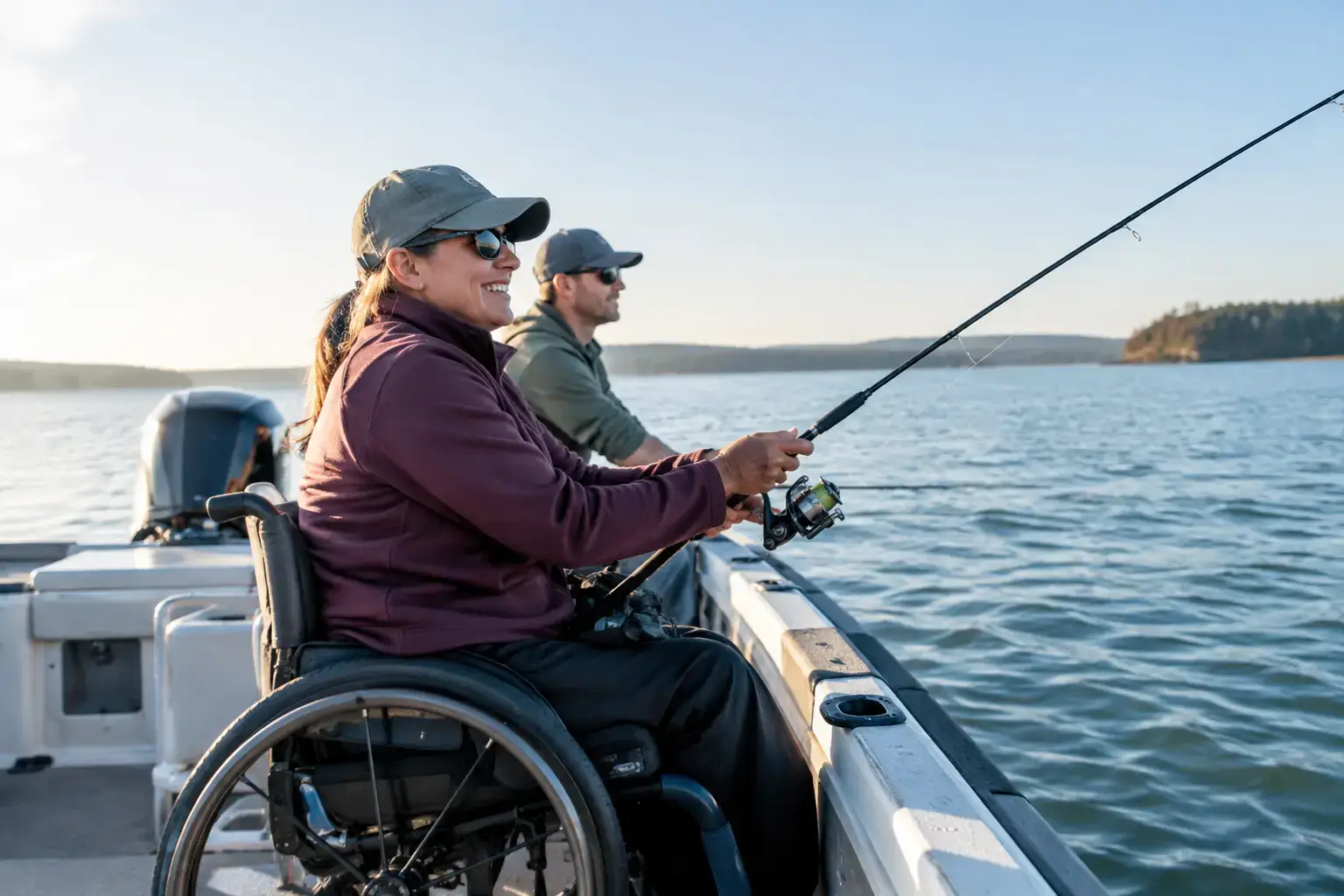
A great fishing day should be about feeling the bite, not worrying about whether you can get down the dock, move around the boat, or stay comfortable long enough to fish. Finding accessible fishing trips takes more than filtering by destination and species. It means matching the boat, launch point, trip length, and fishing style to the needs of everyone in your group.
That can mean planning around a wheelchair, limited mobility, balance concerns, chronic pain, sensory needs, a recent recovery, or simply bringing along an angler who needs a little more room and a steadier ride. The right charter can make the day feel easy. The wrong fit can turn a trip everyone was excited about into a long, frustrating outing.
Start With the Fishing Day You Actually Want
Before searching for a boat, decide what a successful day looks like for your group. Are you hoping to put a first redfish, speckled trout, or flounder in the boat? Do you want a calm-water family trip with plenty of action? Or is the goal a serious offshore run for tuna, sailfish, or marlin?
The fish matters because it shapes the whole day. Inshore trips often mean shorter runs, protected water, and more chances to sit between spots. That can be a strong choice for anglers who need a smoother ride, easier boarding, or flexibility to head in early. Nearshore reef and wreck trips can also work well when the weather is settled, though the ride may be rougher and the boat may have more movement.
Offshore and deep-sea fishing can be incredible, but it asks more from everyone aboard. Runs are longer, seas can build, and moving around the deck takes more balance. That does not automatically rule it out. It just means you should be honest about comfort, stamina, and the conditions your group can handle. A shorter offshore trip may be a better fit than an all-day run, especially for a first outing.
What Accessible Fishing Trips Look Like in Practice
Accessibility is not one feature you can check off. One angler may need a step-free route from parking lot to dock. Another may be able to board with assistance but need a stable seat, shade, and room to stretch. Someone else may need clear instructions, a quieter environment, or a place to store medication and personal equipment safely.
When you contact a captain, describe what will make the trip workable rather than using a broad label alone. Clear details help you get a useful answer. Let them know whether the angler uses a wheelchair full-time, can transfer to a boat seat, needs rail support, has trouble with stairs, or needs to remain seated while fishing.
Ask about the full path of travel, starting before the boat. A boat with an open deck is only part of the equation if the marina has uneven pavement, a steep gangway, or a floating dock that shifts with tide and wake. Find out where you can park, how far the walk or roll is to the dock, whether there are steps along the route, and how boarding usually works.
A good conversation should also cover the boat itself. Ask about deck level changes, doorways, cabin access, seating, handrails, shade, restroom access, and whether there is enough open space to maneuver. Photos can help, but they do not replace specifics. A wide-looking cockpit may still have raised coamings, narrow passages, coolers, or gear storage that changes the usable space.
Ask About Boarding Without Guesswork
Boarding is usually the biggest question, and it depends heavily on the marina, tide, boat design, and the angler's transfer ability. Some boats sit close to the dock and have a straightforward step across. Others may require stepping down, crossing a gap, or using a ladder-like entry point. Conditions can change from morning to afternoon.
Tell the captain what assistance is appropriate and what is not. If an angler can transfer with a steady handrail and one helper, say that. If lifting is not an option, say that clearly. It is better to find a boat that fits the plan than to arrive at the dock hoping the setup will work out.
If you are traveling with a mobility device, ask whether it can come aboard, be secured at the dock, or be stored nearby during the trip. Do not assume a folding chair, walker, or wheelchair will fit through a cabin door or stay protected from spray. Bring dimensions if space is tight.
Choose the Right Trip Length and Water Conditions
A four-hour charter is often the sweet spot for accessible fishing, especially for first-timers. It gives everyone time to fish, settle into the rhythm of the boat, and enjoy the day without committing to a long run or a full day on the water. If the bite is close to the marina, a shorter trip can still produce plenty of fish.
Trip length is not just about endurance. It affects restroom needs, medication timing, meals, temperature exposure, and how much time an angler can comfortably stay in one position. Build in room for breaks. Fishing is better when nobody feels pressured to push past their limit just because the clock is running.
Protected water is often more important than chasing the biggest possible catch. Bays, marshes, rivers, lakes, and backcountry flats can offer excellent fishing with less pounding than open water. Redfish, trout, snook, striped bass, crappie, bass, and many other species can make for memorable trips without a long offshore ride.
Weather always gets the final vote. Even a boat that is comfortable in calm conditions can feel challenging when wind and chop build. Ask what kind of conditions are typical for the area and whether the trip can shift to more protected water if the forecast changes. Flexibility matters more than forcing a particular plan.
Plan for Fishing From a Seated Position
Most anglers can fish effectively from a seat with a little planning. Spinning gear is usually the easiest setup because it is manageable, versatile, and works for casting, drifting bait, jigging lightly, or soaking a bait near structure. A rod holder can take the strain out of holding a rod while waiting for a bite, and it can help keep gear secure when the boat moves.
Ask whether the crew can position an angler where they have a clear casting lane and room to fight a fish. On a busy boat, that may mean fishing from the stern or a protected side deck rather than trying to move around during the action. For many trips, the crew can handle netting, leader work, bait changes, and fish photos while the angler stays in a stable position.
Consider the physical demands of the target species, too. A bull redfish or big striped bass can pull hard but may be manageable with the right rod and drag setting. A long fight with tuna, amberjack, or halibut is a different challenge. If landing a powerful fish is part of the goal, tell the captain ahead of time so the tackle and game plan can match the angler.
Bring Comfort Gear That Helps, Not Clutter
Charter boats have limited space, so bring only what supports a more comfortable day. A sun hat, layers, sunscreen, water, required medications, and motion-sickness prevention are smart basics. If you use a seat cushion, back support, gloves, or adaptive fishing aid on land, ask whether it is practical aboard the boat.
For anglers sensitive to heat, cold, glare, or noise, plan around the season and departure time. Early morning can be cooler and calmer in many places, while a midday trip may offer warmer conditions and easier travel for some groups. There is no universal best choice. The right answer depends on the fish, local weather, and the person you are planning for.
Keep personal gear organized in one small, easy-to-reach bag. Loose items become obstacles on a moving deck. If someone needs medical equipment or a particular item close by, tell the crew where it should be stored and make sure it stays accessible during the ride.
Finding Accessible Fishing Trips With Confidence
When you search, begin with the fish you want to catch and the kind of water your group can enjoy. Then narrow the options by asking direct questions about the marina, boarding, deck layout, seating, restroom access, trip length, and backup plans for rough weather. On Unreel Charters, you can start with the species, location, and trip type, then contact the captain directly before committing to a day on the water.
Do not feel like you need to apologize for asking detailed questions. A fishing charter is a real investment of time, travel, and anticipation. The more clearly you explain what your group needs, the easier it is to choose a trip where everybody can focus on the next bite.
The best accessible trip is not necessarily the biggest boat or the farthest run offshore. It is the one where every angler can board with confidence, fish comfortably, and head home talking about the catch instead of the obstacles.