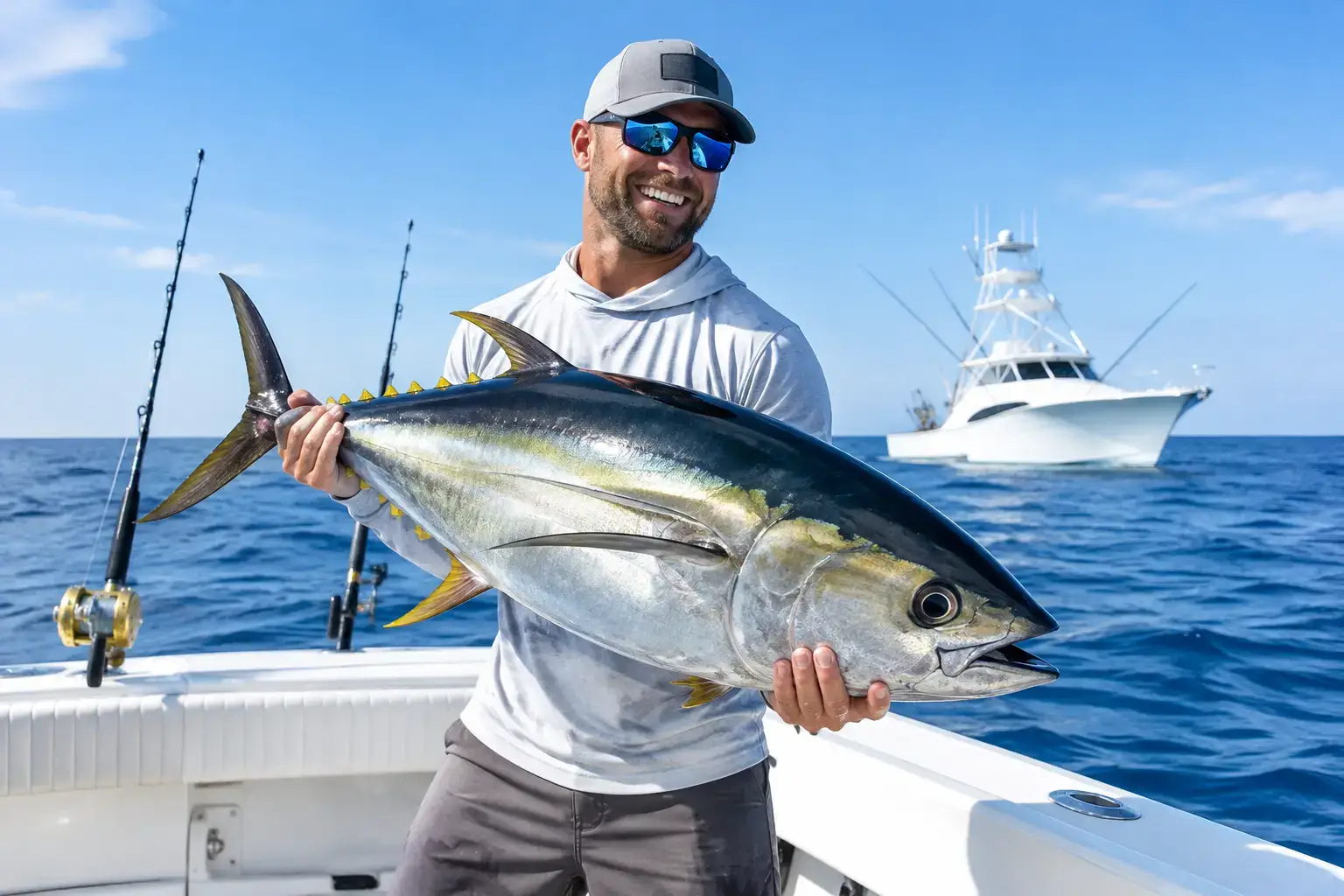
The first tuna you see crash a bait or rip drag is the moment an offshore trip stops feeling theoretical. Tuna charters can put you in range of bluefin, yellowfin, blackfin, bigeye, or albacore, but the right trip depends on far more than finding a boat with “tuna” in the description. Your target species, the season, the run offshore, your group’s experience, and how hard you want to fish all shape the day.
For some crews, the goal is a fast-paced day of trolling and filling the fish box. For others, it is one serious shot at a giant bluefin on heavy stand-up gear. Know which version of tuna fishing you want before you start comparing trips. It makes every other booking decision easier.
Start With the Tuna You Want to Catch
“Tuna fishing” covers very different fisheries. A blackfin trip off Florida can be a manageable offshore day for anglers who have some boating experience and want action. A yellowfin trip in the Gulf, Southern California, or Hawaii may mean a long run, live-bait fishing, chunking, or kite fishing. Bluefin fishing in the Northeast, Mid-Atlantic, and California can be technical, weather-dependent, and built around a single powerful fish.
Ask what species are realistically available during your travel dates, not just what has been caught there before. A captain may run trips for several tuna species through the year, but seasonal windows, bait movement, water temperature, and weather decide what is happening now.
If you are flexible on destination, begin with the fish. If you are locked into a vacation location, begin with the local season. That simple choice helps you avoid booking an offshore trip that is great fishing but poorly timed for tuna.
Match the Trip to Your Crew
A tuna trip is not automatically the best first charter for every group. Offshore days often start early, cover real distance, and require patience between bites. When the bite turns on, though, everyone needs to move quickly, listen closely, and take turns at the rod.
Think honestly about who is coming. A crew of experienced anglers may be happy with an all-day run and a deck full of heavy tackle. A family with younger kids or first-time saltwater anglers may have a better time on a shorter offshore trip that targets blackfin along with mahi, wahoo, or bottom fish. There is no lesser version of the trip if everyone comes home fired up and wants to go again.
Trip length matters because distance matters. Nearshore waters may hold tuna in certain places and seasons, but many fisheries require a substantial offshore run before lines ever go in. A half-day outing can be enough in the right fishery, while other destinations call for a full day, an overnight trip, or longer. Do not judge the value only by hours listed. Ask how much of the day is likely to be spent running, fishing, and returning.
What Tuna Charters Usually Cost
Tuna charter pricing changes with trip length, location, boat size, fuel needs, time of year, and whether the trip is private or shared. A shorter local offshore trip generally costs less than an overnight run targeting yellowfin or a specialized bluefin trip with heavy gear and a long distance to the grounds.
The number that matters is the full trip total, not just the starting price. Before you commit, ask what is included in the rate and what may be extra. Common details to confirm include the fishing license, bait, tackle, fish cleaning, mate gratuity, parking, ice, and any fuel surcharge. If your group is splitting the charter, settle the headcount and payment plan before the morning of the trip.
A private charter gives your group control over the pace and target species, within the conditions and fishing available. Shared trips can lower the individual cost and are a practical option for solo anglers, but you will fish with others and follow the day’s plan. Neither is automatically better. It depends on whether your priority is a dedicated trip for your crew or simply getting offshore for a shot at tuna.
Questions to Ask Before Booking a Tuna Trip
A good conversation before booking removes most of the uncertainty. Tell the captain how many anglers are coming, their offshore experience, your preferred dates, and the tuna species you hope to catch. Then ask what the trip normally looks like for that time of year.
You also want clear answers on the expected run, the planned trip length, the number of anglers who can fish comfortably, and the techniques likely to be used. Trolling is common and approachable, while jigging, popping, chunking, live-bait fishing, and kite fishing can each demand more attention and physical effort. If casting to feeding tuna is high on your list, say so. If you would rather troll and enjoy the ride, say that too.
Ask whether anglers will rotate on hookups. On a group trip, that detail matters. A tuna bite can go from quiet to chaos quickly, and a fair rotation keeps one confident angler from taking every rod.
Finally, ask about the weather policy and the captain’s call on fishable conditions. Tuna fishing requires flexibility. The perfect date on a calendar does not help if the ocean does not cooperate.
Pick the Right Boat, Not Just the Biggest One
A large boat can offer more room and comfort, especially for a bigger group or a long ride offshore. But boat size alone does not tell you whether it fits your trip. Focus on the offshore range, fishing layout, shade or cabin space, bathroom setup if your group needs one, and the number of people fishing.
For a small group of experienced anglers, a capable center console can be an exciting, hands-on platform for casting, jigging, and fighting fish around the boat. For a mixed group or a long offshore day, a sportfisher-style boat may offer more comfort and protection from the elements. The best choice is the one that suits the conditions, the fishery, and your crew.
Do not overlook the departure point. A boat leaving closer to the fishing grounds may create more fishing time than a longer ride from a convenient marina. On the other hand, shaving drive time from your hotel can matter when you are traveling with kids or coordinating a large group. There is usually a trade-off.
Pack for the Run and the Fight
Most tuna trips provide the rods, reels, terminal tackle, and bait needed for the day. Bring your own favorite gear only after confirming it fits the planned technique. A popping rod is no help if the day calls for trolling, and a favorite light outfit may not be appropriate for a bluefin bite.
Pack light but smart: sun-protective clothing, a hat that stays put, polarized sunglasses, sunscreen, rain gear, non-slip shoes, water, snacks, and any motion-sickness remedy you know works for you. Eat a simple breakfast, hydrate before leaving the dock, and keep your eyes on the horizon during the run if the water gets to you.
A soft cooler is useful if you plan to take fish home, but confirm the fish-cleaning plan first. Tuna yields a lot of meat, and your group should know how much it can reasonably use, store, or share. Fresh tuna is too good to waste.
Be Ready When the Bite Happens
Tuna fishing has long quiet stretches and sudden mayhem. Lines may be set for an hour before a reel screams, then several rods go down at once. The anglers who have the best day are usually the ones who are ready before that moment arrives.
Listen during the dockside briefing. Learn where to stand, where not to step, how the rotation works, and what to do when a fish is hooked. Keep your gear stowed, your phone secure, and your attention on the spread when the captain says fish are showing.
You do not need to be an expert to earn a tuna. You need the right expectations, a crew that matches the trip, and a willingness to fish hard when the opportunity shows. Choose the fishery that fits your dates, ask direct questions, and book the day your group will remember when the drag starts screaming.