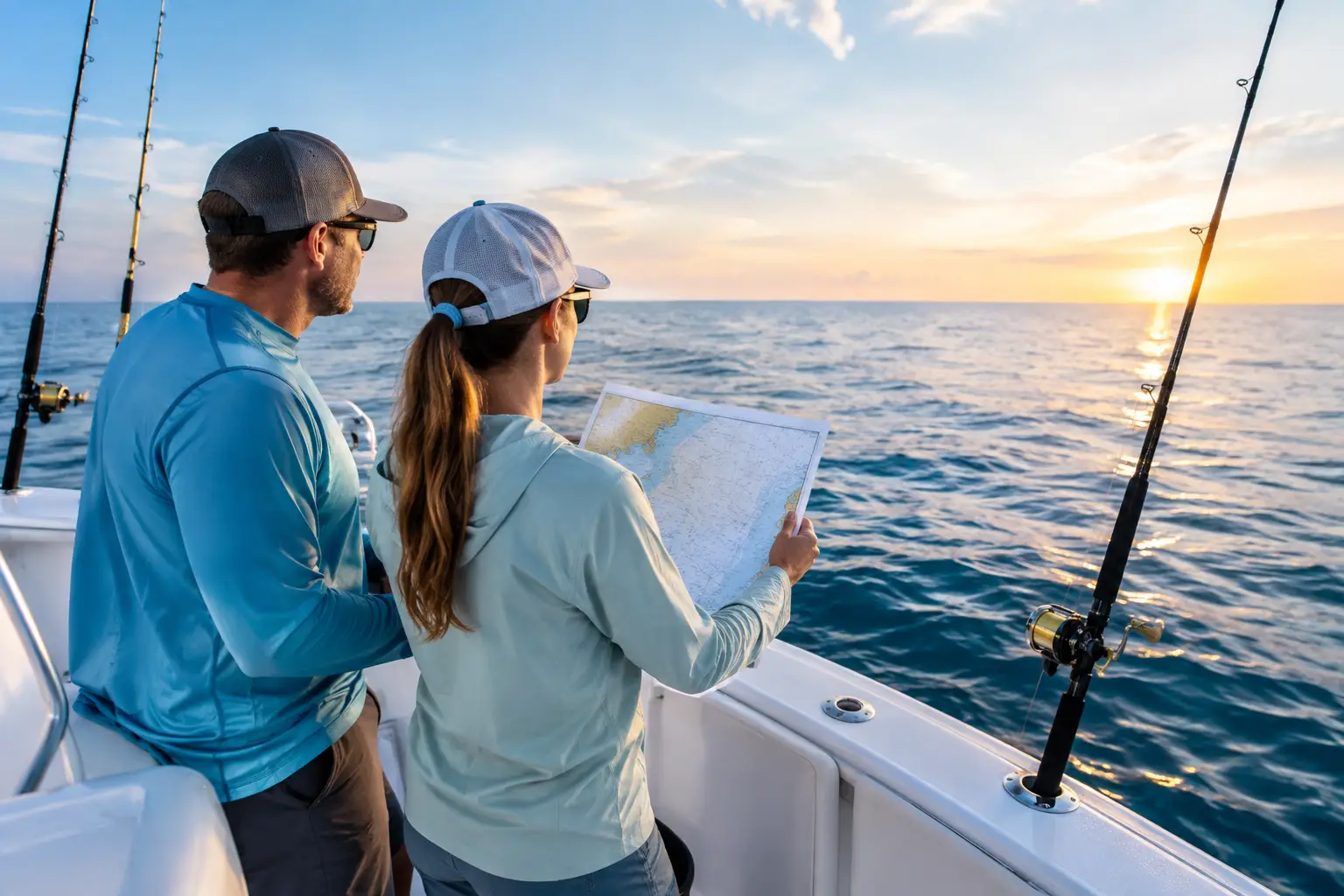
A three-day trip can feel like a bucket-list run or three expensive days of chasing yesterday's bite. The difference usually comes down to the multiday fishing trip itinerary you build before the truck is loaded, not after the first morning's weather report arrives.
A good itinerary gives your captain room to make the right calls while keeping your crew focused on the fish that brought you there. It accounts for travel, seasonal patterns, sea conditions, fatigue, food, tackle, and one unavoidable truth: a fishing plan should have a target, but it cannot be rigid.
Start With the Fish, Not the Vacation Rental
The first question is simple: what do you want to catch? That answer shapes nearly every other decision.
A crew chasing yellowfin tuna, bluefin tuna, marlin, or swordfish needs a different plan than a family hoping for redfish, speckled trout, snook, or flounder. The same goes for permit on the flats, salmon on a river system, halibut offshore, or muskie in northern lakes. Species determine the right region, the best month, the run time, the trip length, and the kind of captain you need.
Be specific, but give yourself a sensible second choice. If your main goal is offshore tuna, ask what the captain can target when a hard offshore run is off the table. If you are traveling for tarpon, ask whether snook, redfish, or permit are realistic alternate options in that window. A backup species is not settling. It is how you keep a weather day from becoming a wasted day.
This is where a species-first search saves time. On Unreel Charters, anglers can begin with the fish, then narrow the search by location and trip type instead of sorting through a pile of generic boat tours.
Build Your Multiday Fishing Trip Itinerary Around Conditions
The biggest mistake in multiday planning is treating every day as interchangeable. They are not. Give each day a job.
Day one: learn the water and establish the bite
Make your first fishing day a full day if the trip and budget allow. Your captain gets a fresh read on current conditions, bait, water color, wind direction, and where fish are actually showing. You also learn the pace of the boat, the techniques being used, and what your group can comfortably handle.
If a long run is involved, arrive the day before. A late flight, rental-car problem, or missed connection should not put the crew on the dock at sunrise running on gas-station coffee. Sleep close to the marina, organize your gear, confirm the meeting point, and buy any personal items you need before launch morning.
Day two: commit to the best opportunity
The second day is often when you can push harder. By then, your captain has information from day one and can decide whether it makes sense to repeat a productive pattern, move to a new zone, or take a longer run for a better class of fish.
For an offshore trip, this may be the day to commit to the canyon, the rigs, the reef line, or distant blue water if the forecast supports it. On an inshore or freshwater trip, it may mean timing a certain tide, fishing low-light windows, or returning to a stretch that held quality fish but needed a better tide stage.
Tell the captain early if day two is your priority day. Maybe it is the day your group wants to chase a trophy, keep fish for dinner, film content, or fish a tournament division. Clear expectations help the captain decide where to spend fuel, time, and effort.
Day three: leave room for a smart finish
Your final day should not automatically be another all-out marathon. It depends on your return travel, the crew's energy, and what the first two days produced.
If you have an afternoon flight, book a shorter nearshore or inshore trip only if the captain believes it is realistic. Do not schedule a full offshore day and expect to be at the airport with no stress. If you are driving home, consider a half day focused on a reliable local bite, especially if everyone is tired or fish processing needs to happen.
A final morning can also be your weather buffer. If day one gets blown out, that extra slot may save the trip. When possible, schedule fishing days with one flexible day on either end of the trip instead of arriving and leaving with no margin.
Match Trip Length to the Water You Want to Fish
A multiday trip does not always mean consecutive eight-hour charters. Sometimes the better play is one long offshore day, one recovery day, and one shorter inshore trip. That combination can give a group more variety and protect the trip from a single bad forecast.
For offshore anglers, longer days are often necessary because transit time eats into the fishing window. A 10- to 12-hour trip may be the minimum practical option for certain grounds. But more hours only make sense if your crew is prepared for the ride and the forecast is favorable. A worn-out crew that cannot stand, cast, or eat is not getting full value from a 12-hour day.
For inshore fishing, back-to-back half days can be better than one long day, particularly during hot weather or when tides drive the best bite windows. A dawn trip for trout and redfish followed by a late-afternoon snook or flounder session may outperform fishing the slow middle of the day.
Ask captains what format fits the season. They know when a split schedule is smart and when it simply creates more dock time.
Talk Through the Non-Fishing Details Before You Book
The boat is only one part of a multiday fishing trip. The small logistical misses are what drain energy from a group.
Confirm departure times, marina parking, licensing, fish limits, payment expectations, weather policies, and what the charter provides. Ask whether ice, bottled water, tackle, bait, and fish cleaning are included. If anyone in the group gets motion sick, deal with that before the first run, not when the horizon disappears behind the stern.
For overnight or destination trips, make a plan for fish storage. A successful tuna, salmon, walleye, or snapper trip can leave you with more fillets than a hotel mini-fridge can handle. Find out whether local processing, vacuum sealing, freezing, or shipping options are available. Also bring a cooler plan for the drive home.
Your crew matters, too. A mixed-experience group can have a great trip, but only if everyone understands the plan. First-timers may be better suited to protected water or a nearshore day before taking on a rough offshore run. Experienced anglers should be honest about whether they want technical fly-fishing, live-bait work, trolling, bottom fishing, or a little of everything.
Pack for Repetition, Not Just One Good Day
Packing for multiple days means planning for wet gear, changing temperatures, and the fact that yesterday's sunscreen will not carry you through tomorrow.
Bring sun protection, rain gear, non-marking footwear, a hat with retention, polarized sunglasses, and enough layers for the run out and changing weather. Pack more than one quick-dry shirt if you can. A damp shirt on day two is a miserable way to start before daylight.
If you are bringing personal tackle, clear it with the captain first. Their setup may be purpose-built for the fish and water you are targeting. A favorite rod is great when it fits the program. A carload of mismatched gear is just clutter on deck. The same goes for coolers, cameras, and extra bags: bring what earns its space.
Let the Captain Adjust the Plan
You are booking local knowledge, not a fixed script. The captain sees the forecast, the water, the seasonal shift, and the conditions that are easy to miss from a weather app.
That does not mean you should be vague about your goals. Tell them your priority species, your group's experience, whether you want to harvest fish, and how hard you are willing to run. Then listen when the plan changes. A switch from offshore mahi to nearshore grouper, or from a windy flat to a protected backwater, may be the call that puts fish in the boat.
The best multiday fishing trips have structure without stubbornness. Set a clear target, leave room for the weather, give each day a purpose, and choose a captain whose fishery matches the experience you want. Then show up rested, ready, and willing to follow the bite. That is how a few days on the water become the trip your crew talks about long after the cooler is empty.