A fly rod changes the pace of a fishing day. You are not just waiting for a bite. You are reading current seams, wind lanes, bait movement, shadows, and the way a fish tracks across shallow water. That is why the top fly fishing trip types are not interchangeable. The right trip puts you within casting range of the fish you actually want, in water that matches your skill level and the kind of day you want on the boat or river.
A first-time angler chasing redfish on protected flats needs a very different plan than an experienced caster hunting tarpon, permit, steelhead, or big browns. Start with the fish, then look at the water, season, travel distance, and how much casting pressure you are ready for. A good captain or guide handles the local knowledge. Your job is to choose an experience that makes sense before the first line gets stripped off the reel.
Which Top Fly Fishing Trip Types Fit Your Goal?
The best fly fishing trip is usually the one with a clear purpose. Do you want steady shots at willing fish, a full day of technical sight fishing, a family-friendly introduction, or one legitimate chance at a fish that may haunt you for years? There is no wrong answer, but there are bad mismatches.
Weather matters more in fly fishing than many anglers expect. Wind can turn an open-bay casting day into hard work. Rain can improve a trout river, stain a small creek, or make a backcountry run unsafe. Tides decide when many saltwater flats come alive. Book with enough flexibility to respect the conditions, and ask what the guide's backup plan looks like when the original water is not fishing right.
Saltwater Flats Sight Fishing
Flats fishing is the classic visual fly-fishing experience. You may be poling across clear shallows while looking for tailing redfish, cruising bonefish, laid-up tarpon, snook, permit, or black drum. When the guide calls a fish, the cast becomes immediate: lead it, drop the fly softly, strip at the right speed, and stay calm when the water erupts.
This trip type is perfect for anglers who want to see the fish before the eat. It can also be humbling. Wind, glare, and long accurate casts are part of the deal, especially for permit and tarpon. Redfish and black drum trips in protected marshes or shallow bays are often a more approachable way to learn the rhythm of saltwater sight fishing.
Backcountry and Marsh Fly Trips
Backcountry fly fishing trades wide-open water for winding creeks, mangrove edges, grass lines, and quiet pockets where fish feed tight to cover. Expect redfish, snook, seatrout, juvenile tarpon, bass, and other species depending on the region. These waters can offer shelter when bigger bays are rough, which makes them a smart choice during breezy seasons.
The casting is often shorter, but accuracy matters. A fly that lands too far from the mangrove line may get ignored. One that lands in the branches ends up as decoration. For newer saltwater anglers, a backcountry day can provide more opportunities to cast, learn stripping techniques, and get comfortable with a heavier fly rod before taking on open flats.
Trout River Float Trips
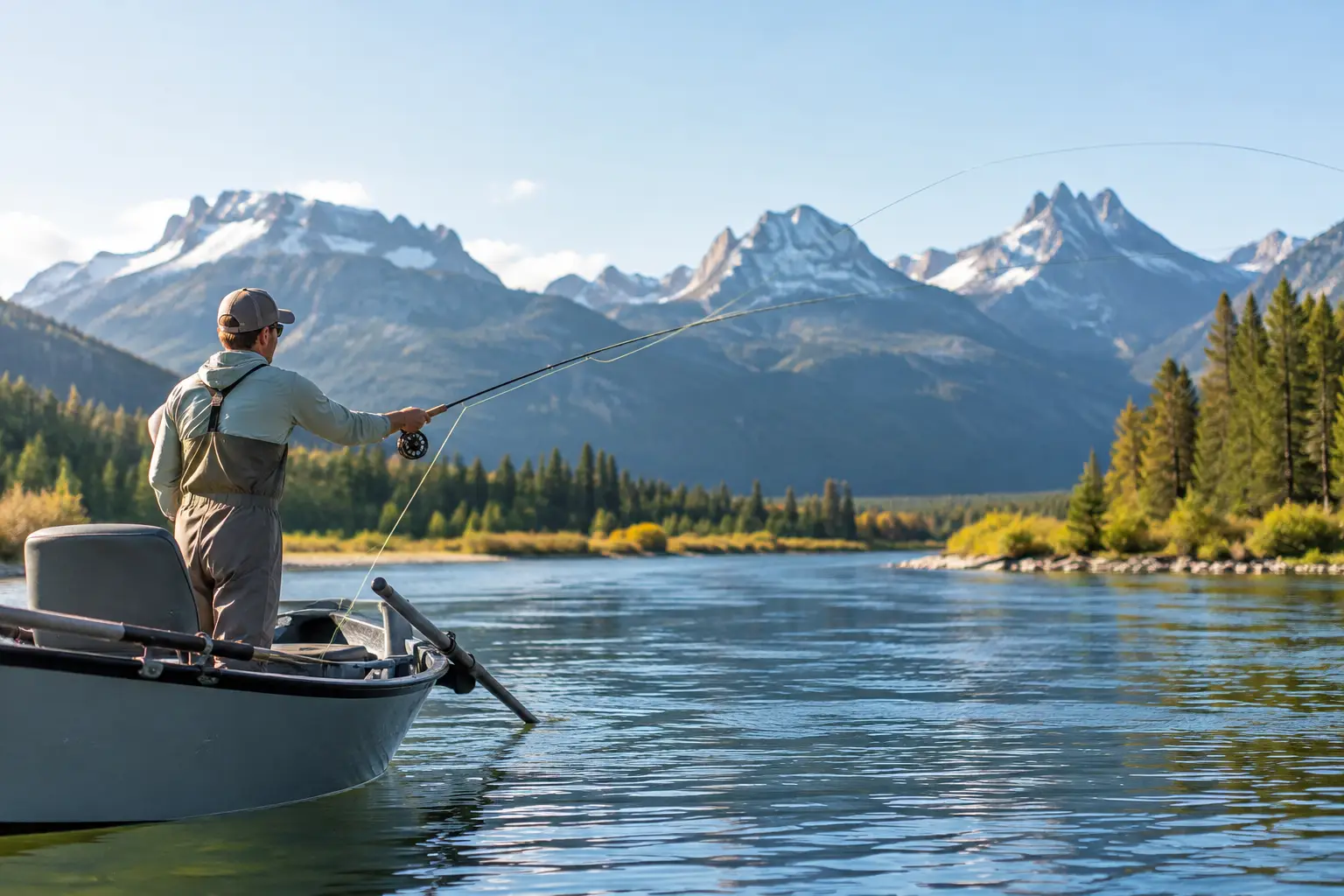
A float trip covers water that wading cannot. Drifting through trout country lets you work long runs, undercut banks, riffles, and dry-fly water while a guide rows and positions the boat. Depending on the season, you may fish dries, nymph rigs, streamers, or all three for rainbow, brown, brook, or cutthroat trout.
This is a strong option for anglers who want variety and mobility without committing to a remote expedition. It is also a good group format because the guide can rotate casting positions and adjust the program as hatches, flows, and fish behavior change. The trade-off is that boat fishing can feel less intimate than standing alone in a cold run, and busy stretches may see other drifters during peak season.
Walk-and-Wade Trout Trips
Walk-and-wade fishing is slower, more deliberate, and often more technical. You are moving under your own power, studying each pocket, seam, and foam line before placing a cast. Small streams and spring creeks reward quiet footwork and precise presentation, while larger tailwaters may demand careful nymphing and strong mends.
Choose this trip when you want to learn how to read a river instead of simply cover it. It suits anglers who enjoy the process as much as the catch. It can be physically demanding on uneven rocks, and it is not always ideal for anyone with limited mobility, but a patient day on foot can teach more about trout behavior than a fast-moving float.
Warmwater Bass and Panfish Trips
Not every quality fly-fishing day requires a distant destination or a demanding double haul. Warmwater lakes, rivers, and ponds can produce aggressive smallmouth, largemouth, spotted bass, carp, crappie, and sunfish. Poppers near cover, baitfish patterns along banks, and crawfish flies through rocky current can create explosive takes.
These trips are an excellent entry point for beginners, families, and anglers building confidence with a fly rod. Bass and panfish are often forgiving teachers, and carp can add a serious sight-fishing challenge without a coastal flight. Ask whether the trip is built around topwater action, moving-water smallmouth, or stalking fish in shallow lakes. Those are very different days with the same general label.
Salmon and Steelhead Swing Trips
Salmon and steelhead fishing carries a certain seriousness because success is never guaranteed. You may spend hours stepping through a run, making controlled casts across current, and swinging flies through likely holding water. The take can be electric, but the work leading up to it is patient and repetitive by design.
This trip type fits anglers who appreciate a challenge and do not measure a day only by numbers. Timing is critical because migrations, river levels, and water temperature determine where fish are and whether they are willing to move. A guide can put you in the right run and help with technique, but no one can schedule a steelhead's mood. Go for the setting, the method, and the possibility of a memorable fish.
Offshore and Bluewater Fly Fishing
Bluewater fly trips are for anglers who want speed, power, and long runs from fish that do not care how expensive the reel was. Depending on the coast and season, the target list can include false albacore, bonito, jacks, mahi-mahi, tuna, sailfish, and other pelagic species. Some days involve casting to feeding schools. Others require quick shots when fish appear in the spread or around floating structure.
This is not usually the place to learn basic casting mechanics. Boats move, wind builds, fish show up fast, and a hooked pelagic can expose every weak point in your line management. Still, it is one of the most exciting fly-fishing formats for an experienced angler. Ask about seas, travel time, casting deck space, and whether conventional tackle will be available if conditions make fly casting impractical.
How to Book the Right Fly Fishing Trip
Before contacting a guide, get specific about your target fish and your real experience level. There is no benefit in calling yourself advanced if you have only cast a 5-weight trout rod on calm water. A capable guide would rather know that you are new to saltwater, need help with line control, or have never cast an 8-weight. That honesty helps them choose the right water, flies, and pace for the day.
Also ask what is included. On a river, that may mean waders, lunch, flies, and transportation between access points. On a saltwater charter, it may mean fly gear, licenses, water, and a plan for changing weather. Confirm the length of the trip, passenger limit, physical requirements, and whether you will be casting exclusively or sharing time with conventional anglers.
Searching by species is often the fastest way to narrow the field. If you want redfish on fly, find captains who consistently work shallow redfish water, not just anyone who happens to carry a fly rod. If you are after trout, ask what river section and technique are fishing best at that time of year. On Unreel Charters, that fish-first approach helps cut through generic trip listings and gets you closer to the kind of water you came to fish.
Bring the right mindset, too. A missed shot at a tailing fish is not a ruined day. It is information for the next cast. Pick a trip that matches your target, prepare for the conditions, and let the guide put local knowledge to work. The next fish you see pushing water, sipping a dry, or crushing a baitfish fly may be the one that turns a single outing into a lifelong obsession.