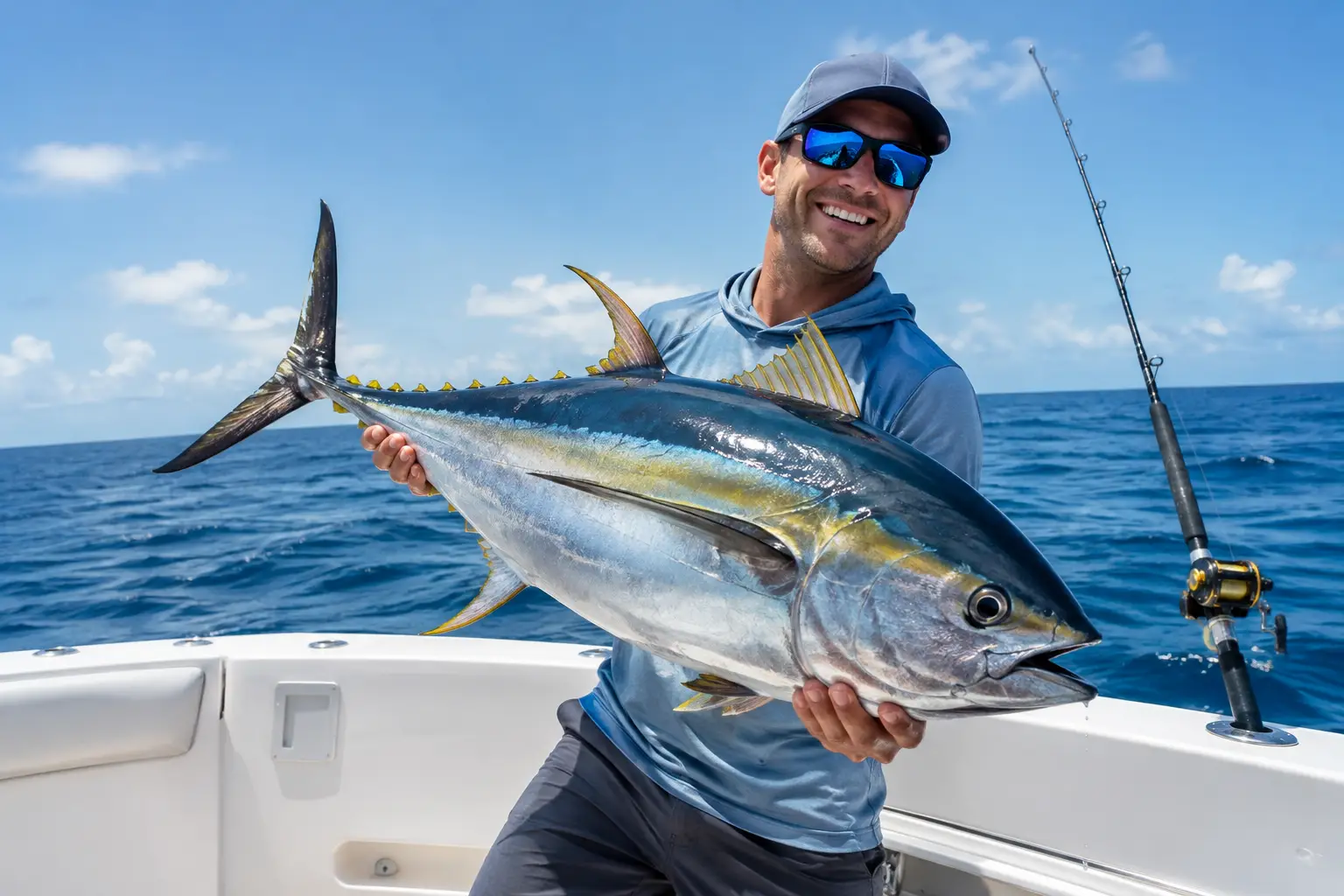
A tuna trip can look completely different from one month to the next, even out of the same marina. Tuna charter seasons are shaped by migration, water temperature, bait, weather windows, and the fishery rules in place when you travel. Pick the right season and you may find fish feeding hard within reach of the boat. Pick the wrong one and you could still have a great offshore day, but not the tuna trip you had pictured.
The first move is deciding which tuna you want to catch. “Tuna season” is not one nationwide calendar. Bluefin, yellowfin, blackfin, and bigeye each follow their own patterns, and a spring trip off North Carolina has little in common with a winter run out of San Diego.
Tuna Charter Seasons Depend on the Species
Bluefin tuna
Bluefin are the fish many anglers build a whole trip around. They can be available in several regions, but the timing and trip style vary sharply.
In Southern California, bluefin can show up from spring into fall, with the strongest opportunities often building as water warms and bait gathers offshore. Some years bring fish close enough for a manageable day trip. Other years, the better zone sits much farther out, making an overnight or multi-day trip the smarter call. That distance matters when you are choosing a charter, especially if someone in your group is new to offshore fishing.
On the East Coast, bluefin opportunities are commonly associated with late spring through fall. New England and the Mid-Atlantic can produce serious fishing when baitfish stack up around temperature breaks, banks, and offshore structure. These are often physically demanding trips for big, powerful fish. If your goal is giant bluefin, ask up front whether the boat is targeting them, how far it expects to run, and what the current regulations allow anglers to keep.
The Gulf also offers bluefin opportunities, particularly around the Louisiana fishery. The exact timing can shift, but cooler months are often on the radar for anglers targeting large fish around offshore rigs and structure. This is not usually a quick half-day outing. Plan for a long run, changing conditions, and a crew that understands the specific fishery you want to pursue.
Yellowfin tuna
Yellowfin are the classic warm-water offshore target: fast runs, hard strikes, and enough power to make even a modest-sized fish memorable. The Gulf of Mexico is a major yellowfin destination, with Louisiana standing out for trips around oil rigs, floating structure, and current lines. Yellowfin can be caught there through much of the year, though weather can be the deciding factor during cooler months.
Summer through early fall often gives many Gulf anglers the combination they want: warm water, active bait, and more comfortable conditions offshore. But winter yellowfin trips can be excellent when the forecast gives you a safe window. The trade-off is that weather cancellations are more likely, and the ride can be rougher. If dates are fixed for a family group or a work trip, build a backup day into the plan.
Hawaii also has yellowfin, known locally as ahi, with opportunities throughout the year. Conditions, currents, and local bait patterns influence the bite more than a simple calendar date. A winter trip can be just as exciting as a summer one, provided you book for the right island and offshore style.
Blackfin tuna
Blackfin are smaller than bluefin and yellowfin, but they are no consolation prize. They fight hard, eat well, and can make an offshore trip more accessible for groups that want real tuna action without committing to a giant-fish mission.
Florida and the Gulf Coast offer blackfin opportunities across much of the year. Off South Florida, the fish are often available around reefs, wrecks, and deeper edges, with spring and fall migrations creating particularly good windows in many areas. In the Gulf, blackfin may show around rigs and offshore structure alongside other pelagic species.
A blackfin-focused trip can be a smart choice for first-time offshore anglers, mixed-experience groups, and anyone who wants a shorter run than a dedicated bluefin or yellowfin hunt may require. Just be clear about your goal. A captain may encounter blackfin while targeting other fish, but a trip designed around tuna gives you a better shot at the techniques and areas that produce them.
Bigeye tuna
Bigeye are a prized offshore catch, but they are not a fish to plan around casually. They are more often part of a long-range or deep offshore program, particularly from Southern California and Hawaii. Availability can be seasonal and highly dependent on offshore conditions, water temperatures, and where the bait is holding.
If bigeye are at the top of your list, flexibility is your best advantage. Choose a destination during its traditional window, give yourself more than one possible fishing date, and be open to an overnight trip. A captain can tell you whether recent conditions make a dedicated bigeye run realistic or whether bluefin, yellowfin, or mixed pelagics are the better target.
Where to Fish During Tuna Charter Seasons
For many anglers, the destination matters as much as the species. The right place depends on how much travel, boat time, and physical effort you want in the day.
Southern California is a strong fit for anglers chasing Pacific bluefin, yellowfin, and occasional bigeye. Summer and fall are often the periods anglers watch most closely, but the fish do not follow a neat schedule. A cold-water influence, a shift in bait, or an offshore temperature break can change the plan fast. Trips range from full-day offshore runs to overnight and multi-day adventures.
Louisiana is a natural choice for yellowfin and blackfin. Deepwater structure can hold tuna through changing seasons, which gives anglers more calendar flexibility than many migratory fisheries. It still pays to ask about the likely run time. “Offshore” can mean very different things depending on the departure point and the fish being targeted.
South Florida is a practical option for blackfin, especially for anglers who want to combine tuna with mahi, wahoo, sailfish, or bottom fishing. Spring and fall can be productive around migrations, while winter weather requires more scheduling flexibility. The Gulf Stream can put blue water close to shore in some areas, but no one should assume a short ride without discussing the plan.
New England and the Mid-Atlantic are built for anglers with bluefin on the brain. Late spring through fall is the broad period to consider, with local bait movements driving the best bite. These trips may focus on trolling, jigging, casting topwater plugs, chunking, or live bait, depending on what the fish are doing that week.
Hawaii works well for year-round offshore anglers who want a shot at yellowfin, bigeye, and a wide mix of pelagic fish. Conditions can change by island and season, so choose your trip based on the target first rather than treating every Hawaiian charter as the same experience.
Book for Conditions, Not Just a Month
A calendar gets you in the right neighborhood. Current conditions get you on the right fish. Tuna follow forage and favorable water, and both can move quickly. That is why a great captain will adjust the plan around recent reports, sea conditions, water color, current edges, and the bait showing on the grounds.
When you contact a charter, tell them your preferred tuna species, your available dates, the experience level of your group, and whether you can handle an overnight trip. Also ask how long the run usually is during that season, whether the trip is trolling-heavy or more active, and what happens if weather blocks the offshore grounds.
Do not skip the question about keeping fish. Tuna regulations, bag limits, size rules, and seasonal closures can change by species and region. A catch-and-release bluefin trip can still be unforgettable, but it is better to know that possibility before you book than after a fish comes tight.
Choose the Trip Length That Matches the Fish
Trip length is one of the biggest decisions in tuna fishing. A half-day trip can work for nearshore blackfin in the right place, but it is rarely the best choice for anglers with a specific offshore tuna goal. Full-day trips open more water. Overnight trips give crews time to reach distant grounds, fish low-light periods, and stay with a bite instead of turning back early.
Longer is not automatically better, though. If your group has young anglers, first-timers, or anyone uncertain about open water, a shorter blackfin or mixed-pelagics trip may deliver more fun than an ambitious run that leaves everyone worn out. Choose the adventure your group will enjoy, not just the biggest fish photo you hope to take.
Pack for sun, spray, and a long day moving around the boat. Bring layers even in warm destinations, non-slip shoes, sunglasses, and any motion-sickness medication you need before leaving the dock. Most importantly, be ready to listen. Tuna fishing can switch from waiting to total chaos in seconds.
The best time to book is when your target species, destination, and trip length line up - then leave enough room in your schedule for the ocean to have its say. Find your next unreel catch with a plan built around the fish, not just the date on the calendar.