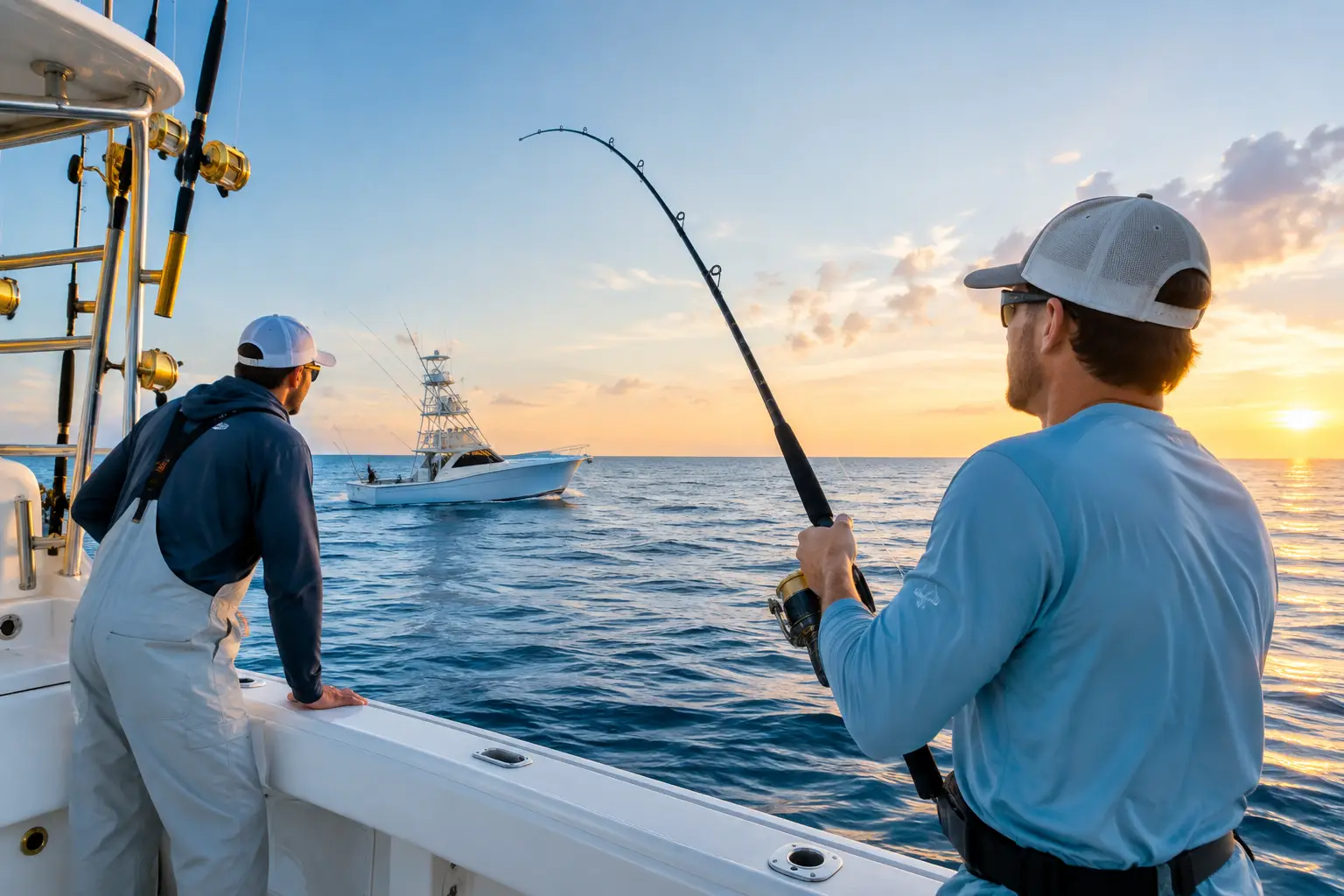
A dock full of boats is easy. A tournament anglers talk about long after the weigh-in takes more thought. The best fishing tournament formats match the fishery, the skill level in the field, and the reason people signed up in the first place. A hardcore marlin crew wants a very different day than a family group chasing redfish, trout, and a little friendly bragging rights.
For charter-based events, the format also needs to work on the water. Captains need rules that are clear before lines hit the water, fair across different boats, and realistic for the species, season, weather, and available fishing time. Pick the wrong format and the event can turn into a rulebook argument. Pick the right one and every boat has a reason to fish hard until the final call.
What Makes a Tournament Format Work?
Start with the target species, not the trophy table. Billfish, redfish, walleye, tuna, bass, king mackerel, and flounder all call for different scoring systems and handling rules. A harvest weigh-in may make sense for one fishery, while a photo-based release format is the responsible choice for another.
Then consider who is fishing. An event built for experienced offshore teams can use tighter species windows and more detailed scoring. A corporate outing or mixed group needs simple rules, quick verification, and more than one way to win. That is how you keep a first-time angler interested when another boat lands the biggest fish of the day.
Finally, keep the captain in the conversation. Local guides know what the fish are doing, what can be measured reliably on a rocking deck, and which rules create bad incentives. Their input can save an organizer from building a format that looks good on paper but falls apart at the dock.
1. Biggest Fish Wins
The classic weight-based tournament remains popular for a reason. It is easy to understand: the heaviest eligible fish wins. It creates real dockside drama, especially in tournaments built around species such as tuna, walleye, salmon, striped bass, or kingfish.
This format is strongest when harvest is legal, sustainable, and consistent with local fishery rules. Set minimum lengths, species limits, weigh-in deadlines, and a clear procedure for tie breakers before registration opens. If multiple species are eligible, decide whether each species has its own division or whether one fish carries the entire event.
The trade-off is that one late bite can erase a full day of solid fishing. That is exciting for serious teams, but it can leave casual anglers feeling like they were never in the fight. Adding optional divisions, such as youth angler, ladies, or heaviest fish by species, gives more crews a shot without muddying the main prize.
2. Catch, Photo, Release
Catch, photo, release is one of the best fishing tournament formats for fisheries where conservation matters as much as competition. Anglers land the fish, photograph it against an approved measuring device or capture the required verification image, then release it. Scores are usually based on length, points by species, or a combination of both.
This is a natural fit for redfish, snook, trout, tarpon, bonefish, permit, muskie, and many billfish events. It lets a tournament celebrate great fish without turning every catch into a weigh-in candidate. It can also make charter tournaments more accessible because crews can compete across several species without filling a cooler.
The rules have to be tight. Require a visible identifier, timestamp standards if needed, approved measuring boards, and photos that show the full fish clearly. Spell out what happens when a tail is pinched, a mouth is open, or a photo is unclear. A simple verification process protects the fish and the credibility of the leaderboard.
3. Points Per Species
A multi-species points format rewards versatile fishing instead of one lucky bite. Each eligible species is assigned a point value, and teams build a score by catching, photographing, or releasing qualifying fish. A grand slam bonus can reward crews that complete a defined species set.
This format shines in places with diverse inshore or nearshore opportunities. One team may hunt redfish along grass edges, another may target snook around mangroves, and a third may find a trout bite over deeper grass. Every crew is making tactical decisions based on its captain's local knowledge.
Be careful with point values. If one common species is worth too much, every boat will ignore the rest of the fishery. If a rare species is worth too little, nobody will chase it. Keep the system simple enough to follow at sea and publish examples of winning score combinations before tournament day.
4. Team Aggregate Weight or Length
Instead of rewarding a single fish, team aggregate formats score a defined number of fish. It might be the combined weight of a team's three largest tuna, the total length of its best five redfish, or a two-fish limit for each angler aboard.
Aggregate scoring rewards consistency. A crew that finds a dependable bite and makes good decisions all day can beat a team that lands one giant fish and spends the rest of the trip searching. That makes it a strong format for company events, club trips, and charter groups where everybody wants to contribute.
The key is setting a sensible number of scoring fish. Too few and the format becomes a biggest-fish contest in disguise. Too many and measuring, handling, and tracking catches slows down the fishing. For a half-day charter event, a smaller scoring limit is usually the better call.
5. Calcutta or Optional Side Pots
A Calcutta adds a voluntary money game alongside the main tournament. Teams may be auctioned before the event, or entrants can buy into optional species-specific side pots. The main event stays open to everyone, while crews that want more action can play for higher stakes.
This can bring serious energy to a tournament, but it is not automatically right for every crowd. Keep entry into side pots separate from the base registration, make payout rules public, and follow all local rules governing prize competitions. No one should discover after launch that they were competing in a game they did not understand.
For a charter event with newcomers, a modest big-fish side pot is often cleaner than a complicated auction. It adds excitement without making the day feel like it is only for high-rolling teams.
6. Captain's Choice
Captain's choice gives each boat the freedom to target one of several approved species. The winner may be determined by the best fish within a chosen category, adjusted points, or an overall scoring chart. It is especially useful when weather, water clarity, and bait conditions can shift the bite from one area to another.
This format respects local expertise. An offshore crew may make a tuna run, while another captain fishes protected water for inshore species when the wind builds. Both remain part of the same event rather than being punished for fishing conditions beyond their control.
The challenge is comparing unlike fish fairly. A 30-inch redfish and a 30-pound king mackerel cannot simply be placed on the same leaderboard. Use separate divisions or a carefully tested points table, and avoid rules that require complicated calculations at the awards dock.
7. Mystery Fish or Hourly Awards
For an event built around fun, mystery fish and hourly awards keep the entire field engaged. The organizer can announce a surprise eligible species at the captains' meeting, or award prizes for the best verified catch during designated time blocks. These formats work well for mixed-skill groups, youth events, and community tournaments.
They also spread opportunity across the day. A crew that misses the early bite can still win an afternoon category. Just make sure the mystery element is exciting, not confusing. Eligible species, legal size requirements, and verification methods should still be crystal clear.
Match the Format to the Charter Trip
A four-hour inshore trip needs fast scoring and close boundaries. A full-day offshore tournament can handle more species, longer runs, and weigh-in logistics. If anglers are booking around a fish they want to catch, tell them exactly what counts before they commit: target species, fishing area, tournament window, release rules, and whether the charter price includes entry.
For organizers, the strongest event is rarely the one with the most rules. It is the one where anglers understand the mission, captains can fish safely and professionally, and the winning catch feels earned. Find a captain who knows the local bite, build the format around that fishery, and give every crew a real reason to make the next cast count.