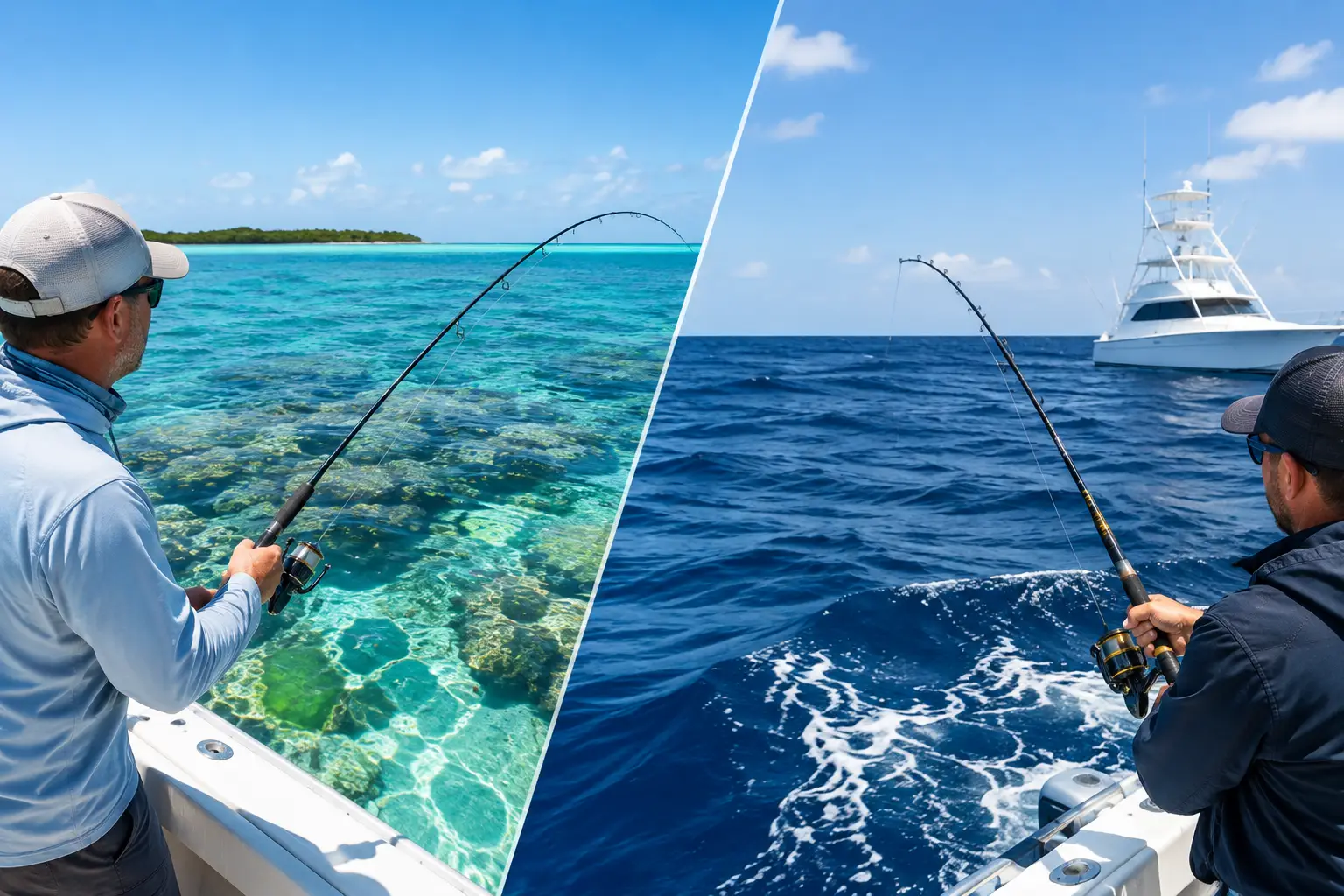
The choice between reef fishing versus open water usually comes down to one question: what kind of day do you actually want on the water? A reef trip can put steady action, structure, and a cooler full of great-eating fish within reach. An open-water trip can mean big runs, bigger water, and a real shot at pelagic species that make the drag scream. Neither is automatically better. The right trip is the one that matches your target fish, your crew, and how much adventure you want in the day.
Reef Fishing Versus Open Water: The Real Difference
Reef fishing happens around structure. That can mean natural coral reefs, artificial reefs, ledges, hard bottom, wrecks, rock piles, and offshore platforms depending on the region. Structure holds bait, and bait pulls predators in. Your captain may anchor, drift, or use a trolling motor to keep the boat positioned over a productive piece of bottom.
Open-water fishing, often called bluewater or pelagic fishing, happens away from that fixed structure. Captains look for current breaks, temperature changes, bait schools, weed lines, birds, floating debris, and offshore rips. The fish are moving, so the game is about finding them. Trolling is common, though kite fishing, chunking, casting, jigging, and live-bait methods all have their place.
That distinction changes nearly every part of the trip: the travel time, how the boat fishes, what bites, and how predictable the action feels.
What You Can Catch on a Reef Trip
Reef fishing is built for anglers who want variety. Depending on where you fish and the season, you may target snapper, grouper, amberjack, triggerfish, cobia, sheepshead, grunts, sea bass, hogfish, or a mix of bottom species. Reef-and-wreck trips can also produce hard-fighting surprises such as king mackerel, barracuda, jacks, and occasionally larger predators cruising the edges.
The appeal is that fish have a reason to be there. A captain who knows productive structure can put baits in the strike zone without spending the entire trip searching miles of open water. That makes reef fishing a strong option for families, first-time charter guests, and groups that want frequent bites instead of waiting for one major opportunity.
It is not always easy fishing. Reef species are experts at getting back into the rocks, and a big grouper or amberjack can make a light-tackle angler feel undergunned in a hurry. The bite often happens close to the bottom, so you need to stay alert, keep tension on the line, and follow your captain's instructions when a fish hits.
The pace of reef fishing
A typical reef day has a repeatable rhythm: drop a bait, work it near the structure, hook up, reel hard, reset, and do it again. There can be plenty of action, but it is not always nonstop. Changing tides, water clarity, bait availability, and fishing pressure all affect the bite.
For many crews, that rhythm is exactly the point. There is time to learn techniques, watch the sonar, compare catches, and enjoy the hands-on part of fishing. If bringing home legal, table-ready fish matters, reef fishing is often the more dependable fit.
What You Can Catch in Open Water
Open-water charters are where anglers chase fish that roam. Tuna, mahi-mahi, wahoo, sailfish, marlin, kingfish, and offshore sharks are common targets in the right regions. On certain coasts and seasons, that list can also include bluefin tuna, yellowfin tuna, blackfin tuna, swordfish, striped bass, or other migratory species.
These fish are built to cover ground. They hunt bait, follow water conditions, and can show up fast or vanish just as fast. A captain may run well offshore before setting lines, then troll a spread while watching birds, radar, current, and bait activity. When everything comes together, the result can be the kind of bite anglers talk about for years.
Open water is often about quality over quantity. You might catch several fish in a hot bite. You might spend a long stretch watching rods and waiting for the right opportunity. That is not a bad charter day if your goal is a tuna, a wahoo, or a billfish. It is simply a different kind of fishing than dropping bait over a reef.
The pace of open-water fishing
Trolling can look calm until it suddenly is not. A rod folds over, a reel starts dumping line, and the cockpit gets busy fast. Multiple hookups are possible, especially around mahi or tuna, but so are long runs between bites.
That makes open-water trips a great choice for anglers who enjoy the hunt as much as the catch. You are covering water, reading conditions, and trusting a captain's offshore knowledge. If your group wants big-game potential and understands that nature does not run on a schedule, open water delivers a different level of excitement.
Consider the Ride Before You Book
Distance matters. Reef fishing can be nearshore in some places, with only a short run from the dock. In other fisheries, the best reefs and wrecks may still be many miles offshore. Open-water fishing commonly requires longer runs, but there are exceptions when pelagic fish push close to the beach.
Ask how long you will be running each way. A six-hour trip can feel very different if an hour is spent traveling out and another hour returning. A longer trip may give your captain more time to reach productive water, but it also means more cost, more exposure to weather, and a bigger commitment for the crew.
Sea conditions matter just as much. Smaller waves can still feel rough in a fast boat, especially when wind and tide stack up. If anyone in your group is new to boating or prone to motion sickness, say so before booking. A good captain can recommend a trip style, departure time, or duration that gives your crew the best chance of enjoying the day.
Match the Trip to Your Crew
For a family trip, mixed-skill group, or crew focused on bringing home fish, reef fishing is usually the safer starting point. There is more hands-on participation, less waiting between opportunities, and a clear connection between the bait, the bottom, and the bite. It also gives younger anglers a better chance to stay engaged.
For experienced anglers, tournament-minded crews, or anyone with a specific bucket-list species in mind, open water may be worth the longer ride. A sailfish, marlin, trophy tuna, or fast wahoo is not a casual target. The work, uncertainty, and occasional quiet stretch are part of chasing it.
Your target species should lead the decision. Do not book an offshore trip just because it sounds more serious if what you really want is snapper for dinner. Do not book a reef trip expecting a reliable shot at billfish. Start with the fish, then choose the trip type, location, season, and captain that specialize in that fish.
Gear, Technique, and What the Captain Handles
Most charter boats provide the tackle, bait, licenses, and local know-how needed for the trip. Still, reef and open-water fishing ask different things of an angler.
On a reef trip, you may be bottom fishing with cut bait, live bait, jigs, or rigs designed to get down quickly. The key skills are feeling the bite, setting the hook when instructed, and keeping a hooked fish from reaching the structure. Heavier tackle is common because the fish have places to break you off.
On an open-water trip, much of the early work may happen through trolling. Once a fish strikes, you could be fighting on stand-up gear, working a rod from a fighting chair, or casting to fish near the surface. You may also help clear lines during a hookup so the captain and crew can keep the fish from tangling the spread.
You do not need to be an expert for either trip. You do need to listen. Local captains know how current, season, regulations, and weather shape the fishery. Their job is not just to put lines in the water. It is to make the right calls as conditions change.
Ask These Questions Before Choosing
Before you reserve a charter, get direct answers on the target species, expected travel time, trip length, and whether the captain expects to fish reef structure, wrecks, nearshore water, or the open ocean. Ask what the group can realistically expect, not just what is possible on a perfect day.
Also ask whether fish can be kept, what size and bag rules apply, and whether the captain recommends the trip for your group's experience level. Regulations change by species and location, and responsible captains follow them. A fish that is out of season, undersized, or protected stays in the water.
When you search Unreel Charters, begin with what you want to catch. Then narrow the options by location and trip type. That puts you closer to a captain whose normal day on the water matches the day you have in mind.
A reef can turn a first-time angler into someone who never stops talking about their grouper. Open water can turn one screaming run into a permanent obsession. Pick the fish that has your attention, choose a captain who knows that fishery, and give the day enough room to be what fishing always is: earned, unpredictable, and worth it.