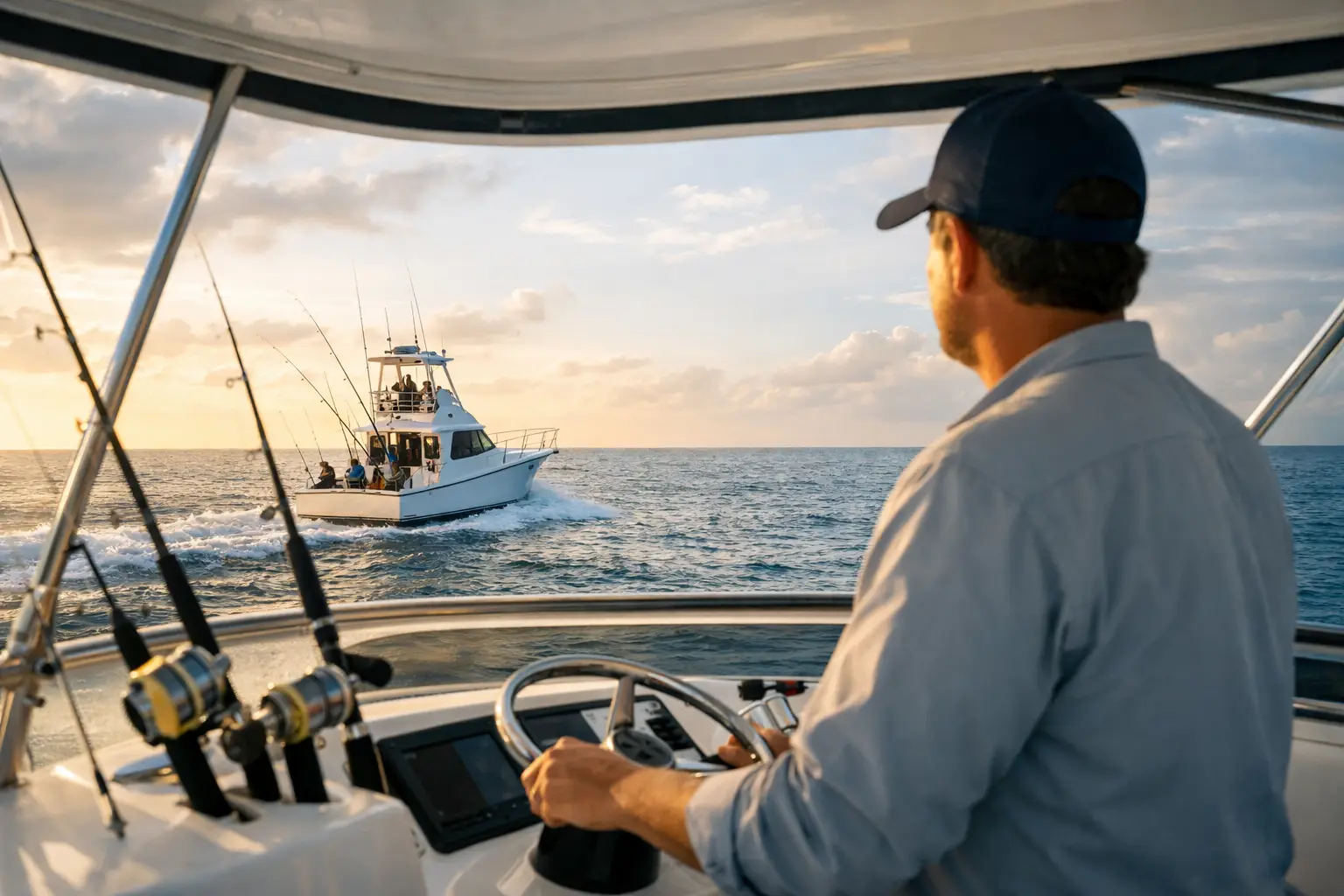
A vacant Saturday in prime season is not always a marketing problem. Sometimes it is a match problem. The anglers seeing your charter may want a cheap boat ride, while your operation is built for serious tarpon shots, family-friendly redfish trips, or long-run offshore tuna days. Captain marketing fixes that gap by making it clear who you fish for, what you target, and why the right customer should call you.
For an independent charter operation, marketing is not about sounding like a giant travel brand. It is about putting your local knowledge, fishing style, and trip options in front of anglers already looking for that exact experience. The goal is fewer dead-end inquiries and more conversations that turn into trips worth running.
What Captain Marketing Actually Means
Captain marketing is the work of making your charter easy to find, easy to understand, and easy to contact. It covers your photos, video, trip descriptions, species focus, service area, reviews, social posts, listing profiles, and the way you answer inquiries. None of those pieces works alone. Together, they tell an angler whether you are the captain for their day on the water.
The strongest marketing starts with a simple truth: anglers rarely wake up wanting to book “a charter.” They want to catch something. Maybe it is snook around mangroves, walleye on a lake, striped bass near the coast, or a bluewater shot at marlin. They may also care about the format - a half-day inshore outing, a reef-and-wreck trip, a fly-fishing day, or a tournament-ready offshore run.
If your marketing leads with generic language like “the best fishing experience,” you make anglers work to figure out whether you fit. Lead with the fish, water, trip type, and area you know best. Specific beats broad when someone is deciding where to spend a day and a serious chunk of their fishing budget.
Start With the Trips You Want to Run
Not every open date deserves the same kind of promotion. A captain who wants to grow premium offshore bookings should not build every message around bargain half-days. A guide who shines with first-time families should not make their profile feel like it is only for hardcore anglers chasing trophy fish.
Choose the trips that make the most sense for your business. Consider what is profitable, what fits your boat and crew, what you enjoy running, and what your local fishery reliably supports. Then make those trips the center of your marketing.
That does not mean hiding your flexibility. Conditions change, seasons shift, and a good captain adjusts. But an angler should know your strongest lanes within seconds. If you are known for spring cobia, summer reef fishing, fall redfish, or winter trout, say so plainly. If you offer both beginner-friendly and advanced trips, explain the difference instead of treating every charter as the same product.
Clear positioning also saves time at the dock. The right guest arrives with realistic expectations about travel time, target species, technique, and the level of physical effort involved. That makes for a better trip, better photos, and better word of mouth.
Write for the question anglers are already asking
Most anglers are trying to answer a few practical questions before they reach out: What can we catch? Where will we fish? How long is the trip? Is this right for my group? What is included? What happens if weather changes the plan?
Your descriptions should answer those questions in plain language. Avoid stuffing them with every species that has ever swum through your area. A long target list can look impressive, but it can also create promises you cannot reasonably make in every month or weather pattern.
A better approach is seasonal and honest. Explain the primary targets, the likely backup options, and the kind of water you fish. Say when a longer trip is worthwhile and when an inshore trip is the smarter call. Anglers respect a captain who gives them a real read before they book.
Make Your Visuals Prove the Story
Fishing is visual, but captain marketing is not just a gallery of grip-and-grin shots. Catch photos matter. So do the details that help a customer picture their own trip: the boat underway before sunrise, a kid holding a first redfish, a clean deck, live bait in the well, a fly line laid out on the bow, a crew working a fish, or a release done right.
Use current photos that reflect the trips you actively sell. If your business is centered on family inshore fishing, let families see themselves in the content. If your edge is technical sight fishing or offshore big-game action, show the conditions, preparation, and fish that define that day.
Video deserves special attention because it gives anglers a feel for your operation fast. A short clip of the ride out, the spread going in, bait getting crushed, or a quick explanation of seasonal conditions can do more than a polished slogan. Keep it real. Clear audio and useful context beat flashy edits that hide what the trip is actually like.
Own the Direct Customer Relationship
A booking is more valuable than one day on the calendar. It can become a returning customer, a referral source, a repeat family trip, or a group that comes back every season. That only happens when the customer knows they are working directly with a professional captain who cares about the result.
Make contact simple. Respond quickly, but do not rush into a vague quote. Ask enough questions to place the group on the right trip: number of anglers, experience level, preferred dates, target species, and whether they have hard limits on time or travel. That small amount of qualification prevents a lot of mismatched expectations.
Then follow through with useful pre-trip communication. Tell guests what to bring, where to meet, what weather decisions look like, and what the day may involve. A clear confirmation reduces no-shows and last-minute confusion. It also makes your operation feel organized without making it feel corporate.
For captain-first platforms such as Unreel Charters, the point is visibility without giving away control of the relationship or a share of every trip. Your profile should work like your best dockside introduction: direct, credible, and built around the fishing you actually do.
Track What Brings the Right Calls
Marketing without feedback turns into guesswork. You do not need a complicated dashboard to learn what is working. Track where inquiries come from, what species people ask about, which trips get booked, and which questions keep repeating.
If anglers consistently find you for one target species but book another trip after speaking with you, that may reveal an opportunity to improve your descriptions. If a certain photo or video creates a jump in inquiries, make more content in that style. If you get plenty of messages but few confirmed dates, look at whether pricing, trip expectations, response time, or availability is creating friction.
Traffic alone is not the prize. A thousand views from people outside your service area do less for your business than a handful of serious anglers searching for the fish you target next month. Good captain marketing values fit over vanity.
Avoid the Marketing Traps That Waste Time
The biggest trap is trying to appeal to everyone. A broad message may bring more inquiries, but it often brings more poor-fit inquiries too. Be open about what you offer, but do not blur the identity of your charter just to chase attention.
Another mistake is treating marketing as something you do only when dates are empty. The best time to collect photos, record quick videos, update trip details, and ask for feedback is while you are already running good trips. A steady stream of current proof keeps your business visible before the slow week arrives.
Finally, do not overpromise. Fishing is fishing. Weather, tides, water clarity, bait, and seasonal movement all matter. Sell the expertise, preparation, and opportunity you provide, not a guaranteed fish that no honest captain can guarantee.
The best marketing message is often the simplest one: here is what we are catching, here is how we fish, and here is who will have a great day doing it. Put that message where anglers search, keep it current, and let your work on the water give people a reason to come back.