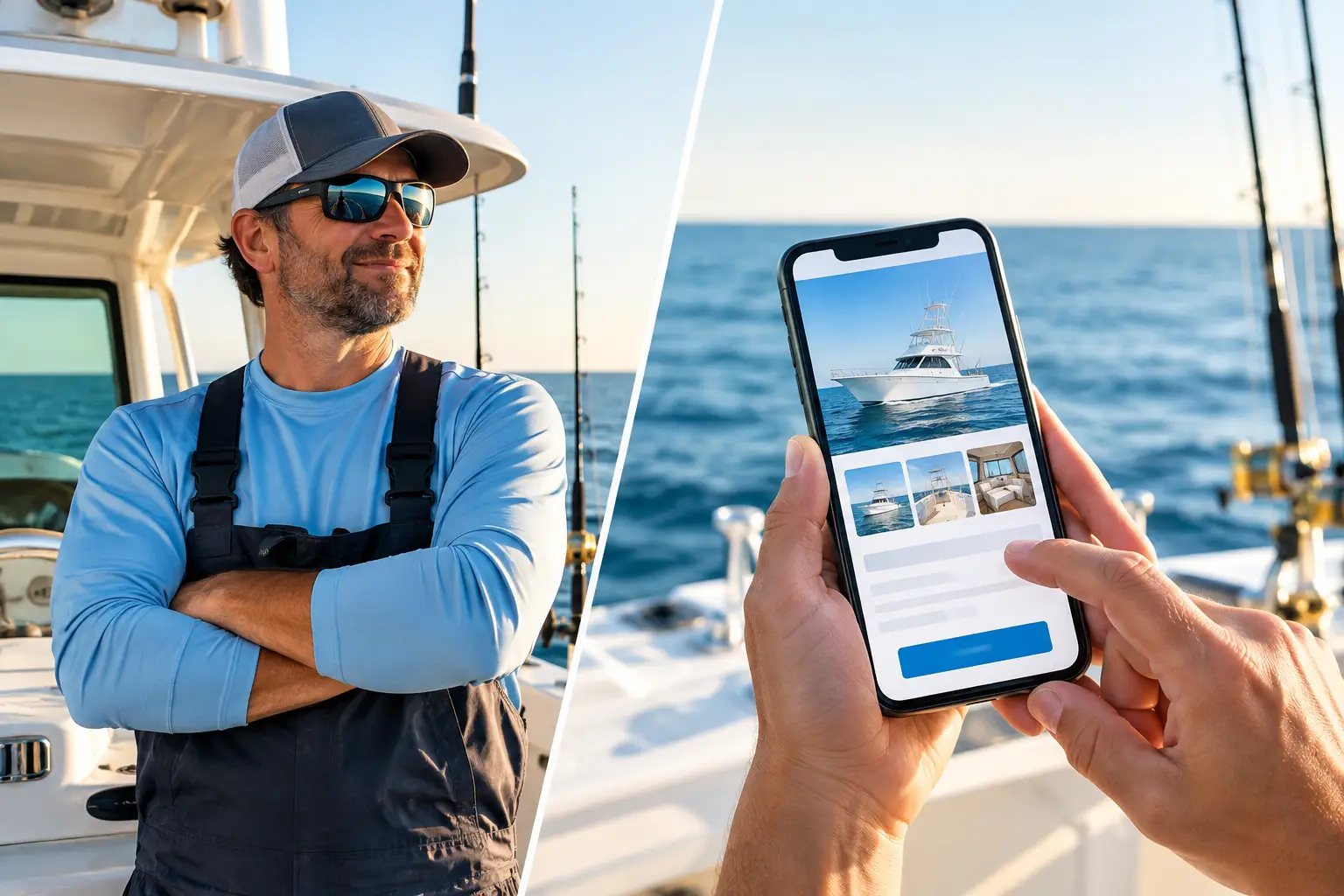
An angler searching for a redfish trip, a shot at bluefin tuna, or a family-friendly half day is not looking for another generic business card. That is the real difference in a captain profile versus basic listing: one confirms that your operation exists, while the other gives anglers a reason to call you.
For independent captains, the choice is not about making a profile look fancy. It is about whether your listing can answer the questions that matter before a customer moves on: What do you target? Where do you fish? What kind of trip do you run? Is this captain the right fit for the day I want on the water?
A basic listing can be a smart starting point. A complete captain profile can become a working part of your marketing. The right move depends on your goals, your market, and how much of your business story you are ready to put in front of anglers.
What a Basic Listing Does Well
A basic listing puts your charter operation on the map. At minimum, it gives prospective customers a way to find your business, see your general service area, and make contact. If you are just getting started with online visibility, that is better than being invisible when someone searches for the species or water near you.
It also works for captains who have a steady stream of repeat customers and only need another discovery channel. Maybe your calendar is usually full through referrals, your local reputation is established, or you simply want anglers who are already searching your area to know you are available. In that situation, a simple listing can cover the basics without demanding much time.
But a basic listing has limits. It leaves the angler to fill in the gaps, and gaps create hesitation. A customer planning a reef-and-wreck trip does not want to guess whether your operation spends time over structure. Someone bringing two kids for their first inshore outing needs to know whether the trip is built for that kind of day. An experienced fly angler wants evidence that you understand the fishery, not a broad label that says "fishing charter."
That is where a bare listing can lose the bite. It may show up in a search, but it may not make the case for why the customer should choose you.
Captain Profile Versus Basic Listing: The Real Difference
A captain profile gives your operation context. Instead of presenting only a name, location, and contact point, it shows anglers how you fish and what kind of experience they can expect. It turns a quick search result into a decision-ready page.
The strongest profiles are specific. They connect your target species, fishing locations, trip styles, and approach to the customer’s goal. A captain who runs shallow-water trips for redfish, snook, trout, and flounder should say so plainly. A crew focused on offshore pelagics, deep drops, or tournament-caliber days should make that clear too. Specificity filters out bad-fit inquiries and attracts anglers who are already after the fishing you do best.
Video can do more than a paragraph ever will. A short look at the boat leaving the dock, working a flat, setting up over a wreck, or landing the kind of fish you target helps anglers picture the trip. It also lets your personality come through. For a guide service, that matters. Customers are not only booking a seat on a boat. They are choosing who they will spend a day with, how the day will be run, and whether the experience matches their crew.
A fuller profile also gives you room to set expectations. You can speak directly to trip types, skill levels, seasonal opportunities, group fit, and the style of fishing you offer. That clarity protects your time. Fewer vague messages means more conversations with people who understand what they are asking for.
Visibility Is Only Useful When It Brings the Right Anglers
More exposure sounds good, but random exposure does not always produce better business. A captain who specializes in nearshore bottom fishing may not want a flood of inquiries from travelers expecting a long-range tuna run. A guide known for technical sight fishing may not be the best match for a large beginner group looking for a relaxed afternoon.
That is why species-first discovery matters. Anglers often start with the fish, not the marina. They search for tarpon, salmon, halibut, permit, muskie, sailfish, or whatever has been living in their head since the last trip. When your profile clearly connects you to those targets and the trips you actually run, your visibility becomes more useful.
A basic listing may still catch some of that traffic, especially when the area itself is the main search term. A captain profile gives the platform more relevant detail to match with angler intent. It helps the right customer find you before they send three messages to guides who do not offer the trip they want.
There is a trade-off: a detailed profile requires honest upkeep. If your seasonal focus changes, your service area shifts, or you stop offering a certain trip, update it. A profile that promises an experience you no longer provide can create more friction than a basic listing. Keep it current, practical, and true to the fishing you do now.
Control Matters After the Inquiry Comes In
For owner-operators, listing choice is also a business decision. A profile should support direct relationships with customers, not put a wall between you and the people booking your time. You built your reputation, learned your waters, invested in your gear, and earned the repeat business. Your marketing should strengthen that independence.
That means looking beyond how a listing appears on screen. Consider what you can control: your photos and video, your trip description, how anglers contact you, and whether you can see what kind of traffic your page receives. Traffic reporting is especially useful because it replaces guesswork with a clearer view of whether your listing is being found and what may need improvement.
If a profile is getting views but not inquiries, the issue may be clarity rather than demand. Your species may be too broad, your trip descriptions may not explain the experience, or your imagery may not show the fishing customers came to find. If traffic is low, expanding the detail around locations, trip types, and seasonal targets can help anglers understand when you are relevant.
On Unreel Charters, the captain-first model is built around that control: direct exposure, profile tools, and no booking commissions taking a cut of the trip revenue you earned. The point is simple. Marketing should help you fill days on the calendar without giving away ownership of your business.
When a Basic Listing Is Enough
A basic listing is enough when your needs are truly basic. You may be testing a new market, running a limited number of trips, or relying mostly on a referral network. It can also make sense if you do not yet have current photos, a clear service description, or the time to maintain a fuller profile.
Start there if that is where you are. Just do not confuse a starting point with the finish line. As your operation grows, a fuller captain profile gives you more ways to stand apart from every vague listing nearby.
When a Captain Profile Is Worth It
A captain profile is worth the effort when you want to attract anglers based on the fishing you are known for. It is especially valuable if your trips have a clear specialty, you serve travelers unfamiliar with your fishery, or you want to explain why your approach is different from a generic charter outing.
It also pays off when you want better-fit inquiries. The more clearly anglers can see your target species, trip format, and style before they reach out, the less time you spend sorting through mismatched requests. That leaves more room for the conversations that turn into good trips, strong reviews, and customers who come back when the next season rolls around.
Your listing should feel like the first honest conversation an angler has with your business. Give them enough to know what you chase, where you shine, and why a day on your boat is the one they have been looking for.