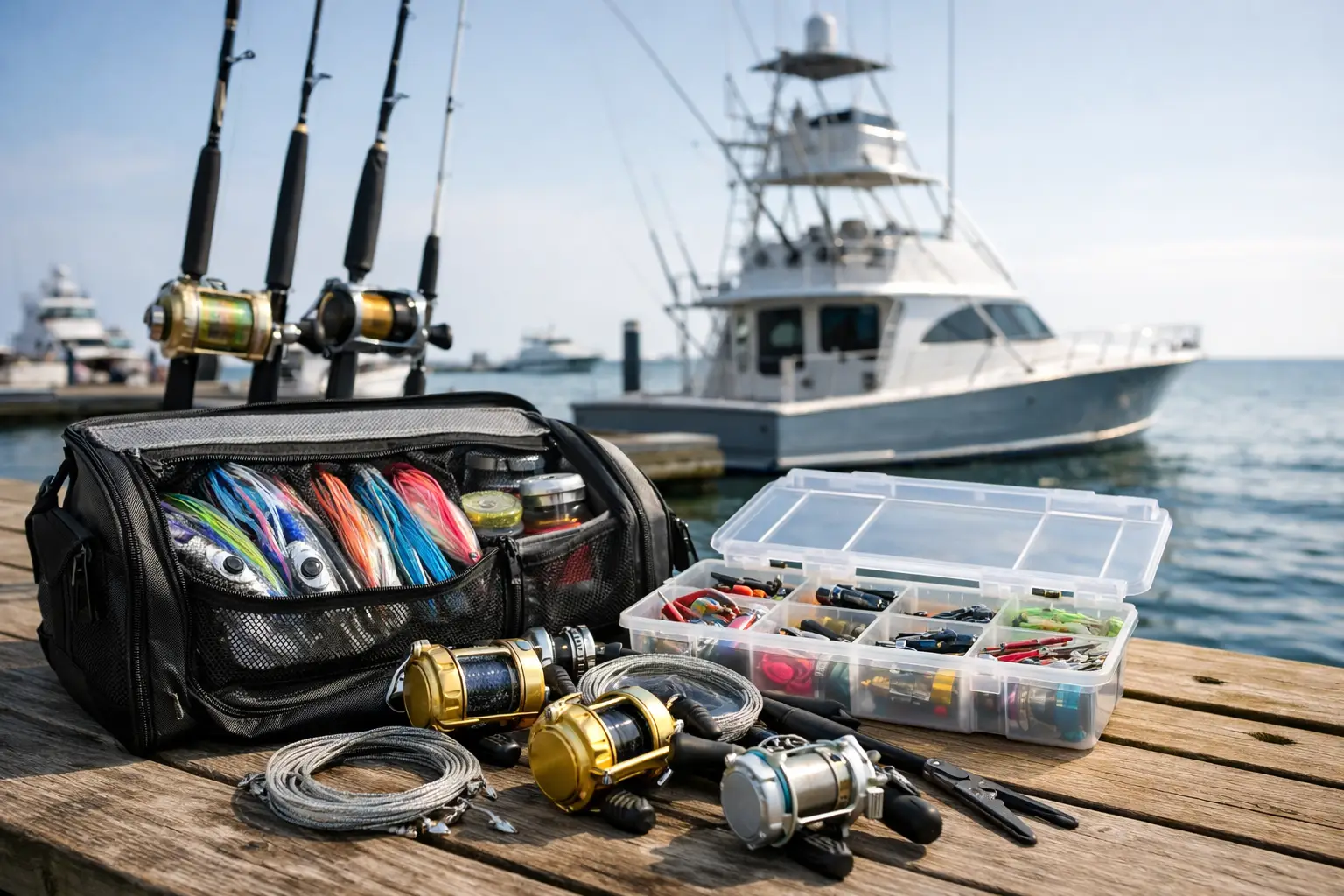
A crowded dock at 5:30 a.m. is the wrong place to realize your leader spool is at home, your rain jacket is under a pile of luggage, and the captain already has every rod you hauled across three states. Knowing how to pack offshore tackle starts with one rule: bring what improves your day on the water, not everything you own.
Offshore fishing can mean trolling for billfish, dropping jigs on wrecks, live-baiting for tuna, or putting baits in the spread for mahi. Those are different jobs, and the right tackle loadout changes with the fish, the boat, the season, and how far the run is. A good pack is lean, organized, and built around the trip you actually booked.
Start With the Captain's Tackle Plan
Before you open a tackle box, ask what the charter provides. Most offshore charter boats carry the serious hardware: matched rod-and-reel outfits, gaffs, nets, fighting belts, terminal tackle, and rigged baits suited to that day's program. The captain knows what has been producing in that water, and charter gear is selected to work with the boat's spread and deck routine.
That does not mean you should show up empty-handed. It means your personal tackle should have a purpose. Maybe you trust a certain slow-pitch jig, have a proven topwater lure for a tuna feed, or want a compact selection of hooks and leader for a species-specific plan. Tell the captain what you hope to bring before trip day. Some crews welcome specialty gear; others need the cockpit clear and prefer everyone fish the same proven setup.
Be specific when you call or message. Ask whether the trip is primarily trolling, bottom fishing, jigging, casting, or live-baiting. Ask what species are most realistic, whether bait and tackle are included, and whether there is storage for a personal rod tube or tackle bag. This is also where a species-first charter search pays off: the tackle conversation gets much easier when you begin with the fish you want to catch.
How to Pack Offshore Tackle by Fishing Method
Pack for the technique, then add only a small backup layer. Offshore boats have limited dry space, and a rolling tackle shop becomes a tripping hazard fast.
Trolling for mahi, wahoo, marlin, or sailfish
For a trolling trip, the crew's rigged ballyhoo, skirted lures, teasers, and heavy outfits usually do the real work. Your best contribution may be zero extra rods. If the captain approves personal lures, bring a small, labeled lure roll or waterproof box with a few confidence baits in the size range being pulled.
Wahoo is the exception that often tempts anglers to overpack. Wire, heavy fluorocarbon, trolling leads, and high-speed lures are useful only when they match the crew's program. A favorite wahoo lure can earn a spot. An entire separate wahoo system usually cannot.
Jigging and popping for tuna
Jigging and casting trips create more room for personal preference. Bring a compact jig wallet with a range of weights, replacement assist hooks, split rings, solid rings, and a small pair of split-ring pliers. Weight matters more than color when current is ripping, so cover the likely depth and drift speed rather than packing five shades of the same jig.
For popping, a handful of proven floating plugs, stickbaits, and spare hooks is enough. Keep them in a box that closes securely. Big topwater plugs banging around loose in a hatch can turn a clean boat into a hook hazard.
Bottom fishing, reef, and wreck trips
Bottom fishing is terminal-tackle heavy, but it is still a bad reason to bring a giant tray. Pack several sinker options if the captain asks you to supply them, plus a compact organizer holding circle hooks, swivels, jig heads, and leader material appropriate to the target species. Grouper, snapper, amberjack, and other reef fish may require different hook sizes and leader strengths, so follow the local recommendation instead of copying a generic internet rig.
If you want to fish metal, bring a few vertical jigs and replacement hooks. Wreck fishing eats tackle. Expect some losses, set a personal limit on what you are willing to donate to the structure, and enjoy the bite rather than staring at the bottom of an empty jig box.
Use One Bag, Not a Pile of Boxes
The best offshore tackle bag is soft-sided, water-resistant, easy to carry one-handed, and small enough to stow without taking over the cockpit. Backpacks work well when you are flying or walking down a long marina dock. A shoulder bag or compact tackle sling can be better when you need quick access while moving around the boat.
Build your bag in layers. Put the gear you may need during the first hour on top. Keep spare leaders, extra hooks, and less-used items lower down. Every sharp item should be contained, and every container should close when the boat hits a wave.
A practical offshore bag often includes these distinct essentials:
- One technique-specific box or jig wallet
- A small terminal-tackle organizer
- Leader material and a few pre-tied rigs, if requested
- Pliers, cutters, and a compact hook-removal tool
- Spare hooks, rings, and a few zip-top bags for wet or bloody gear
Label anything that can disappear into a shared hatch. A strip of colored tape and your last name are plenty. Saltwater boats are busy workplaces, and clear ownership prevents awkward confusion at the end of the day.
Pack Personal Gear Like It Matters
Your tackle might be dialed, but poor personal gear can make a great bite miserable. Offshore weather changes quickly, and spray reaches places you did not expect. Wear non-marking deck shoes with traction, and bring a light rain shell even when the forecast looks friendly. A hat with a retention clip, polarized sunglasses with a strap, sunscreen, and a neck gaiter are practical, not optional accessories.
Bring more water than you think you will drink unless the captain confirms it is supplied. Pack snacks that are easy to eat with one hand and will not melt into the deck. If motion sickness is a possibility, deal with it before leaving the dock. Whatever remedy you use, follow its directions and test it on land first if it may make you drowsy.
Put your phone, wallet, keys, and any medication in a genuinely waterproof pouch. A "water-resistant" backpack is not the same thing when it gets soaked by spray or sits in a wet deck box. If you want photos, clear phone storage the night before and bring a small charging bank in that sealed pouch.
Flying With Offshore Tackle Takes More Planning
When travel is part of the trip, simplicity wins. Hooks, knives, pliers, and tools belong in checked luggage under airline rules. Rods travel best in a hard tube, but confirm airline length limits and fees before committing to bring them. A charter's gear may be better than risking a broken favorite rod in transit.
Lures and terminal tackle should be secured so hooks cannot shift through a bag. Remove loose batteries from electronics, keep corrosion-prone tools dry, and do not pack fuel, aerosols, or other restricted items without checking current rules. When the trip is a short flight or a destination vacation, a small specialty kit plus the captain's tackle is usually the smart trade.
Do a Five-Minute Dockside Check
The night before, place your bag by the door and run a short check: captain contact information, meeting location, fishing license requirements, weather gear, food and water, medication, and photo protection. Then look at your tackle once more and remove one unnecessary box.
That last move is usually the difference between prepared and overloaded. Offshore fishing rewards anglers who stay ready for the next bite, listen to the crew, and keep the deck clear. Pack with the target species and trip style in mind, and you will spend less time digging through gear and more time watching the spread, feeling the jig fall, or waiting for that rod to come tight.